
Skip to content
EXIT
A breathless disaster-comedy of kinetic urgency, where soaring desperation transforms concrete canyons into sheer cliffs and ordinary underdogs find their wings amid rising asphyxiation.
EXIT

EXIT

엑시트

"There's no way out."

31 July 2019 South Korea 103 min 7.6 (314)

Director: Lee Sang-geun

Cast: Cho Jung-seok, Yoona, Goh Doo-shim, Park In-hwan, Kim Ji-young

Action Comedy Youth Unemployment and Societal Stigma The Re-evaluation of "Useless" Skills and Adaptation Altruism vs. Self-Preservation The Power of Solidarity and Modern Connectivity
Budget: $10,892,000
Box Office: $69,501,772

Overview

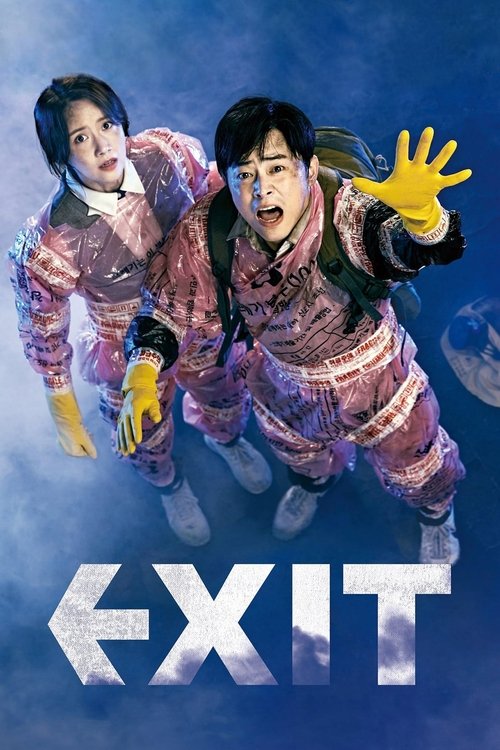
EXIT centers on Lee Yong-nam, an unemployed man in his thirties who still lives with his parents and is viewed by his extended family as an embarrassing underachiever. Despite his lack of corporate prospects, Yong-nam maintains peak physical fitness through his enduring hobby: rock climbing. Desperate to impress his relatives and reconnect with his unrequited college crush, Eui-ju, he arranges his mother’s lavish 70th birthday banquet at the Cloud Garden convention hall where Eui-ju works as a deputy manager.

The celebration turns catastrophic when a disgruntled scientist releases a lethal, airborne toxic chemical on the surrounding city streets. As the dense, corrosive white gas rapidly accumulates and ascends, the streets become death traps, trapping the banquet guests inside. With elevator shafts compromised and building stairwells engulfed, the roof is the only viable refuge—yet the rooftop exit door is locked from the outside.

Left with no other way to save his family, Yong-nam must rely on the very skills his family once dismissed as useless. Harnessing ropes, gym chalk, and raw physical grit, he scales the sheer exterior of the high-rise to reach the roof. From that moment, Yong-nam and Eui-ju are thrust into an urban survival race, leaping across Seoul's rooftops ahead of the rising toxic tide.

Core Meaning

Director Lee Sang-geun crafted EXIT as a satirical, empowering allegory for South Korea’s "Sampo Generation"—young adults crushed under hyper-competitive job markets, social expectations, and feelings of inadequacy. The rising toxic gas serves as a literalization of societal suffocation: an invisible, inescapable pressure closing in on youth who are told their passions have no economic value.

The film’s central message is that worth is not measured by corporate titles, social status, or traditional markers of adult success. Yong-nam and Eui-ju survive not through institutional rescue or superhuman heroics, but through practical problem-solving, communal empathy, and the exact "useless" climbing hobby for which society belittled them. Lee celebrates collective human decency over selfish self-preservation, demonstrating that ordinary people who carry moral responsibility and grit can conquer systemic crises.

Thematic DNA

Youth Unemployment and Societal Stigma 30%
The Re-evaluation of "Useless" Skills and Adaptation 25%
Altruism vs. Self-Preservation 25%
The Power of Solidarity and Modern Connectivity 20%

Youth Unemployment and Societal Stigma

The film foregrounds the economic alienation experienced by South Korean millennials. Yong-nam is nagged by his family and patronized by relatives, while Eui-ju endures precarious employment and demeaning treatment from her superior. The gas functions as an externalization of their daily social dead-end.

The Re-evaluation of "Useless" Skills and Adaptation

Rock climbing—dismissed by Yong-nam’s family as an immature pastime—becomes the ultimate survival tool. The film emphasizes low-tech ingenuity, using everyday tools like chalk, heavy-duty tape, curtains, gym weights, and garbage bags to craft makeshift survival apparatuses.

Altruism vs. Self-Preservation

Rather than portraying flawless, fearless martyrs, EXIT shows characters who openly weep, panic, and feel terror, yet choose self-sacrifice anyway. Both Yong-nam and Eui-ju repeatedly give up their rescue spots—first for Yong-nam's family and later for a group of trapped school children—balancing visceral, relatable fear with moral courage.

The Power of Solidarity and Modern Connectivity

Escape is not purely individualistic. Surviving requires synchronized partnership between Yong-nam and Eui-ju, collective signaling using Morse code, and eventual intervention by everyday citizens flying personal drones to scout paths and guide rescue teams.

Character Analysis

Lee Yong-nam

Cho Jung-seok

Archetype: Reluctant Everyday Hero Key Trait: Relentless physical resilience and split-second problem-solving.

Motivation

Protecting his family and proving his worth to Eui-ju and himself.

Character Arc

Evolves from a depressed, unemployed family scapegoat into an agile, selfless protector.

Eui-ju

Im Yoon-ah (Yoona)

Archetype: The Competent Co-Survivor / Egalitarian Partner Key Trait: Pragmatic intelligence, high endurance, and emotional honesty.

Motivation

Surviving without abandoning her professional integrity or ethical duty.

Character Arc

Moves from customer-service subservience to taking fierce ownership of her survival and ethical agency.

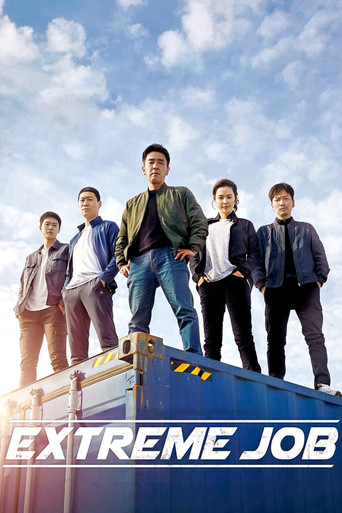
All 5 characters and cast

Symbols & Motifs

The Rising Gas

Meaning:

A physical manifestation of economic stagnation, claustrophobia, and the social pressures rising beneath the younger generation.

Context:

It accumulates at street level and ascends steadily, forcing characters to constantly seek higher ground across the urban cityscape.

The Carabiner and Climbing Rope

Meaning:

Artifacts of trust, mechanical linkage, and mutual reliance.

Context:

The climbing gear shifts from an athletic tool to a literal lifeline during urban ascents, and finally into a token of romantic promise passed between Eui-ju and Yong-nam.

Makeshift Hazmat Suits (Garbage Bags & Duct Tape)

Meaning:

Symbolizes the resourcefulness of the precariat and their blue-collar ingenuity.

Context:

Lacking high-end civil defense gear, the protagonists armor themselves with household disposable waste, duct tape, and dishwashing gloves to survive toxic exposure.

Rooftop Exit Doors

Meaning:

Represent institutional barriers and structural failures that trap ordinary citizens when crises strike.

Context:

Found locked from the outside to prevent trespassing or suicides, preventing the banquet guests from reaching safety without perilous external climbing.

The S.O.S. Morse Code Rhythm ("따따따 따-따-따 따따따")

Meaning:

A motif of vocal resistance and the desperate human drive to be seen and heard in an indifferent metropolis.

Context:

Rhythmically pounded out using banquet hall microphones, tambourines, and cell phone flashlights to attract aerial rescue crews.

Drones

Meaning:

Representative of modern digital culture, shifting from mechanisms of voyeurism to tools of democratized mutual aid and collective solidarity.

Context:

Initially flown by livestreamers chasing clicks, a coordinated fleet of civilian drones later pushes back toxic clouds and illuminates paths to aid the fleeing leads.

Memorable Quotes

따따따 따-따-따 따따따!
— Yong-nam, Eui-ju, and the trapped family

Context

Banging tambourines, cell phone flashlights, and banquet hall microphones against the glass in the exact rhythm of Morse code S.O.S. (··· ——— ···).

Meaning

It became the defining cultural catchphrase of the film, capturing collective human resilience and ingenuity under pressure.

우리 둘만 남았잖아... 나도 살고 싶단 말이야!
— Eui-ju

Context

Sobbing alongside Yong-nam after they willfully surrender their spots on the rescue helicopter to let others escape.

Meaning

It cuts through traditional melodrama by acknowledging how terrifying and genuinely painful self-sacrifice feels.

All 4 quotes

Philosophical Questions

What constitutes genuine value in human life?

The film questions capitalism’s tendency to measure an individual's worth entirely by employment status, salary, or social prestige, contrasting it with practical life-saving ingenuity.

Can moral responsibility survive basic survival instincts?

By showing its characters crying and wishing they hadn't given up their seats, EXIT asks whether heroism requires the erasure of self-interest or simply acting justly in spite of fear.

How does collective empathy function in a hyper-individualized digital age?

Through the drone community and public outcry, the film examines whether modern social technology isolates us or offers new channels for civic solidarity.

Alternative Interpretations

The Generational Allegory: Many critics view the toxic gas not as an isolated disaster, but as the accumulated toxic residue of older generations' socio-economic choices. The older generation is rescued first by military helicopters, leaving the young adults stranded on precarious rooftops to fend for themselves using improvised waste bags.

Full ending explanation

Cultural Impact

EXIT arrived during a defining moment for South Korean cinema in 2019, sharing theatrical space with Bong Joon-ho’s Palme d'Or and Oscar winner Parasite. While Parasite critiqued structural class disparity through pitch-black satire, EXIT examined the identical socioeconomic anxieties through the lens of a high-octane pop-culture action comedy.

In South Korea, youth unemployment, intense competition for civil service jobs, and exorbitant real estate prices have led young people to refer to the country as "Hell Joseon." EXIT captured this zeitgeist. The film's Morse code chant ("따따따 따-따-따 따따따") became an instant viral meme across social media and variety shows. The film cemented Cho Jung-seok’s status as a premier comedic leading man and established Yoona as an A-list box office lead capable of handling taxing physical roles.

Audience Reception

EXIT was received as a triumphant crowd-pleaser that revitalized the disaster formula into a nimble, heart-pounding survival comedy.

Audiences and critics praised the film for its brisk pacing, inventive set pieces, and refreshing blend of physical comedy and acrophobia-inducing suspense. The strong chemistry between Cho Jung-seok and Yoona was singled out as the emotional engine of the narrative, while critics lauded the decision to keep violence low and avoid the exhausting, grim melodrama typical of Korean disaster blockbusters.

On the critical side, some reviewers found the terrorist motive and villainous backstory thinly written and quickly brushed aside. Western reviewers also noted that the occasional shifts between broad slapstick and tense survival felt tonally abrupt.

Interesting Facts

  • EXIT was the feature directorial debut of Lee Sang-geun, who had spent years working on short films and served as an assistant director under acclaimed action filmmaker Ryoo Seung-wan.
  • Ryoo Seung-wan and his wife, producer Kang Hye-jung, produced the film through their production company, Filmmaker R&K.
  • Both Cho Jung-seok and Im Yoon-ah underwent months of intensive rock climbing training and wire-work stunts prior to filming to perform many of their climbing and traversing scenes themselves.
  • While Yoona was widely known as a member of Girls' Generation and television actress, EXIT was her first leading role in a major feature film.
  • In production interviews, Cho Jung-seok stated he strongly empathized with Yong-nam’s joblessness because of his own historical struggles retaking the CSATs and attempting to establish his acting career.
  • Premiering on July 31, 2019, the movie became a massive commercial triumph, grossing over $69.5 million and selling more than 9.4 million tickets in South Korea alone, ranking as the third most-watched domestic film of 2019.
  • The film won several honors at the 40th Blue Dragon Film Awards, including Best New Director for Lee Sang-geun.

Easter Eggs

Climbing Gyms and Parkour Culture

Yong-nam’s opening calisthenics on children’s playground pull-up bars mirror street workout subcultures in Seoul, establishing his outsider status as the "weird neighborhood ahjusshi".

Bong Joon-ho / Disaster Tropes Parody

The film subverts Korean disaster genre staples seen in The Host, Haeundae, or The Tower, deliberately mocking overt tear-jerking tragedy in favor of kinetic slapstick and pragmatic ingenuity.

Homage to Die Hard

Yong-nam improvising gear, running barefoot or in taped socks across hazardous terrain, and climbing exterior shafts directly evokes John McClane’s blue-collar navigation of the Nakatomi Plaza.

Livestream Culture Parody

The depiction of live streamers racing their commercial drones to broadcast Yong-nam and Eui-ju’s ordeal reflects the hyper-monetized streaming culture (AfreecaTV, YouTube) in South Korea.

Frequently Asked Questions

Explore More About This Movie

Dive deeper into specific aspects of the movie with our detailed analysis pages

Comments (0)

Leave a comment

No comments yet. Be the first to share your thoughts!

Similar Movies