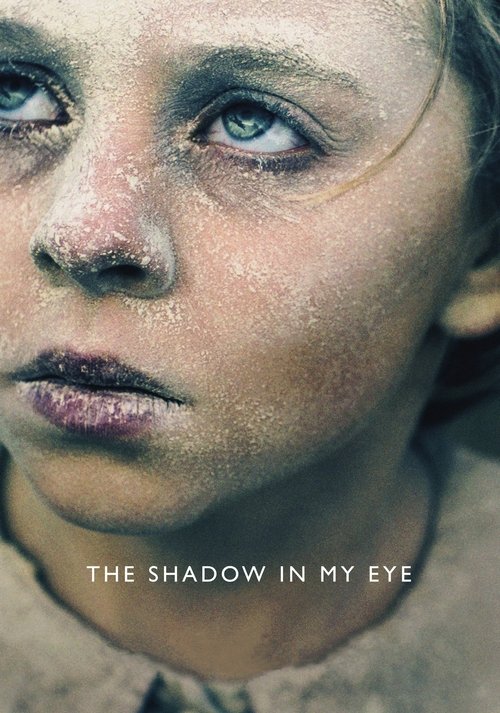
The Shadow in My Eye
A haunting war drama where the innocence of childhood is shattered by the shadow of a falling bomb, leaving an indelible scar on the soul.
The Shadow in My Eye

The Shadow in My Eye

Skyggen i mit øje

28 October 2021 Denmark 107 min ⭐ 7.8 (526)
Director: Ole Bornedal
Cast: Bertram Bisgaard Enevoldsen, Ester Birch, Ella Josephine Lund Nilsson, Malena Lucia Lodahl, Fanny Leander Bornedal
Drama War History
The Brutality and Randomness of War Loss of Innocence Questioning of Faith The Complexity of Morality

Overview

"The Shadow in My Eye" (original title: "Skyggen i mit øje"), also known as "The Bombardment," is a 2021 Danish historical drama directed by Ole Bornedal. The film is set in Copenhagen during the final months of World War II and is based on the tragic true story of Operation Carthage. On March 21, 1945, the British Royal Air Force embarked on a mission to bomb the Gestapo headquarters, the Shellhus, in Copenhagen. However, the mission had devastating consequences when one of the bombers crashed near a French-language Catholic school, leading subsequent pilots to mistake the school for their target.

The narrative weaves together the lives of several characters whose paths converge on this fateful day. We follow Henry, a young boy left traumatized and mute after witnessing a brutal air attack. He is sent to Copenhagen, where he befriends his cousin Rigmor and her friend Eva, students at the French school. Another central storyline involves Sister Teresa, a young novice at the school who is grappling with her faith in the face of the horrors of war, and her complex relationship with a young Danish man, Frederik, who works for the HIPO corps, the Danish auxiliary police assisting the Gestapo. The film meticulously builds the tension leading up to the raid, exploring the lives of the children, the nuns, the collaborators, and the British pilots, showing the human side of all involved before the catastrophic event unfolds.
Core Meaning

The core meaning of "The Shadow in My Eye" revolves around the devastating and indiscriminate nature of war, particularly its impact on the innocent. Director Ole Bornedal stated his intention was to tell the story of the war "through the eyes of children," focusing on "innocence versus machines, of the child who falls victim to the horrors of coincidence." The film poignantly illustrates that in conflict, there are no clear winners, only varying degrees of loss and suffering. It challenges the black-and-white narrative of good versus evil often present in war films, by humanizing characters on different sides of the conflict, including a Danish collaborator. The film serves as a memorial to a forgotten tragedy and a powerful anti-war statement, emphasizing that the greatest casualties are often civilians, and their stories are the ones that must be remembered to comprehend the true cost of war.

Thematic DNA

The Brutality and Randomness of War 35%
Loss of Innocence 30%
Questioning of Faith 20%
The Complexity of Morality 15%

The Brutality and Randomness of War

The film relentlessly portrays war as a chaotic and arbitrary force that shatters ordinary lives without warning. This is established from the opening scene where a car of bridesmaids is mistakenly strafed. The central tragedy of the school's bombing is depicted as a catastrophic error, a result of a plane crash that sends smoke billowing, misleading other pilots. This highlights how a single moment of chance can lead to immense suffering, underscoring the theme that war's destruction is not always calculated or strategic, but often tragically accidental.

Loss of Innocence

The narrative is primarily seen through the eyes of its child protagonists, Henry, Rigmor, and Eva. Their world of childhood games and simple fears is brutally invaded by the adult world of war. Henry's mutism is a direct result of witnessing an act of war, a symbolic silencing of his innocence. The school, a supposed sanctuary of learning and safety, becomes a tomb. The film powerfully contrasts the children's naivety with the horrific reality they are forced to confront, making their loss of innocence all the more heartbreaking.

Questioning of Faith

Sister Teresa's character arc embodies the struggle with faith in a world filled with suffering. She questions how a benevolent God could allow such atrocities to occur. Her internal conflict is externalized through her forbidden relationship with Frederik, a man on the opposing side, as she seeks to find meaning or a sign from God in the midst of chaos. The film presents faith not as a comfort, but as a profound and painful question in the face of overwhelming tragedy.

The Complexity of Morality

The film avoids simplistic portrayals of good and evil. While the Nazis are the clear aggressors, the film also shows the human cost of the Allied mission. Frederik, the Danish collaborator, is depicted not as a one-dimensional villain but as a conflicted individual. Director Ole Bornedal has stated that he wanted to show that "even the pigs are people." This nuanced approach forces the audience to confront the uncomfortable moral ambiguities of war, where lines are blurred and everyone is a victim in some way.

Character Analysis

Henry

Bertram Bisgaard Enevoldsen

Archetype: The Innocent Victim
Key Trait: Traumatized

Motivation

Henry's initial motivation is simply to survive and cope with his trauma. His friendship with Rigmor and Eva gives him a new motivation: to reconnect with the world and overcome his fear.

Character Arc

Henry begins the film as a happy, carefree boy. After witnessing a traumatic event, he becomes mute and fearful, embodying the psychological wounds of war. Throughout the film, with the help of his cousins, he slowly begins to regain his confidence. During the bombing of the school, he is forced to confront his trauma head-on and finds his voice again while helping the rescuers, signifying a painful transition from innocence to a harsh maturity.

Teresa

Fanny Leander Bornedal

Archetype: The Questioning Believer
Key Trait: Faith-stricken

Motivation

Teresa is motivated by a desperate need to understand God's place in a world of suffering. She seeks proof of His existence, or His absence, through her actions.

Character Arc

Teresa starts as a young novice struggling with her faith in God amidst the war. Her crisis of faith leads her to test God through a forbidden relationship with Frederik. In the end, trapped in the rubble of the school, she makes a selfless sacrifice in an attempt to save Rigmor, suggesting she finds her own form of faith not in divine intervention, but in human compassion and sacrifice.

Frederik

Alex Høgh Andersen

Archetype: The Conflicted Collaborator
Key Trait: Conflicted

Motivation

Frederik's motivations are complex and likely stem from a combination of self-preservation, a misguided sense of order, and a deep-seated desire for belonging. His relationship with Teresa awakens a desire for redemption.

Character Arc

Frederik is a Danish HIPO officer, a collaborator with the Gestapo, and is initially depicted as a brutal enforcer. Through his interactions with Teresa, his humanity and guilt are revealed. He is a man torn between his duty and his conscience. His arc is one of attempted redemption, as he ultimately tries to save Teresa from the bombed school.

Rigmor

Ester Birch

Archetype: The Hopeful Innocent
Key Trait: Compassionate

Motivation

Rigmor is motivated by a pure and simple desire to help her cousin and enjoy her childhood, despite the looming presence of the war.

Character Arc

Rigmor is a bright and compassionate young girl who embodies the resilience of childhood. She is a source of strength and hope for her traumatized cousin, Henry. Her arc is tragically cut short by the bombing, making her a symbol of the countless innocent lives lost in the war.

Eva

Ella Josephine Lund Nilsson

Archetype: The Survivor
Key Trait: Innocent

Motivation

Eva's motivation on the day of the bombing is driven by a child's logic and emotion - she is upset with her father and decides to go home. This simple act has profound consequences.

Character Arc

Eva, like Rigmor, is a young and innocent schoolgirl. Her personal story arc is defined by a small act of defiance on the day of the bombing - leaving the school to go home after an argument with her father. This seemingly insignificant decision ultimately saves her life, highlighting the random nature of survival in war.

Symbols & Motifs

The Open Sky

Meaning:

The open sky symbolizes a source of terror and imminent death for Henry. After witnessing the initial air attack, he becomes pathologically afraid of the sky, a space that is usually associated with freedom and openness. This represents how war has inverted the natural order, turning a symbol of hope into one of dread.

Context:

Henry's fear of the open sky is a recurring motif. His cousins, Rigmor and Eva, try to help him overcome this fear by playing games and using a rope to guide him under the open sky. This symbolizes their attempt to reclaim their childhood innocence in a world where danger can rain down from above at any moment.

The Unfinished Porridge

Meaning:

Eva's unfinished bowl of porridge symbolizes the mundane arguments of family life that are rendered tragically insignificant by the war. It also becomes a symbol of her survival and a poignant reminder of the preciousness of ordinary moments.

Context:

On the morning of the bombing, Eva argues with her father about not finishing her porridge. After the school is hit and her parents fear she is dead, her mother finds her at home, covered in dust, eating the porridge. This image is a powerful and heartbreaking representation of a child's simple logic and the enduring need for normalcy amidst chaos.

The Burning School

Meaning:

The burning school represents the destruction of innocence, safety, and the future. A place of learning and sanctuary is transformed into a fiery hell, a stark visual metaphor for the impact of war on children.

Context:

The climactic sequence of the film shows the school being bombed and consumed by flames. The images of nuns and children trapped in the rubble and fire are a visceral depiction of the central tragedy.

Memorable Quotes

I'm looking for God, Teresa. God is everywhere. He can't be. With everything that's happening.

— Teresa and another nun

Context:

This conversation takes place early in the film, establishing Teresa's spiritual crisis which is a central part of her character's journey.

Meaning:

This exchange encapsulates the central theme of faith being tested by the brutality of war. It highlights Teresa's desperate search for meaning and a benevolent divine presence in a world that seems to have been abandoned by God.

What kind of God would let all this happen?

— A general sentiment expressed in the film

Context:

This question is implicitly asked by many of the characters through their actions and expressions of despair, particularly after the bombing of the school.

Meaning:

This rhetorical question, though not attributed to a single character, is the philosophical heart of the film. It's a question that hangs over the entire narrative, challenging both the characters and the audience to grapple with the problem of evil and suffering.

Philosophical Questions

How can faith and belief in a benevolent higher power be maintained in the face of immense suffering and injustice?

The film explores this question primarily through the character of Sister Teresa. Her journey is a profound struggle with her faith as she witnesses the horrors of war. She actively tests God, engaging in a forbidden relationship as if to provoke a divine response. The film does not offer an easy answer, but suggests that true faith may not be found in miracles or divine intervention, but in acts of human compassion and self-sacrifice, as seen in Teresa's final moments.

What is the true cost of war, and who ultimately pays the price?

"The Shadow in My Eye" argues that the true cost of war is not measured in strategic victories or defeats, but in the lives of innocent civilians. By focusing on the children of the French school, the film forces the audience to confront the devastating human consequences of military action. The bombing is a "tragic mistake," a piece of collateral damage that underscores the film's message that the price of war is always paid by the most vulnerable.

Can morality be absolute in a time of war?

The film challenges the idea of a clear moral divide in wartime. It presents the British pilots as dedicated soldiers who are horrified by their mistake, and the Danish collaborator Frederik as a conflicted man capable of love and remorse. This nuanced portrayal suggests that war forces individuals into impossible moral positions, and that even those on the "right" side can be responsible for terrible tragedies. It questions the very notion of a 'just war' when the consequences are so devastating for the innocent.

Alternative Interpretations

While the film's main message is a clear anti-war statement, some alternative interpretations can be considered. The ending, with Eva found alive and eating her porridge, can be seen not just as a depiction of random survival, but also as a symbol of life's persistence and the human spirit's ability to find normalcy even in the most horrific circumstances. Her focus on a simple, childlike need in the aftermath of such devastation can be interpreted as a psychological coping mechanism, a retreat into the familiar to shield herself from the trauma she has witnessed. Another interpretation could focus on the film's title, "The Shadow in My Eye." While it directly refers to the physical and psychological impact of the bombing, it could also be interpreted as a metaphor for the dark side of humanity that war exposes. The "shadow" is not just the falling bombs, but the moral compromises, the loss of faith, and the capacity for violence that exists within all people, even those who believe they are fighting for a just cause. The film's nuanced portrayal of the collaborator, Frederik, supports this interpretation, suggesting that the line between good and evil is not always clear, and that the shadow of war falls on everyone.

Cultural Impact

"The Shadow in My Eye" had a significant cultural impact in Denmark by bringing a relatively forgotten national tragedy to the forefront of public consciousness. While the bombing of the Shellhus was a known event, the immense collateral damage and the loss of so many children at the French school was a story that had not been widely told in popular culture. The film sparked renewed interest and discussion about this painful chapter of Danish history. Internationally, its release on Netflix as "The Bombardment" introduced the story to a global audience, many of whom were unaware of the event. The film was praised for its powerful and unflinching depiction of the horrors of war from a civilian perspective, particularly that of children. However, it also faced criticism and debate over its historical accuracy, particularly a fabricated scene involving a dying child, which led to a public discussion about the responsibilities of historical fiction. The film's raw and emotional portrayal of a real-life tragedy resonated with audiences and critics, serving as a stark reminder of the human cost of war.

Audience Reception

Audience reception for "The Shadow in My Eye" has been largely positive, with many viewers praising its emotional power and unflinching portrayal of a tragic historical event. Audiences were particularly moved by the performances of the child actors, who brought a heartbreaking authenticity to their roles. The film's ability to create a deep sense of dread and its powerful, emotional climax were frequently highlighted as strengths. However, some viewers found the film to be relentlessly grim and difficult to watch due to its subject matter. A common point of criticism was that some of the adult character arcs, particularly the romance between Teresa and Frederik, felt underdeveloped compared to the compelling stories of the children. Overall, the film has been lauded as a poignant and important work of historical drama that leaves a lasting impact on its viewers.

Interesting Facts

  • The film is based on the real-life Operation Carthage, a British Royal Air Force raid on the Gestapo headquarters in Copenhagen on March 21, 1945. The tragic bombing of the French school was a real event that killed 86 children and 18 adults.
  • Fanny Leander Bornedal, who plays Sister Teresa, is the daughter of the film's director, Ole Bornedal.
  • The film sparked a controversy regarding historical accuracy. Director Ole Bornedal claimed a key final scene was based on a real conversation between a nun and a dying child, but a Danish documentary filmmaker revealed this to be false; the conversation was between two nuns.
  • The film's international title is "The Bombardment". It was released on Netflix in March 2022.
  • The film received the Robert Award (the Danish equivalent of the Oscars) for Best Visual Effects.

⚠️ Spoiler Analysis

Click to reveal detailed analysis with spoilers

Frequently Asked Questions

Explore More About This Movie

Dive deeper into specific aspects of the movie with our detailed analysis pages

Comments (0)

Leave a comment

No comments yet. Be the first to share your thoughts!