On My Skin
Sulla mia pelle
"The last seven days of Stefano Cucchi"
Overview
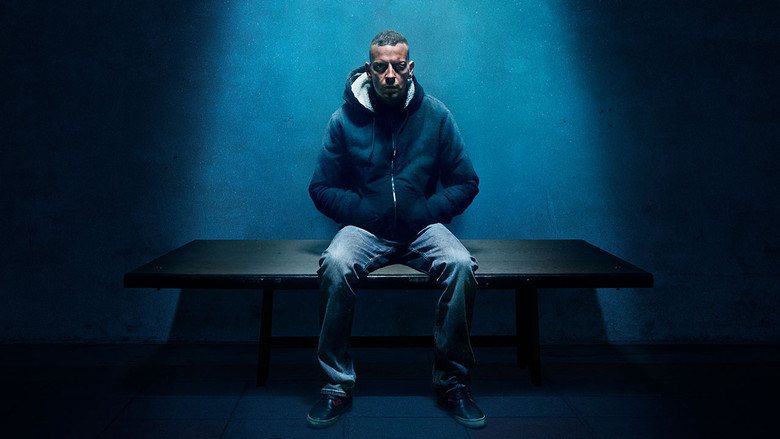
"On My Skin" chronicles the last seven days in the life of Stefano Cucchi (Alessandro Borghi), a young Italian building surveyor arrested for a minor drug offense on October 15, 2009. After his arrest, Stefano is subjected to a brutal beating by Carabinieri officers, an event that the film deliberately keeps off-screen, focusing instead on the devastating aftermath.
As Stefano is moved through the labyrinthine Italian justice and prison system—from police stations to courtrooms and finally to a prison hospital—his physical condition deteriorates rapidly. He is covered in bruises, barely able to walk, and suffering from severe internal injuries. His family, led by his sister Ilaria (Jasmine Trinca) and his parents (Max Tortora and Milvia Marigliano), is repeatedly denied access to him, caught in a bureaucratic nightmare and unaware of the true extent of his suffering. The film is a quiet but powerful indictment of a system that allows a man to die in its custody, ignored by guards, doctors, and judges who fail to act.

Core Meaning
The core meaning of "On My Skin" is a powerful denunciation of institutional indifference, abuse of power, and the dehumanization of individuals within the justice system. Director Alessio Cremonini sought to shed light on a story of profound injustice, focusing not on the sensationalism of violence, but on the systematic failure of every person and protocol that Stefano Cucchi encountered. The film is a J'accuse—an accusation—against a bureaucracy that is "incapable of facing its responsibilities." By meticulously reconstructing Stefano's final days based on thousands of pages of case documents, the film forces the audience to bear witness to a preventable tragedy, arguing that human dignity and rights should be inviolable, even for those accused of a crime. It carries the message that silence and procedural apathy can be as deadly as physical violence, and it stands as a tribute to his family's relentless fight for truth.
Thematic DNA
Systemic Indifference and Bureaucratic Dehumanization
The film masterfully portrays a system where protocol and procedure supersede human compassion. From the prison guards and medical staff to the judges, nearly every official Stefano encounters treats him as a case file rather than a suffering human being. They see his injuries but choose to accept his coerced explanation of having "fallen down the stairs," demonstrating a collective unwillingness to get involved or take responsibility. This theme is highlighted by the family's frustrating struggle against a wall of bureaucratic red tape that prevents them from seeing Stefano, symbolizing a system that isolates and ultimately destroys individuals.
Police Brutality and Abuse of Power
While the actual beating occurs behind a closed door, its consequences are the central focus of the film. "On My Skin" is a direct and unflinching examination of police brutality and the subsequent cover-up. The film highlights the immense power imbalance between law enforcement officers and detainees. Stefano's fear of further retaliation, which prevents him from officially accusing the officers, underscores the terror that such abuse instills in its victims. The story became a national scandal in Italy, turning Stefano Cucchi into a symbol of the fight against police violence.
The Fight for Truth and Justice
This theme is embodied by Stefano's family, particularly his sister, Ilaria Cucchi. While the film primarily focuses on Stefano's ordeal, the narrative is framed by the family's desperate attempts to reach him and their eventual crusade for justice after his death. The film's epilogue details their relentless battle to hold those responsible accountable, a fight that was still ongoing when the film was released. Ilaria became a prominent public figure in Italy, and her struggle gives the film a powerful moral weight, transforming a personal tragedy into a universal call for accountability.
Character Analysis
Stefano Cucchi
Alessandro Borghi
Motivation
Initially, Stefano's motivation is survival and navigating his precarious situation. After the beating, his primary motivation becomes enduring the immense pain while paralyzed by fear. He refuses to officially report the beating, likely fearing deadly retribution from the officers. This silence, born of terror, is a key factor in his tragic fate.
Character Arc
Stefano begins the film as a wiry, street-smart young man living on the margins. He is flawed—he uses and deals drugs—but he is not a hardened criminal. His arc is a tragic, physical, and psychological descent. Following his arrest and beating, he transforms from a defiant individual into a broken, fearful shell of a man. His journey is not one of development but of disintegration, as the system strips him of his health, dignity, and ultimately his life. His death transforms him into a symbol of injustice.
Ilaria Cucchi
Jasmine Trinca
Motivation
Her motivation is her love for her brother and a fierce, unwavering desire for truth and accountability. She refuses to accept the official explanations and is driven by the need to find out what happened to Stefano and who was responsible for his death.
Character Arc
Ilaria's main arc largely takes place after the events of the film, but is powerfully foreshadowed. Within the film's timeline, she transforms from a concerned sister, trying to navigate a frustrating bureaucracy, into a grieving, horrified, and ultimately determined fighter for truth. The final scenes, showing her reaction to seeing Stefano's body, mark the beginning of her public crusade for justice.
Giovanni Cucchi
Max Tortora
Motivation
His motivation is the fundamental parental drive to protect his child. He wants to see Stefano, ensure he has his epilepsy medication, and understand why he is being held. He believes in the system, which makes its ultimate failure all the more devastating for him.
Character Arc
Giovanni is portrayed as a respectable, lower-middle-class surveyor who is both disappointed in his son's life choices but also deeply loves him. His arc is one of increasing helplessness and desperation. He tries to use his position and reason to get through to the authorities but is repeatedly stonewalled. His journey through the film is from parental concern to profound, impotent grief.
Symbols & Motifs
Stefano's Emaciated and Bruised Body
Stefano's body is the central, horrifying symbol of the film. Its progressive decay serves as a physical record of the violence inflicted upon him and the neglect he suffers. The shocking post-mortem photographs of his emaciated and battered body, which his family released to the public, were a crucial catalyst in the real-life case. In the film, his body is the undeniable evidence, the 'testimony on his skin' that refutes the official narrative of a fall or natural causes.
Throughout the film, the camera focuses on Stefano's deteriorating state: the darkening bruises around his eyes, his fractured spine making it impossible to sit, and his dramatic weight loss. The final shots of his family viewing his corpse in the morgue are a devastating confirmation of the truth they had been denied.
Closed Doors
Closed doors symbolize the secrecy, denial, and bureaucratic barriers that define Stefano's experience. The most pivotal door is the one behind which he is beaten, a deliberate choice by the director to make the audience feel the same uncertainty and powerlessness as Stefano. Other closed doors—of prison cells, interrogation rooms, and offices—represent his isolation and the institutional refusal to see or acknowledge his suffering.
The film deliberately omits the scene of the beating, instead showing the Carabinieri leading Stefano into a room and closing the door. Later, his family is constantly met with closed doors and bureaucratic refusals when they try to visit him, physically representing the system's impenetrability.
The Refusal of Food and Water
Stefano's refusal to eat or accept medical treatment, like a fluid drip, symbolizes his loss of will and his final, desperate attempt to exert some control over his own body. It is a passive protest born of fear and pain, but it is misinterpreted by the system as mere stubbornness, further contributing to his medical decline. It highlights the breakdown of trust between the individual and the state that is supposed to care for him.
In several scenes in the prison hospital, medical staff note Stefano's refusal to cooperate with treatment. He hides under his blanket, shutting out the world. This is not depicted as a rational decision, but as the reaction of a man broken physically and psychologically, unable to trust those around him.
Memorable Quotes
Sono caduto dalle scale.
— Stefano Cucchi
Context:
Stefano utters this line multiple times throughout his week in custody. He says it to a judge during his initial hearing and to medical staff at the prison hospital, often while grimacing in pain from injuries that are clearly inconsistent with a simple fall.
Meaning:
"I fell down the stairs." This is the lie Stefano repeatedly tells doctors, judges, and guards when asked about his horrific injuries. It's a phrase dripping with tragic irony. He says it out of fear, likely under duress and threat of further violence, but it becomes the official excuse that the indifferent system readily accepts, allowing everyone to abdicate their responsibility to investigate further. It encapsulates the coercion and fear at the heart of his ordeal.
Philosophical Questions
Where does responsibility lie in a systemic failure?
The film meticulously explores how a tragedy can occur not through one single evil act, but through a chain of individual choices to remain passive. No single person, apart from the attackers, is solely responsible for Stefano's death. Yet, the prison guard who doesn't press for the truth, the doctor who doesn't challenge the patient's fearful lie, and the judge who processes the case without alarm are all complicit. The film forces the viewer to question the nature of guilt and responsibility. Is inaction a form of violence? It suggests that in a dehumanizing bureaucracy, the diffusion of responsibility can have lethal consequences.
What is the value of a human life when it is in the hands of the state?
Stefano is arrested for a relatively minor crime, yet he is handed a death sentence by the system. The film raises profound questions about the social contract. Once an individual is in state custody, the state assumes absolute responsibility for their well-being. "On My Skin" depicts a horrifying inversion of this principle, where custody becomes a death sentence. Stefano's humanity is systematically stripped away; he becomes an object to be processed, a problem to be ignored. The film asks the audience to consider the fundamental rights of prisoners and the moral obligations of those who hold power over them.
Alternative Interpretations
While the film's narrative is a direct, fact-based reconstruction, critical interpretations vary on the effectiveness of its choices. Some critics argued that the director's decision not to show the actual beating was a weakness, a missed opportunity to take a definitive stand and viscerally confront the audience with the violence. This perspective suggests the film could have been a more forceful indictment of the system had it been more explicit.
Conversely, the dominant interpretation is that this omission is the film's greatest strength. By focusing on the aftermath—the slow, agonizing decay and the cold, procedural response of the system—the film makes a more profound point: the true horror lies not only in the explosive moment of violence but in the quiet, sustained indifference that follows. This reading suggests the film isn't just about a beating, but about a systemic and moral collapse. Another subtle interpretation frames Stefano's ordeal as a modern-day Calvary, a secular passion play where he is a sacrifice to an unfeeling, bureaucratic state, visually hinted at in a scene where he is strapped to an x-ray machine in a crucifix-like pose.
Cultural Impact
"On My Skin" had a profound cultural and social impact in Italy, far beyond that of a typical film. Released at a critical juncture in the ongoing legal battle, it reignited public debate about police brutality, custodial deaths, and the accountability of state institutions. The film's raw, realistic depiction of Stefano's suffering brought the case to a new generation and a global audience via Netflix, turning the Cucchi family's fight into a widely recognized symbol of the struggle for civil rights. Public screenings, some of them unofficial, were organized in universities and piazzas across Italy, demonstrating its resonance with young people. Critics praised its sober, documentary-like approach, and Alessandro Borghi's performance was widely acclaimed, earning him a David di Donatello award (the Italian Oscar), which he dedicated to Stefano Cucchi. The film was seen not just as entertainment, but as a necessary act of social conscience, a "punch in the gut" that forced a collective reckoning with a dark chapter in the nation's recent history.
Audience Reception
Audiences received "On My Skin" with a mixture of devastation and praise. Many viewers described the film as a powerful, necessary, and deeply moving experience that was difficult to watch but essential viewing. The performance by Alessandro Borghi was almost universally lauded as a tour de force of physical and emotional commitment. The film was praised for its sober, non-sensationalist approach, which allowed the horror of the true story to speak for itself. Some viewers found the pacing slow, particularly in the middle section, which meticulously documents Stefano's decline with little narrative development. The primary point of criticism for a minority of viewers was the film's detached, observational style, with some feeling it could have been more emotionally impactful or more direct in its condemnation. However, the overwhelming consensus was that the film was a courageous and vital piece of filmmaking that honored Stefano Cucchi's memory and powerfully exposed a story of profound injustice.
Interesting Facts
- The film is based on the real-life court records and case files of the Stefano Cucchi case; the writers studied over 10,000 pages of documents to ensure accuracy.
- Alessandro Borghi, who plays Stefano Cucchi, underwent a dramatic physical transformation for the role, losing a significant amount of weight to portray Stefano's emaciated state.
- The film premiered at the Venice Film Festival and was released simultaneously in Italian cinemas and on Netflix globally, a decision that caused some controversy with local exhibitors.
- The film's release in 2018 coincided with a major breakthrough in the real-life case, bringing renewed national and international attention to the fight for justice.
- The Cucchi family, including his sister Ilaria, was deeply involved and supportive of the film's creation.
- Director Alessio Cremonini made the conscious choice not to show the beating, stating, "it's the magistrate's job to tell us what happened behind that door."
- The film's epilogue states that in 2009, the year of Stefano's death, 172 people died in Italian prisons.
⚠️ Spoiler Analysis
Click to reveal detailed analysis with spoilers
Frequently Asked Questions
Explore More About This Movie
Dive deeper into specific aspects of the movie with our detailed analysis pages
Comments (0)
No comments yet. Be the first to share your thoughts!