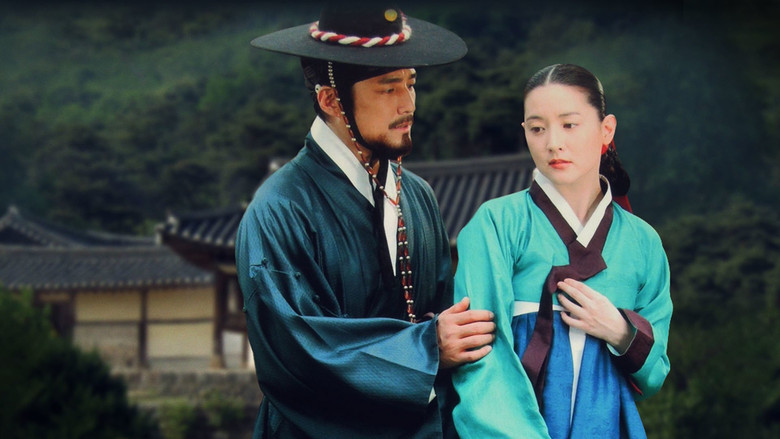
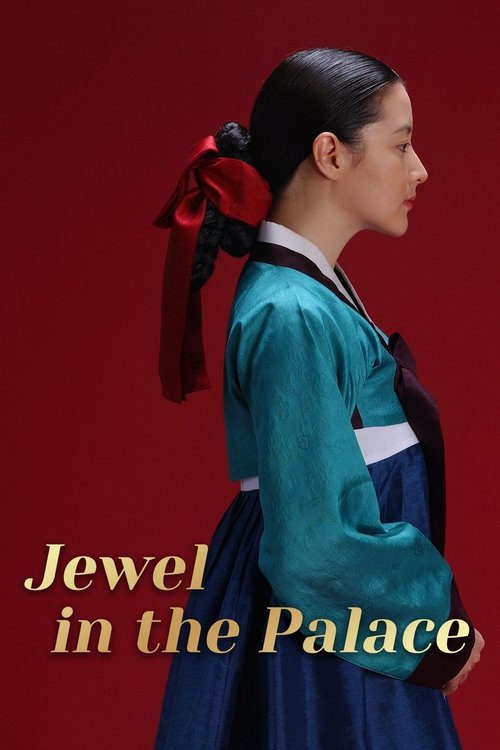
Jewel in the Palace
대장금
Overview
"Jewel in the Palace" (Dae Jang Geum) is a sweeping historical drama set in Joseon-era Korea, based on the real-life figure of Jang-geum, the first female royal physician. The story follows the journey of Seo Jang-geum, an orphaned girl who enters the royal palace as a kitchen apprentice. Driven by a promise to her dying mother, she aims to become the Head of the Royal Kitchen and uncover the injustices that led to her mother's death. Her path is fraught with immense hardship, political intrigue, and the relentless opposition of the powerful Choi family, who have controlled the royal kitchen for generations. Jang-geum's remarkable talent, insatiable curiosity, and unwavering perseverance distinguish her, but also make her a target.
After being falsely accused of treason and exiled to the remote Jeju Island, Jang-geum's life takes a dramatic turn. Instead of succumbing to despair, she redirects her passion for healing people through food to the formal study of medicine. She overcomes incredible social barriers in a deeply patriarchal society to return to the palace, this time not as a cook, but as a physician-in-training. The series chronicles her meteoric rise through the medical ranks, her philosophical struggles with revenge and forgiveness, and her deepening relationship with Min Jeong-ho, a steadfast scholar and military officer who supports her unconditionally. Ultimately, Jang-geum's dedication and skill earn her the trust of the King and the unprecedented title of "The Great Jang-geum," cementing her legacy as a woman who triumphed against all odds.

Core Meaning
The core meaning of "Jewel in the Palace" is a profound exploration of perseverance, integrity, and the transcendent power of a woman's will in a repressive society. The creators convey the message that one's true greatness is not defined by social status or gender, but by the relentless pursuit of knowledge and the ethical application of one's skills. The series posits that food and medicine are not merely technical crafts, but philosophical practices rooted in sincerity and a deep care for humanity. Jang-geum's journey from cook to doctor embodies the idea that the goal of both disciplines is the same: to sustain and heal life. The narrative champions the idea that even within a corrupt and rigid system, a single individual with unyielding determination and a strong moral compass can enact profound change and achieve the impossible.
Thematic DNA
Perseverance Against Adversity
This is the central theme of the entire series. From the loss of her parents to the conspiracies of the Choi family, false accusations, exile, and the challenges of studying medicine as a woman, Jang-geum faces a constant stream of seemingly insurmountable obstacles. The series meticulously details her refusal to surrender. When she loses her sense of taste, she learns to cook by relying on her other senses and deep knowledge. When exiled as a slave, she discovers a new path to her goal by becoming a physician. Her journey emphasizes that hardship is not an end, but an opportunity for transformation and growth.
Female Empowerment in a Patriarchal Society
Set in a time when women had little to no social influence, Jang-geum's story is a powerful narrative of female empowerment. She consistently challenges the rigid social hierarchy that seeks to confine her. The series highlights the struggles of court ladies, who, despite their skills, are pawns in political games. Jang-geum breaks this mold not through political maneuvering, but through sheer competence and intellect. Her ultimate achievement of becoming the King's personal physician, a 3rd rank official, was an unprecedented feat for a woman in that era, directly challenging the misogynistic norms of the time.
The Philosophy of Food and Medicine
The series elevates cooking and medicine from mere professions to profound philosophies. It repeatedly explores the concept that "food and medicine share the same origin." Jang-geum's initial training teaches her that a cook's sincerity and understanding of ingredients are paramount to creating dishes that nourish not just the body, but the soul. This belief seamlessly transitions into her medical practice, where she uses her knowledge of natural ingredients and dietary principles to heal. The show presents a holistic view of health where what one eats is integral to one's well-being.
Justice vs. Revenge
Jang-geum's initial motivation for returning to the palace is to clear her mother's name and seek justice for her and her mentor, Lady Han. However, her journey tests this resolve. While she seeks to expose the Choi family's corruption, she is often advised against acting out of pure vengeance. Her mentor in medicine, Jang-deok, particularly challenges her to focus on saving lives rather than on retribution. The series explores the fine line between bringing wrongdoers to light and being consumed by hatred, suggesting that true victory lies in rising above one's enemies through integrity and service.
Character Analysis
Seo Jang-geum
Lee Young-ae
Motivation
Initially, her motivation is to fulfill her mother's wish of becoming the Highest Kitchen Lady and recording the injustice done to her in the official kitchen journal. After being exiled and seeing more suffering, her motivation expands. It becomes a deeper calling to heal and save people, using her skills to make a difference. While justice for her family remains a goal, her primary drive becomes the ethical practice of medicine.
Character Arc
Jang-geum begins as a curious, intelligent, but naive young girl driven by her mother's last wish. Her initial arc is focused on mastering culinary arts within the rigid, conspiracy-filled royal kitchen. After being framed and exiled, she undergoes a profound transformation. Hitting rock bottom, she rebuilds herself, shifting her ambition from cooking to medicine, a field that offers a more direct path to saving lives and re-entering the palace. Her motivation evolves from personal justice for her mother to a broader sense of duty as a healer. She learns to temper her ambition with wisdom and compassion, ultimately becoming a revered physician who transcends the limitations placed upon her gender and social class, finding fulfillment in her work and love.
Min Jeong-ho
Ji Jin-hee
Motivation
His primary motivation is his love and admiration for Jang-geum. He is driven by a strong sense of justice and a desire to see her succeed on her own terms. He consistently puts her well-being and ambitions above his own, believing in her potential and righteousness. His motivation never wavers; it is purely to support and protect the woman he loves.
Character Arc
Min Jeong-ho starts as a distinguished scholar and military officer who is intrigued by Jang-geum's intelligence and spirit. Initially, he acts as a secret supporter and mentor, providing her with books and encouragement. As he witnesses her repeated struggles against injustice, his admiration grows into deep love. His arc is one of unwavering devotion. He willingly sacrifices his career and social standing multiple times to protect her, following her into exile in Jeju. He evolves from a passive admirer to an active partner in her journey, demonstrating a progressive mindset by respecting and championing her ambitions in a society that does not. He remains her moral compass and steadfast protector until the very end.
King Jungjong
Im Ho
Motivation
As king, his motivation is to rule justly and maintain stability, but he is often hampered by political factions. His personal motivation becomes increasingly focused on Jang-geum. He is drawn to her intellect, her principles, and her ability to solve problems that baffle others. He wishes to protect her and keep her near, which evolves into a deep, unrequited love.
Character Arc
King Jungjong is introduced as a gentle but indecisive ruler, often constrained by the powerful ministers who put him on the throne. Initially, he is a distant figure, the ultimate recipient of the royal kitchen's efforts. As Jang-geum's path intersects with his, first through food and then through medicine, he begins to see her unique talent and integrity. His arc is one of growing admiration and affection for Jang-geum, which forces him to confront his own limitations as a king. He develops from a passive monarch into a more assertive leader, willing to challenge centuries of tradition to appoint Jang-geum as his physician. In the end, his love for her is so great that he chooses her freedom over his desire to keep her by his side, orchestrating her escape.
Choi Geum-young
Hong Ri-na
Motivation
Her motivation is a complex mix of personal ambition, familial duty, and jealousy. She genuinely wants to be the best cook and prove her own worth. However, she is also driven by the Choi family's mandate to secure power at any cost. Her unrequited love for Min Jeong-ho, who only has eyes for Jang-geum, fuels a deep-seated jealousy that pushes her further into morally compromising actions against her rival.
Character Arc
Geum-young begins as Jang-geum's childhood friend within the palace, but her life is dictated by her family's ambition. As the niece of the powerful Lady Choi, she is groomed to become the Highest Kitchen Lady to maintain her family's control. Her arc is a tragic one of conflict between her innate talent, her affection for Jang-geum, and her unreciprocated love for Min Jeong-ho, against the immense pressure and corrupting influence of her clan. She starts with a desire to win based on her own skills but gradually succumbs to the treacherous methods of her family, becoming Jang-geum's primary rival. While she achieves the position she was groomed for, she finds no happiness in it, ultimately losing everything as her family's crimes are exposed.
Symbols & Motifs
Royal Cuisine (Suragan Food)
The meticulously prepared royal cuisine symbolizes more than just sustenance; it represents Korean culture, tradition, and the philosophy of balance and health. Each dish is a testament to the sincerity and knowledge of its creator. It also symbolizes power and political favor, as the one who controls the King's food holds significant influence.
Throughout the first half of the series, the creation of specific dishes for the royal family drives the plot. Cooking competitions, the presentation of meals, and the use of rare ingredients are central to the conflicts and triumphs within the royal kitchen.
Mother's Cooking Journal
The journal left by Jang-geum's mother symbolizes legacy, truth, and Jang-geum's primary motivation. It contains not only recipes but the story of the injustice done to her mother. It represents the hope that truth will eventually be revealed and honor restored.
Jang-geum's quest to enter the palace and become the Highest Kitchen Lady is driven by her desire to find this journal and add her mother's story to it. The journal is a recurring motif that fuels her determination through her darkest moments.
Acupuncture Needles and Medical Texts
These symbolize Jang-geum's transformation and the expansion of her mission. While her cooking knife represented her ability to sustain life, the needles represent her ability to save it from illness and death. They signify her shift from a practitioner of a domestic art to a respected professional in a male-dominated scientific field, embodying her intellectual growth and expanding influence.
In the second half of the series, after her exile, scenes of Jang-geum studying medical texts and practicing with acupuncture needles become prominent. They replace the earlier focus on cooking utensils and signify her new path and identity as a physician.
Memorable Quotes
As a king I command you. As a man I beg you.
— King Jungjong
Context:
Spoken to Jang-geum late in the series when he is trying to persuade her to stay with him, revealing the depth of his personal feelings for her beyond their professional relationship.
Meaning:
This line perfectly encapsulates the King's internal conflict. It shows the immense power he wields as a monarch versus his personal vulnerability and deep affection for Jang-geum, whom he cannot have but desperately wants to keep by his side.
People hide their identity, but books don't.
— Min Jeong-ho
Context:
Said during one of his early encounters with Jang-geum in the royal library (Episode 8), as he lends her books and they begin to form an intellectual and emotional connection.
Meaning:
This quote reflects Min Jeong-ho's scholarly nature and his belief in the pursuit of truth. It's his way of telling Jang-geum that knowledge is a pure and honest path, a subtle encouragement for her to continue learning despite the deceptive nature of the people in the palace.
She is like wild grass. No matter how you pull it, that plant will return and return.
— Choi Keum-young
Context:
Spoken by Geum-young to her aunt, Lady Choi, expressing her frustration and a degree of awe at Jang-geum's ability to consistently recover from their plots against her.
Meaning:
This is a reluctant acknowledgment from Jang-geum's main rival about her incredible resilience. It captures the essence of Jang-geum's character: her unbreakable spirit and her ability to overcome any obstacle thrown in her way, much to the frustration of her adversaries.
I'll tell you this: no-one can ever persuade me to give up! I will never give up!
— Seo Jang-geum
Context:
A declaration made during a moment of intense pressure, encapsulating her unwavering determination to persevere on her chosen path, regardless of the hardships she faces.
Meaning:
This is Jang-geum's personal creed. It is a powerful declaration of her defining characteristic – her absolute refusal to be defeated by circumstance, societal pressure, or the schemes of her enemies. It is the promise she makes to herself and the memory of her loved ones.
Your fate will be destined by three women. You killed the first woman, though you didn't want to. You will save the second one, but she will die because of you. The third one will kill you, but save thousands.
— A Hermit
Context:
This prophecy is delivered to Jang-geum's father at the very beginning of the series (Episode 1) after he participates in the execution of the deposed queen.
Meaning:
This prophecy sets the entire narrative in motion. It foreshadows the tragic connections between Jang-geum's father (Seo Cheon-soo), her mother (Park Myeong-yi), the deposed Queen Yun, and Jang-geum herself. It frames the story with an air of destiny, suggesting that individual lives are interwoven with greater historical events.
Episode Highlights
Exile to Jeju Island
Following a devastating conspiracy, Jang-geum and her mentor Lady Han are convicted of treason. On the arduous journey to exile, Lady Han succumbs to her injuries and dies in Jang-geum's arms. This episode marks the lowest point in Jang-geum's life, as she loses her mentor and is sent to be a slave on Jeju Island. It's a pivotal turning point where her life as a cook ends and her journey toward medicine begins.
This episode is the crucible that forges Jang-geum's new identity. The death of Lady Han solidifies her resolve for justice, and her arrival in Jeju introduces her to her new medical mentor, Jang-deok. It represents the complete destruction of her old life and the painful birth of her new purpose.
The Truth is Unveiled
The culmination of years of struggle. All parties involved in the past and present conspiracies, including the entire Choi clan and their political allies, are brought before a royal tribunal. Through a series of testimonies and revealed evidence, the Choi family's generations of corruption are finally exposed. Lady Choi attempts to escape but ultimately confronts her guilt before dying.
This episode provides the ultimate catharsis for the series' central conflict. It delivers justice for Jang-geum's mother and Lady Han, leading to the complete downfall of the antagonists who have tormented Jang-geum for her entire life. It is the climax of the revenge and justice plotline.
Curing the Prince of Smallpox
The Queen's son, the Crown Prince, contracts the deadly smallpox virus, and all the royal physicians are powerless. In a moment of desperation, the Queen puts her full trust in Jang-geum. Using her knowledge and unwavering dedication, Jang-geum successfully nurses the prince back to health, an act that solidifies her reputation and earns her the Queen's eternal gratitude and protection.
This event is Jang-geum's greatest medical triumph. It elevates her from a skilled female physician to an indispensable figure in the royal court, proving her abilities beyond any doubt and paving the way for her final, unprecedented promotion by the King.
The Wild Berry Dessert
During a critical cooking competition to determine the next Highest Kitchen Lady, Jang-geum is forced to compete in place of the absent Lady Han. For the final dish, instead of an elaborate royal delicacy, she presents a simple wild berry dessert. She explains that it was the last thing her mother ate before she died, and she prepared it with the love and sincerity she felt for her mother. The court is deeply moved.
This moment perfectly encapsulates the series' core philosophy that the heart and sincerity behind a dish are more important than technique or rare ingredients. It's a major turning point for Jang-geum as a character, where she wins not with complex skills, but with profound emotional honesty.
Finale: The Great Jang-geum
Years after the King orchestrates her escape from the palace to save her life, Jang-geum lives a quiet life as a fugitive with Min Jeong-ho and their daughter, treating common people. After the King's death, Queen Munjeong reinstates them. Jang-geum is welcomed back to the palace but ultimately chooses a life of freedom, continuing to heal people outside the palace walls. The final scene shows her performing the first known surgery (on a pregnant woman) in that era.
The finale provides a deeply satisfying conclusion. Jang-geum achieves ultimate recognition with the title "Dae" (The Great), finds happiness and family with Min Jeong-ho, and chooses a life of purpose on her own terms rather than returning to the confines of the palace. It solidifies her legacy as not just a royal physician, but a true healer of the people.
Philosophical Questions
What is the true purpose of a skill?
The series constantly explores whether a skill, be it cooking or medicine, should be used for personal gain and power or for the betterment of others. The Choi family wields their culinary legacy as a tool for political influence and wealth accumulation. In contrast, Jang-geum, guided by her mentors Lady Han and Jang-deok, comes to believe that the ultimate purpose of her skills is to bring health, comfort, and life to people. Her journey argues that true mastery is achieved not just through technical perfection, but through ethical application and a sincere heart.
Can integrity and perseverance triumph over a corrupt system?
Jang-geum is an individual with no status or political backing, pitted against a deeply entrenched system of corruption and nepotism represented by the Choi family and their government allies. The series serves as a long-form case study on this question. Jang-geum's only weapons are her intelligence, her unwavering work ethic, and her refusal to compromise her principles. Her eventual success suggests an optimistic answer: that while the path is incredibly difficult and requires immense sacrifice, a determined individual can indeed expose corruption and achieve justice through sheer merit and moral fortitude.
How does one balance the pursuit of justice with the poison of revenge?
After the deaths of her mother and mentor, Jang-geum is consumed by a desire for justice that borders on revenge. However, as she learns medicine, her mentors challenge her motivations, questioning if a healer's hands can be driven by hatred. The series delves into her internal struggle to seek accountability for the wrongs committed against her family without letting vengeance corrupt her own spirit. It suggests that true justice is not about personal retribution but about restoring balance and truth, a goal she achieves by focusing on her higher purpose of saving lives.
Alternative Interpretations
A prominent alternative interpretation of "Jewel in the Palace" is through a modern feminist lens. While on the surface it's a historical drama, its core narrative can be read as a powerful allegory for the struggles of contemporary women in patriarchal structures. Jang-geum's journey is not just a historical tale but a symbolic fight against systemic misogyny and the 'glass ceiling'. Her constant battles against the Choi family, who represent entrenched, nepotistic power, can be interpreted as the struggle against established 'old boys' networks'. Her shift from cooking (a domestic, traditionally female role) to medicine (a scientific, male-dominated field) symbolizes a woman breaking out of her prescribed role to achieve professional recognition based on intellect and merit. The series can be viewed not just as entertainment, but as an inspirational text that champions female ambition, intelligence, and the right to define one's own path, making it a surprisingly modern and progressive work despite its historical setting.
Cultural Impact
The cultural impact of "Jewel in the Palace" was monumental, both domestically and internationally. It is considered one of the most significant proponents of the "Korean Wave" (Hallyu), introducing tens of millions of people worldwide to Korean history, culture, and aesthetics. The drama was exported to 91 countries, achieving unprecedented popularity in nations across Asia, the Middle East, Africa, and Eastern Europe. Its detailed and respectful portrayal of Korean royal court cuisine sparked global interest in Hansik (Korean food), elevating its perception from simple home cooking to a sophisticated culinary art. Similarly, it shed light on traditional Korean medicine, presenting it as a complex and legitimate healing system. The series' narrative of a determined, intelligent woman succeeding against all odds resonated with audiences globally, making its protagonist, Seo Jang-geum, an inspirational figure. The show's success boosted tourism to its filming locations and established a new standard for large-scale historical dramas in Korea, leaving a lasting legacy on television production and the global spread of Korean culture.
Audience Reception
"Jewel in the Palace" was met with overwhelmingly positive audience reception, becoming a cultural phenomenon in South Korea and a global sensation. It is widely regarded as one of the greatest Korean dramas ever made. Audiences were captivated by Jang-geum's inspiring journey of perseverance, the intricate plot filled with political intrigue, and the fascinating depiction of Korean royal cuisine and traditional medicine. The lead performance by Lee Young-ae was universally praised, turning her into a major international star. The main point of praise was the series' powerful, uplifting message and its strong, intelligent female protagonist. The primary criticism, if any, often pointed to its lengthy 54-episode run, which some viewers found daunting or slow-paced. Despite this, the overall verdict from audiences was and remains overwhelmingly positive, cementing the series as a timeless classic beloved by generations of viewers worldwide.
Interesting Facts
- The series was produced on a budget of US$15 million and was later exported to 91 countries, earning over US$103.4 million and becoming a primary driver of the Korean Wave (Hallyu).
- "Jewel in the Palace" achieved staggering viewership ratings in South Korea, with an average of 45.8% and a peak of 57.1%, making it the 10th highest-rated Korean drama of all time.
- The drama is based on the life of a real historical figure, Jang-geum, who is mentioned briefly in the Annals of the Joseon Dynasty as King Jungjong's physician. However, historical records about her are scarce, allowing the writers significant creative freedom.
- The show's popularity in Iran was phenomenal, reportedly reaching viewership ratings as high as 90%, making it one of the most-watched foreign shows in the country's history.
- While the drama famously portrays Jang-geum's journey as a royal chef, there is no actual historical record of her ever working in the royal kitchen; this element was a fictional addition to enrich the story.
- The popularity of the series led to the creation of an animated spin-off titled "Jang Geum's Dream," which focuses on a younger Jang-geum's adventures in the palace.
- In September 2012, MBC announced plans to produce a sequel, "Dae Jang Geum 2," though production has been stalled for various reasons.
Easter Eggs
In the 2007 historical drama "Yi San," which is set two centuries after "Jewel in the Palace," there is a scene where a character played by actress Lee Ip-sae (who also appeared in "Jewel in the Palace") has a moment of deja vu in the royal kitchen, believing she worked there in a past life.
This is a deliberate inside joke and an homage to "Jewel in the Palace." Both series were created by the same director, Lee Byung-hoon, and produced by MBC. The scene serves as a subtle nod to the enduring legacy of the earlier, immensely popular drama.
⚠️ Spoiler Analysis
Click to reveal detailed analysis with spoilers
Frequently Asked Questions
Explore More About This Movie
Dive deeper into specific aspects of the movie with our detailed analysis pages
Comments (0)
No comments yet. Be the first to share your thoughts!