How to Train Your Dragon: Homecoming
Overview
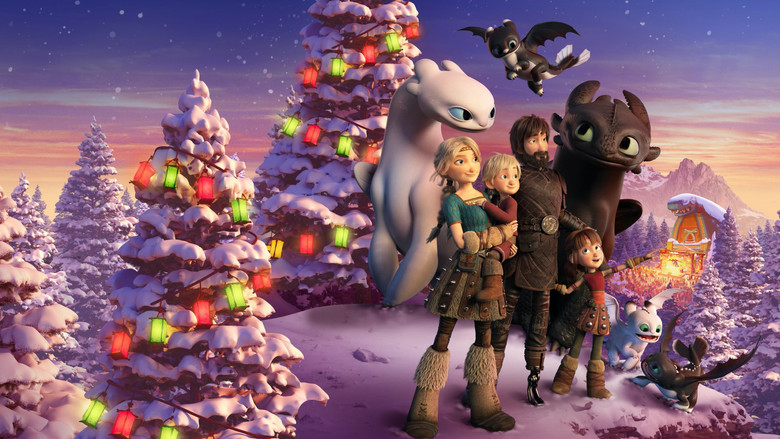
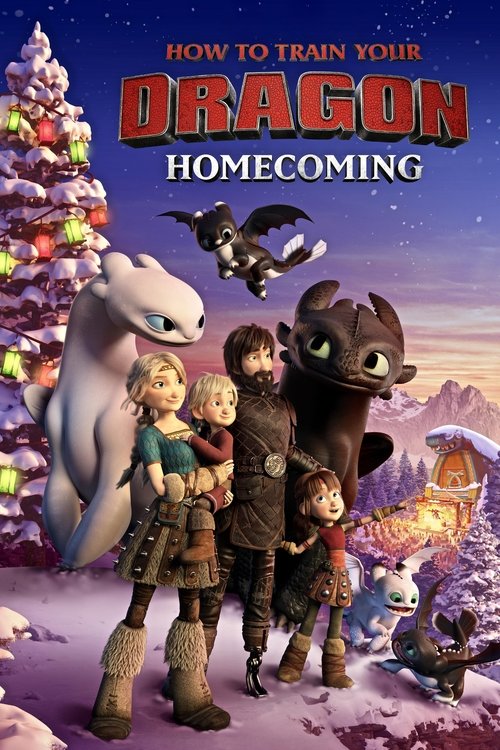
Set ten years after the events of "How to Train Your Dragon: The Hidden World," the Vikings of New Berk are preparing for their winter festival, Snoggletog. Hiccup and Astrid discover that their children, Zephyr and Nuffink, have developed a fear of dragons after finding Stoick the Vast's old journals from a time when Vikings and dragons were enemies. To revive the true history of their bond, Hiccup decides to stage a Snoggletog pageant retelling the story of his friendship with Toothless.
Meanwhile, in the Hidden World, Toothless deeply misses Hiccup and shows his own children, the Night Lights, drawings of his best friend. Their curiosity piqued, the young dragons secretly fly to New Berk to see the village for themselves. This sets the stage for a parallel journey of remembrance and discovery, as both Hiccup's family and Toothless's family work to keep the memory of their shared history alive.

Core Meaning
The core meaning of "How to Train Your Dragon: Homecoming" is that the strongest bonds of love and friendship transcend time and distance. The film champions the power of storytelling and tradition as essential tools for preserving legacy and passing down history to new generations. It serves as a poignant reminder that even when loved ones are physically apart, their memory and impact remain as long as they are held in the heart.
Thematic DNA
Memory and Legacy
The central conflict revolves around Hiccup's desire to preserve the true legacy of the human-dragon bond for his children and the village's new generation. He fears that without the dragons' physical presence, the memory of their friendship will fade and be replaced by the old fears, as symbolized by his children discovering Stoick's journals. The Snoggletog pageant is his direct attempt to combat this fading memory through active storytelling.
Bridging Generational Gaps
The film explores the disconnect between the generation that lived with dragons and the new generation that has grown up only hearing stories. Zephyr and Nuffink's fear represents a natural skepticism born from a lack of experience, which Hiccup and Astrid must overcome. The story illustrates the challenge parents face in conveying the significance of their own life-defining experiences to their children.
The Power of Storytelling
Storytelling is presented as the primary means of keeping history and love alive. Hiccup's pageant, though comically disastrous, ultimately succeeds in its mission to reframe the Viking-dragon history from one of conflict to one of friendship. In parallel, Toothless tells his own family the story of his bond with Hiccup through drawings in the sand, reinforcing the theme across both worlds.
Family and Tradition
Set during the Snoggletog holiday, the film is steeped in themes of family and tradition. It showcases Hiccup and Toothless as fathers, sharing stories with their children. The tradition of leaving fish out for the dragons shows that the village still honors their departed friends, and the entire plot is driven by the desire to create a new tradition (the pageant) to celebrate their shared past.
Character Analysis
Hiccup Horrendous Haddock III
Jay Baruchel
Motivation
To preserve the memory of the bond between humans and dragons for the new generation of Vikings who have never met them.
Character Arc
Hiccup's arc is one of a leader and father trying to ensure his legacy and the history of his people are not forgotten. He moves from worrying about his children's fear to taking proactive, creative steps (the pageant) to educate them, embodying his growth from an awkward boy to a wise chief.
Astrid Hofferson
America Ferrera
Motivation
To ensure her children grow up understanding the true, peaceful history of dragons and to support Hiccup in his role as chief and father.
Character Arc
Astrid serves as the emotional anchor and pragmatist. It is her idea to revive the Snoggletog Pageant. Her arc is less about personal change and more about reaffirming her role as Hiccup's partner in leadership and parenting, providing the crucial idea that sets the story in motion.
Zephyr Haddock
Madalyn Gonzalez
Motivation
Initially motivated by fear, her motivation shifts to curiosity after witnessing the pageant and ultimately meeting Toothless, wanting to understand the creatures her parents love.
Character Arc
Zephyr represents the new generation's perspective. Her arc is central to the film's theme, moving from fear and prejudice (gained from Stoick's journals) to wonder and acceptance after a face-to-face encounter with Toothless. Her change of heart is the ultimate measure of the pageant's success.
Gobber the Belch
Craig Ferguson
Motivation
To help Hiccup remind the children of New Berk about the importance of Stoick and the friendship with dragons, and to put on a spectacular (if chaotic) show.
Character Arc
Gobber's role is to provide humor and to help execute Hiccup's plan. He also serves as a keeper of memory, particularly of Stoick, whom he portrays in the pageant. His arc is static but essential for the film's comedic and nostalgic tone.
Symbols & Motifs
Stoick's Old Journals
The journals symbolize a past defined by fear and misunderstanding. They represent the old history that Hiccup must counteract—a history based on ignorance that threatens to repeat itself in his children's generation.
Hiccup's children, Zephyr and Nuffink, find the journals in the attic and, upon reading them, develop a deep fear of dragons, which ignites the main plot of the short film.
The Snoggletog Pageant
The pageant represents the active and conscious effort to shape a legacy. It is a tool for storytelling that allows the older generation to pass on their values and history to the younger generation in a way they can understand and appreciate.
To combat his children's newfound fear, Hiccup decides to bring back the Snoggletog Pageant to tell the story of how Vikings and dragons made peace. The chaotic but heartfelt performance becomes the film's centerpiece.
Toothless's Drawing in the Sand
This symbolizes the enduring and unspoken bond between Hiccup and Toothless. It demonstrates that the longing and memory are mutual, and that Toothless, despite being the king of his own world, still cherishes his past with Hiccup.
In the Hidden World, Toothless draws a picture of Hiccup and himself in the sand to show his family, which is what inspires the Night Lights to fly to New Berk.
Memorable Quotes
Our ancestors were terrified of dragons because they didn't know them, Astrid. We cannot let our kids go down that road.
— Hiccup
Context:
Hiccup says this to Astrid after they discover their children have become afraid of dragons after reading Stoick's old, anti-dragon journals.
Meaning:
This line encapsulates the core conflict and stakes of the film. It highlights Hiccup's fear that history will repeat itself and his determination to pass on a legacy of understanding rather than fear.
What if we brought the pageant back? We showed the children of New Berk how humans and dragons became friends.
— Astrid
Context:
Astrid proposes this to Hiccup as a way to re-educate their children and the village's youth about the true history of their bond with dragons.
Meaning:
This is the inciting idea that drives the entire plot. It establishes storytelling and tradition as the solution to the film's central problem and showcases Astrid's practical wisdom.
Our loved ones are always nearby, as long as we hold them in our hearts.
— Hiccup
Context:
Hiccup says this to his family at the end of the special, after seeing Toothless and his family fly away, realizing their connection remains strong despite the distance.
Meaning:
This is the film's ultimate moral, summarizing its theme of memory and enduring love. It provides an emotional resolution, affirming that physical separation cannot break true bonds.
Philosophical Questions
How do we keep important memories alive when tangible proof is gone?
The film directly tackles this question through the absence of dragons. Hiccup realizes that simply telling stories isn't enough; he must create an immersive experience—the pageant—to make the memory tangible and emotionally resonant for a new generation. It suggests that preserving memory is an active, creative process, not a passive one.
Can history be defined by the stories we choose to tell?
"Homecoming" demonstrates that history is malleable and dependent on perspective. Stoick's journals tell one version of history—dragons as monsters. Hiccup's pageant tells another—dragons as friends. The film argues for the conscious shaping of historical narratives to promote positive values like empathy and understanding over fear.
Cultural Impact
As a holiday special, "How to Train Your Dragon: Homecoming" serves as a heartfelt epilogue to a beloved film trilogy. It provided fans with a final, satisfying glimpse into the lives of Hiccup, Astrid, and Toothless, addressing the ten-year time jump before the main series' final scene. Critically, it was well-received for its emotional weight and nostalgic tone, winning an Annie Award. While not as culturally significant as the feature films, it functions as a perfect capstone to the franchise, reinforcing its core themes of family, love, and the importance of preserving history. It was praised by audiences as a charming and wholesome addition that offered closure.
Audience Reception
Audience reception for "How to Train Your Dragon: Homecoming" was overwhelmingly positive. Fans praised it as a heartwarming and emotional special that provided a welcome return to the world of Berk. Many viewers appreciated seeing Hiccup and Astrid as parents and getting to know their children, Zephyr and Nuffink. The reunion with Toothless and his new family was a highlight for most. Some minor criticisms pointed to the short runtime, with some fans wishing for a longer story. There was also some fan discussion and confusion regarding its placement in the timeline relative to the epilogue of "The Hidden World," but this did not detract from the overall enjoyment for most viewers.
Interesting Facts
- The special is set ten years after the main events of "How to Train Your Dragon: The Hidden World" but takes place just before that film's epilogue scene.
- It premiered on NBC on December 3, 2019, and was also released on DVD.
- The short film won the Annie Award for Best Animated Special Production.
- Liam Ferguson, who provides the vocal effects for Nuffink, is the son of Craig Ferguson, the voice of Gobber.
- Director Tim Johnson also co-directed other DreamWorks Animation films such as "Antz" and "Home".
Easter Eggs
Gobber's disastrous pageant performance.
The play-within-a-play comically re-enacts and references key moments from the first film, such as Hiccup first meeting Toothless. The climax, where the real Toothless appears amidst the smoke and chaos to help finish the scene, directly mirrors the moment of their bonding in the cove.
Stoick's portrayal in the pageant.
Gobber's portrayal of Stoick the Vast serves as a tribute to the character, keeping his memory and impact on the village alive. It reinforces the film's theme of honoring the past and the legacy of previous generations.
⚠️ Spoiler Analysis
Click to reveal detailed analysis with spoilers
Frequently Asked Questions
Explore More About This Movie
Dive deeper into specific aspects of the movie with our detailed analysis pages
Comments (0)
No comments yet. Be the first to share your thoughts!