Skip to content
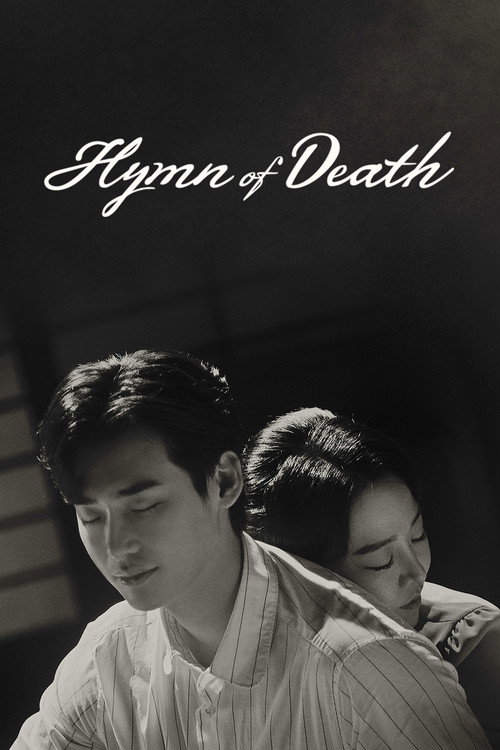
Hymn of Death
A melancholic period melodrama shrouded in unspoken grief, where doomed artistic passion resembles a solitary gramophone spinning in the ocean mist, playing its final waltz before slipping silently beneath the dark waters.
Hymn of Death

Hymn of Death

사의찬미

"The last song sung at the end of life."

27 November 2018 — 04 December 2018 South Korea 1 season 6 episode Ended 8.3 (113)

Cast: Lee Jong-suk, Shin Hye-sun, Park Sun-im, Lee Ji-hoon, Kim Kang-hyun

Drama Artistic Expression as Political Resistance The Crushing Weight of Filial Duty and Patriarchal Expectations The Tragic Dilemma of the "New Woman" (Sin-yeoseong) Love as an Uncompromising Sanctuary Death as Liberating Rest

Overview

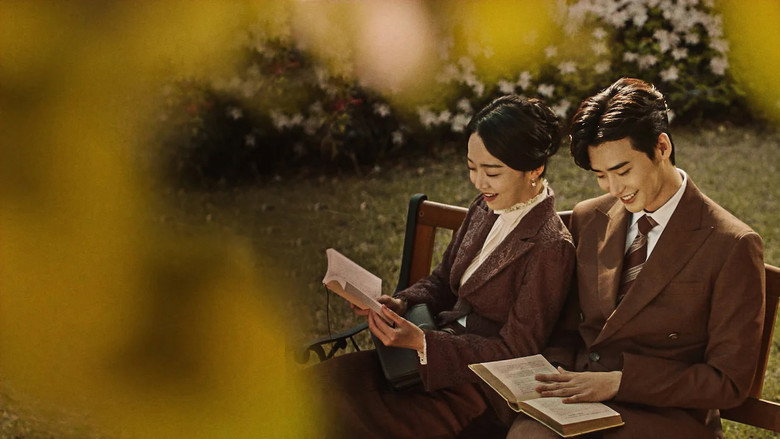
Hymn of Death (Korean: 사의찬미; Saui Chanmi) is a 2018 South Korean historical melodrama miniseries broadcast on SBS and distributed internationally via Netflix. Set in the 1920s against the oppressive backdrop of the Japanese colonial occupation of Korea, the narrative follows the intersecting lives of Kim U-jin (Lee Jong-suk), an aristocratic heir and avant-garde playwright studying English literature at Tokyo's Waseda University, and Yun Sim-deok (Shin Hye-sun), a brilliant vocalist destined to become Korea's first Western-trained classical soprano.

Their initial encounter takes place through the Dong Woo-hee, an expatriate student theatre collective dedicated to staging modern stage plays in their native tongue. Despite an antagonistic first meeting sparked by artistic stubbornness, mutual intellectual respect quickly blossoms into deep emotional affinity. However, their creative and romantic connection is circumscribed by rigid societal boundaries: U-jin is bound to an arranged marriage back home and crushed under paternal expectations to abandon the arts, while Sim-deok shoulders the suffocating financial burden of supporting her impoverished family as an unmarried modern woman.

As historical tensions tighten and censorship criminalizes creative expression in their occupied homeland, the two artists are repeatedly separated and drawn back together by longing. The miniseries traces the trajectory of their doomed romance across Tokyo and Seoul, exploring the collision between filial piety, institutional repression, personal freedom, and artistic purpose.

Core Meaning

The central thesis of Hymn of Death is that true living is defined by the autonomy of the human spirit rather than mere physical survival under existential compromise. Through the tragic biographies of Kim U-jin and Yun Sim-deok, the creators articulate that when totalitarian occupation, patriarchal tyranny, and economic exploitation strip an individual of their voice and authenticity, claiming mastery over one's own fate—even in death—becomes the ultimate assertion of human agency and dignity. The series posits art and love not merely as romantic escapism, but as radical rebellions against spiritual enslavement.

Thematic DNA

Artistic Expression as Political Resistance 25%
The Crushing Weight of Filial Duty and Patriarchal Expectations 25%
The Tragic Dilemma of the "New Woman" (Sin-yeoseong) 20%
Love as an Uncompromising Sanctuary 15%
Death as Liberating Rest 15%

Artistic Expression as Political Resistance

Under colonial subjugation, the characters discover that staging plays and singing Western hymns in the Korean language is considered an act of defiance. U-jin’s writing and Sim-deok’s vocal performances become their sole means of preserving national and individual identity when imperial censors dictate what can be said and thought.

The Crushing Weight of Filial Duty and Patriarchal Expectations

Both leads are trapped by generational obligations. U-jin’s authoritarian father views literature as frivolous madness and demands his son run the family business, while Sim-deok’s parents exploit her voice to secure funding for her siblings' education. The tension between self-actualization and filial debt suffocates their spirits.

The Tragic Dilemma of the "New Woman" (Sin-yeoseong)

Sim-deok embodies the early 20th-century ideal of the educated, independent modern woman. Yet her progressive status leaves her socially alienated: scandalized by malicious public gossip, objectified by colonial authorities, and denied the very independence modernity promised.

Love as an Uncompromising Sanctuary

In a world demanding compliance, U-jin and Sim-deok’s bond is the only space where neither has to wear a mask. Their relationship transcends physical possession; it represents a communion of souls who recognize one another's existential solitude.

Death as Liberating Rest

Rather than portraying their fate as irrational defeat, the narrative frames death as a deliberate entry into eternal peace and unbroken companionship—choosing non-existence over a life of constant compromise.

Character Analysis

Kim U-jin

Lee Jong-suk

Archetype: The Brooding Tragic Artist / Rebel Key Trait: Quiet moral gravity and intellectual melancholy.

Motivation

Initially aims to reconcile duty and passion; evolves into desiring absolute spiritual freedom and peaceful rest.

Character Arc

Begins as a closed-off, repressed scholar torn between obedient son and visionary writer; transforms into a man who defies his lineage and colonial censorship to claim his own destiny alongside Sim-deok.

Yun Sim-deok

Shin Hye-sun

Archetype: The Trailblazing Free Spirit / Tragic Heroine Key Trait: Passionate, defiant independence masking vulnerability.

Motivation

Strives to support her impoverished family through art, evolving into a longing to live genuinely without pretense.

Character Arc

Starts as a spirited, ambitious vocal student determined to achieve professional acclaim; gradually weathers social defamation, familial financial exploitation, and imperial coercion until she chooses her own terms of exit.

All 5 characters and cast

Symbols & Motifs

The Fedora / Hat

Meaning:

Serves as a physical relic of unspoken love and deferred dreams.

Context:

Purchased by Sim-deok after U-jin compliments her appearance, she leaves it behind in his study after discovering his marriage. U-jin keeps it stored inside his drawer for years.

Shoes on the Ship Deck

Meaning:

Symbolizes intentionality, solidarity, and the total abandonment of earthly burdens.

Context:

Introduced in the opening flash-forward and returned to in the finale, where a man’s dress shoes are placed neatly alongside a woman’s pumps on the deck of the steamship Tokuju Maru.

The Gramophone and Record ("Praise of Death")

Meaning:

Captures her voice for eternity while simultaneously serving as the documentation and lyrics of her own eulogy.

Context:

Recorded by Sim-deok in Osaka—set to Iosif Ivanovici's Waves of the Danube—and later listened to on the gramophone in their cabin during their final hours on the ferry.

Arishima Takeo's Literature

Meaning:

Foreshadows the couple's ultimate trajectory and provides an intellectual reference point for their worldview on autonomy and suicide.

Context:

U-jin is seen reading works by Japanese author Arishima Takeo in the opening act, and the couple later discusses his 1923 double suicide with his lover.

The Pen and Manuscript

Meaning:

Represents U-jin's fragile identity and his refusal to succumb to spiritual death.

Context:

Used by U-jin to write plays and poetry; when his father demands he abandon writing and burns his work, U-jin clings to his fountain pen as an act of resistance.

Memorable Quotes

너, 살고 있는가? 아니, 나는 죽기를 바란다. 참으로 살기 위하여.
— Kim U-jin

Context

Delivered as a voiceover in Episode 6 while U-jin writes in Tokyo, quoting from his 1926 poem Theory of Life and Death.

Meaning

Crystallizes the thematic core of the series: confronting physical mortality as the only path to authentic spiritual survival.

인생에서 처음이자 마지막으로 가장 나다운 삶을 살아볼 생각이에요. 설령 그 삶이 고생의 종말일지라도.
— Yun Sim-deok

Context

Spoken to Kim U-jin in Episode 6 while discussing the suicide of Arishima Takeo.

Meaning

Articulates her resolve to step outside societal pressures and live genuinely for the first time, even if it leads to absolute termination.

All 5 quotes

Episode Highlights

Season 1, Episode 1

S1E1

Opens with the striking framing device of two pairs of abandoned shoes on the deck of the Tokuju Maru before flashing back to 1921 Tokyo. Introduces U-jin's intellectual gravity and Sim-deok's fiery audition for the Dong Woo-hee theatre troupe.

Significance:

Establishes the contrast between artistic liberation in Japan and impending national subjugation, anchoring the fateful mystery of their relationship.

Season 1, Episode 2

S1E2

The touring troupe stages their play across Korea to cheering crowds, culminating in U-jin’s arrest by colonial police for incorporating patriotic dialogue on lost national freedom. Sim-deok waits anxiously outside the police station and tends to his wounds.

Significance:

Deepens Sim-deok's romantic realization as she witnesses the physical cost of his artistic rebellion under imperial surveillance.

Season 1, Episode 3

S1E3

Sim-deok visits U-jin’s family estate in Mokpo only to discover that he is already married to a woman chosen by his authoritarian father. Devastated, she departs quietly, leaving behind the fedora he admired.

Significance:

Marks the turning point of their emotional trajectory, fracturing their connection and establishing years of painful separation and unresolved longing.

Season 1, Episode 4

S1E4

Set five years later in 1926. Sim-deok returns to Korea as an acclaimed soprano facing grueling financial burdens from family debts, while U-jin is suffocated by accounting work at his father’s enterprise. They accidentally reunite in Seoul.

Significance:

Demonstrates that their mutual feelings and intellectual connection remain undiminished despite time, societal distance, and personal entrapment.

Season 1, Episode 5

S1E5

U-jin fiercely confronts his father to defend his humanity and flees to Tokyo to write under the pen name "Soosun." Simultaneously, Sim-deok is targeted by vicious rumors of sexual patronage and is blackmailed by the Japanese Governor-General to become an official state singer.

Significance:

Drives both protagonists to their absolute limits, leaving them with no remaining space in their homeland to live with dignity or artistic freedom.

Season 1, Episode 6

S1E6

Sim-deok records "Praise of Death" in Osaka and reunites with U-jin in Tokyo. Registering under the aliases Kim Soo-san and Yoon Duk-soon, they board the ferry Tokuju Maru bound for Busan, share a quiet barefoot waltz on the fog-drenched deck, and walk into the Genkai Sea together.

Significance:

Completes the narrative circle established in the premiere, presenting their joint exit as the ultimate act of liberation, rest, and autonomy.

Philosophical Questions

What constitutes genuine living?

The series explores whether biological survival without creative, emotional, and political truth counts as life, or whether it merely represents an existential compromise.

Can personal autonomy coexist with filial obligation?

Through the crushing domestic demands placed on both leads, the drama examines where an individual's moral duty to parents ends when fulfilling that duty requires the total destruction of the self.

Does tragic art immortalize the artist, or merely memorialize their defeat?

By highlighting the recording and lasting legacy of Saui Chanmi, the narrative questions whether such artistic works represent a lasting victory of beauty or a permanent record of systemic oppression.

How It Ends

Alternative Interpretations

The series invites three distinct readings:

Full ending explanation

Cultural Impact

Hymn of Death dramatizes one of the most famous real-life urban legends and tragic love stories in modern Korean history. The suicide of Kim U-jin and Yun Sim-deok in August 1926 became a cultural sensation; when her final recording, Saui Chanmi, was released shortly after her disappearance, it sold over 100,000 shellac discs, becoming what historians consider the first mass-market Korean popular song.

While previously adapted into plays, musicals, and an acclaimed 1991 feature film titled Death Song, this 2018 television series reframed the narrative for contemporary international streaming audiences, shifting away from tabloid sensationalism to emphasize youth, colonial alienation, and existential autonomy.

Audience Reception

Critically, Hymn of Death was commended for its restrained directing, lush period aesthetics, poetic tone, and evocative original soundtrack. Lee Jong-suk’s understated, brooding interpretation of Kim U-jin and Shin Hye-sun’s vulnerable, dignified portrayal of Yun Sim-deok earned wide acclaim from both domestic and international critics.

The primary critique focused on its compressed broadcast format. Critics and viewers observed that six 35-minute episodes provided insufficient narrative room to fully convey the five-year passage of time, causing the couple's final escalation toward suicide to feel abrupt for viewers unfamiliar with the history. Additionally, some viewers expressed discomfort regarding the sympathetic portrayal of an extramarital bond that sidelined U-jin's arranged wife. Nevertheless, it remains highly regarded as a haunting, boutique miniseries.

Interesting Facts

  • Lead actor Lee Jong-suk opted to star in the drama without taking any appearance fee out of admiration for short-form drama and loyalty to director Park Soo-jin.
  • The drama marked a reunion between Lee Jong-suk and Shin Hye-sun, who previously acted together five years earlier as high school classmates in School 2013.
  • The poems and diary entries voiced by Lee Jong-suk throughout the drama (such as Theory of Life and Death and Trace of Heart) were pulled directly from the preserved 1920s writings of the real Kim U-jin.
  • Originally commissioned as an SBS drama special, the production was broadcast in an unconventional format of six 35-minute episodes over three non-consecutive nights before being recut into three one-hour episodes for Netflix.
  • While Shin Hye-sun performed operatic breathing and mouth choreography on set, her musical vocal tracks were dubbed by professional classical vocalists.

Easter Eggs

Historical Alias Inscriptions

When registering on the passenger ledger of the Tokuju Maru on August 4, 1926, the aliases used by the characters—Kim Soo-san and Yoon Duk-soon—are the exact pseudonyms documented in the real-world historical ship manifest.

Arishima Takeo's Shadow

Discussions regarding Japanese author Arishima Takeo directly reference his actual 1923 double suicide with editor Akiko Hatano, which served as a major shock to East Asian intellectuals and foreshadowed the path of the leads.

Hong Nan-pa's Real Legacy

The character of Hong Nan-pa references one of Korea's actual early Western-style classical composers, celebrated historically for compositions such as Bongseonhwa (Balsam Flower).

Frequently Asked Questions

Explore More About This Movie

Dive deeper into specific aspects of the movie with our detailed analysis pages

Comments (0)

Leave a comment

No comments yet. Be the first to share your thoughts!

Similar Movies