Skip to content
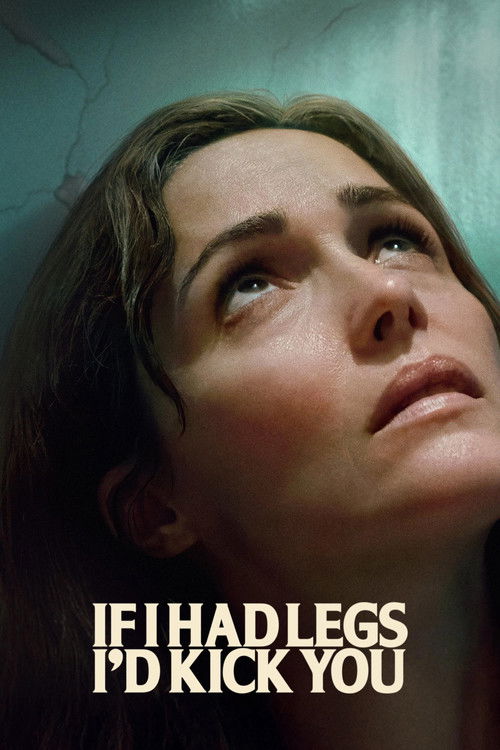
If I Had Legs I'd Kick You
A claustrophobic psychological horror-comedy steeped in asphyxiating maternal panic, following a woman slowly drowning in dry air beneath the ruin of her domestic life.
If I Had Legs I'd Kick You

If I Had Legs I'd Kick You

"Everything is under control."

10 October 2025 United States of America 113 min 6.3 (407)

Director: Mary Bronstein

Cast: Rose Byrne, Conan O'Brien, A$AP Rocky, Danielle Macdonald, Delaney Quinn

Drama The Taboo of Maternal Resentment and Burnout Isolation and the Unequal Burden of Care The Breakdown of Psychoanalytic Pretense Domestic Decay and Bodily Claustrophobia
Budget: $1,500,000
Box Office: $1,709,642

Overview

If I Had Legs I'd Kick You is a psychological comedy-drama written and directed by Mary Bronstein. The film follows Linda (Rose Byrne), a practicing psychotherapist in Montauk, New York, who is balancing her demanding professional caseload against the grinding emotional and physical toll of raising a young daughter suffering from a chronic pediatric feeding disorder. The child requires nightly nourishment administered through an enteral feeding pump as well as daily attendance at a specialized day hospital program. With her husband Charles (voiced by Christian Slater), a ship captain, absent on an eight-week voyage at sea, Linda must manage the medical routine entirely alone.

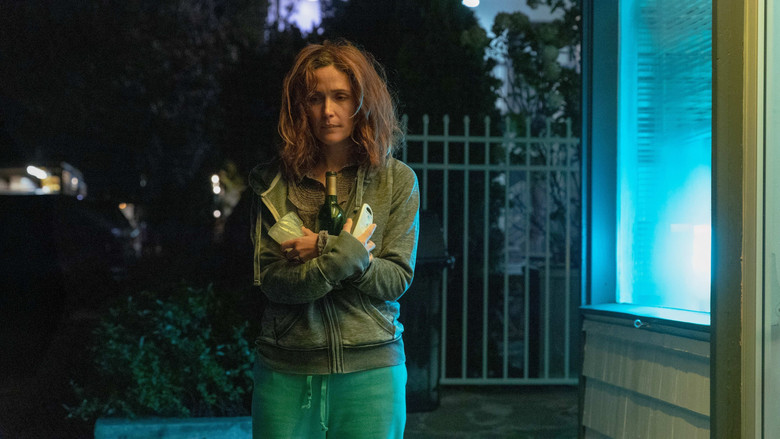
The precarious equilibrium of Linda’s daily existence collapses when the ceiling of their Montauk residence caves in from water damage, forcing mother and daughter into temporary exile at a rundown roadside motel. Uprooted and profoundly sleep-deprived from the rhythmic hum and beeping of her daughter’s medical machinery, Linda’s nights become a sanctuary of desperate escapism involving junk food, alcohol, and weed outside the room. Along the way, she crosses paths with an eccentric cast of peripheral figures, including Diana (Ivy Wolk), the motel’s acerbic front desk clerk; James (A$AP Rocky), the motel’s easygoing superintendent; and Caroline (Danielle Macdonald).

As Linda grapples with the sudden disappearance of one of her therapy patients, her internal friction spills over into her own treatment sessions. Sitting across from her therapist (Conan O'Brien), Linda’s suppressed resentment transforms into a combative, darkly comic psychological sparring match. Threaded with deadpan absurdity and unrelenting tension, the narrative tracks Linda’s unraveling as she navigates the unspeakable isolation and ambivalence of maternal caretaking.


Core Meaning

Mary Bronstein conceived the film to articulate the taboo realities of maternal resentment, rage, and chronic caregiver burnout. Rather than presenting motherhood as an idealized narrative of selfless nobility, the film examines the terror of feeling emotionally enslaved to a dependent being whose survival requires total self-abnegation. Bronstein framed the work as a feminine inversion of David Lynch’s Eraserhead, explaining that while Lynch's classic addresses a male fear of paternal entrapment from which the man can theoretically walk away, Linda exists in an inescapable biological and societal bind: she cannot leave.

The core message explores how unconditional love can coexist with unspeakable anger. Under unrelenting trauma, the person receiving care can unintentionally turn into an object of fear and burden rather than a subject of love. Empathy and reconnection cannot happen until a caregiver’s suppressed agony is fully externalized and faced, stripping away martyrdom to confront the human being on the other side.

Thematic DNA

The Taboo of Maternal Resentment and Burnout 35%
Isolation and the Unequal Burden of Care 25%
The Breakdown of Psychoanalytic Pretense 20%
Domestic Decay and Bodily Claustrophobia 20%

The Taboo of Maternal Resentment and Burnout

The film directly dismantles societal expectations of maternal devotion. Linda’s exhaustion leads to dark emotional ambivalence toward her chronically ill child, exposing the forbidden desire of a devoted mother wishing to escape her own life.

Isolation and the Unequal Burden of Care

Linda’s isolation is exacerbated by institutional and domestic abandonment. While her husband is physically removed at sea and emotionally distant across phone calls, Linda is trapped in domestic trenches, bearing the invisible, non-stop mental and administrative workload.

The Breakdown of Psychoanalytic Pretense

Linda is a therapist who cannot heal herself, while her hostile sessions with her own therapist demonstrate the limits of formal clinical language in the face of raw, primal panic.

Domestic Decay and Bodily Claustrophobia

The breakdown of the home and the medicalization of the child's body mirror Linda's unraveling mental state. Entrapment shifts from physical walls to motel rooms, medical tubes, and endless routines.

Character Analysis

Linda

Rose Byrne

Archetype: Tragic Antihero / Reluctant Caregiver Key Trait: Prickly, razor-sharp hyper-verbal exhaustion

Motivation

To cure her daughter while harboring an unacknowledged urge to flee her suffocating reality.

Character Arc

Starts as a hyper-vigilant professional barely holding together the seams of her life; spirals through sleeplessness, displacement, and defensive aggression into complete breakdown; ultimately finds a stripped-down moment of human recognition.

The Therapist

Conan O'Brien

Archetype: Unorthodox / Adversarial Mentor Key Trait: Dry, deadpan clinical authority laced with rising bewilderment

Motivation

To enforce therapeutic boundaries against an antagonistic, defensive client.

Character Arc

Exists as Linda’s emotional foil in therapy sessions, shifting from analytical composure to petty exasperation as Linda punctures his clinical detachment.

All 5 characters and cast

Symbols & Motifs

The Collapsed Ceiling / The Hole

Meaning:

A physical manifestation of Linda's crumbling domestic world, exposing a literal and psychological void she cannot repair and forcing her into rootless instability.

Context:

Occurs early in the film when water damage causes the ceiling of Linda's Montauk home to suddenly cave in and flood, precipitating her exile to the roadside motel.

The Enteral Feeding Pump and Gastric Tube

Meaning:

Serves as both a literal medical tether and an emotional umbilical cord, symbolizing the synthetic, medicalized barrier separating normal childhood from perpetual crisis.

Context:

Present nightly in the bedroom and motel room, where its repetitive mechanical hums, churns, and beeps drive Linda to severe sleep deprivation.

The Off-Screen Child

Meaning:

Symbolizes Linda’s perceptual dissociation, rendering the child an omnipresent, suffocating entity of obligation rather than an individual human being.

Context:

Employed as a formal technique throughout almost the entire runtime, keeping the child framed out of sight except for partial glimpses, the back of her head, or her disembodied voice.

The Ocean / Water

Meaning:

Embodies the overwhelming tide of Linda's parental responsibilities alongside her temptation toward total surrender, release, and oblivion.

Context:

Begins with the interior ceiling flooding in Montauk and culminates in Linda fleeing to the cold sand by the crashing surf of the shore during her breaking point.

Memorable Quotes

Eraserhead is about a type of parental anxiety that only men can have. And this is a film about a parental anxiety only a woman can have. In Eraserhead, he can leave and that's his angst. Linda cannot leave. That's hers.
— Mary Bronstein

Context

Stated by the director during the film's press rollout to frame the narrative as a feminine inversion of Lynch's work.

Meaning

Articulates the programmatic thesis and thematic engine of the entire film: the inescapable physical and societal reality of maternal responsibility.

I still don't want to eat food, it's too squishy.
— The Child (Delaney Quinn)

Context

Uttered in the motel room in the aftermath of a harrowing tube-feeding crisis where the tube was pulled out.

Meaning

A moment of black comedy highlighting the agonizing, irrational simplicity of childhood disorders that push adult caregivers past their breaking point.

All 3 quotes

Philosophical Questions

Can love exist simultaneously with acute resentment?

The film examines whether maternal devotion has biological and psychological breaking points where long-term self-abnegation curdles into visceral, suppressed rage.

What occurs when the self is subordinated to another's survival?

It investigates the fragmentation of identity that happens when an individual's emotional and physical existence is fully overtaken by the medical routines of a dependent.

Where does empathy go when suffering becomes routine?

The narrative explores the gradual erosion of clinical and maternal emotional availability under unrelenting, everyday trauma and sleeplessness.

Alternative Interpretations

The film can be read through several distinct lenses:

Full ending explanation

Cultural Impact

Premiering during a notable cultural shift in independent cinema toward unvarnished depictions of maternal ambivalence and burnout, the film stood alongside works exploring parental horror through psychological realism. Distributed by A24 following its Sundance premiere in January 2025, it garnered widespread acclaim, particularly for Rose Byrne’s central performance, which earned the Silver Bear at Berlin, an Independent Spirit Award, a Golden Globe Award, and an Academy Award nomination for Best Actress. It also sparked wider cultural discourse on platforms like Reddit and cultural outlets regarding the isolating realities of pediatric feeding disorders.

Audience Reception

Critical Acclaim: Unified praise centered on Rose Byrne’s performance, hailed as an electrifying, uncompromising masterclass in comic frustration and manic grief. Mary Bronstein's sharp script, tight claustrophobic pacing, and Conan O'Brien’s dramatic turn were also widely lauded.

Criticisms: Some viewers found the experience emotionally exhausting, noting that its unrelenting anxiety and refusal to offer traditional cinematic comfort made it painful to watch, with some divided over maternal hostility toward a sick child.

Debates: The deliberate choice to withhold the child's face until the final scene divided audiences between those viewing it as an inspired formal device and those finding it alienating.

Interesting Facts

  • Mary Bronstein began drafting the screenplay in a cramped California motel room while caring for her own chronically ill daughter, turning her personal caretaking isolation into creative fiction.
  • This marks Bronstein’s second feature directorial effort, arriving 17 years after her 2008 cult independent comedy Yeast.
  • The film was co-produced by Ronald Bronstein (Mary Bronstein’s longtime creative partner and husband) and Josh Safdie through production outfits including Fat City and Bronxburgh, bearing their trademark high-stress pacing.
  • Christian Slater’s performance as Charles is entirely vocal; to preserve real-life emotional and physical distance, his dialogue was recorded remotely to mirror the marital rift.
  • The daughter's face was deliberately kept out of frame throughout production to preserve audience alignment with Linda’s mental state and prevent instinctive viewer sympathy from drifting entirely to the child.
  • Rose Byrne won the Silver Bear for Best Leading Performance at the 75th Berlin International Film Festival for her role as Linda.

Easter Eggs

Homage to David Lynch’s Eraserhead (1977)

The film structures its soundscapes, grotesque domestic anxieties, and sickly infant dynamics as an intentional companion piece to Lynch's work, using the mechanical hum of the enteral pump as a domestic analogue to Lynch's industrial drones.

A24 Collaborator Cameos

Features indie actors and screen regulars like Daniel Zolghadri (Funny Pages) and Ivy Wolk, reinforcing the New York independent film ecosystem fostered by Ronald Bronstein and Josh Safdie.

Meta-Casting with Conan O'Brien

Plays directly against O'Brien's familiar television comedy persona by casting him as a measured, irritated therapist, generating offbeat tension that disarms the viewer.

Frequently Asked Questions

Explore More About This Movie

Dive deeper into specific aspects of the movie with our detailed analysis pages

Comments (0)

Leave a comment

No comments yet. Be the first to share your thoughts!

Similar Movies