Skip to content
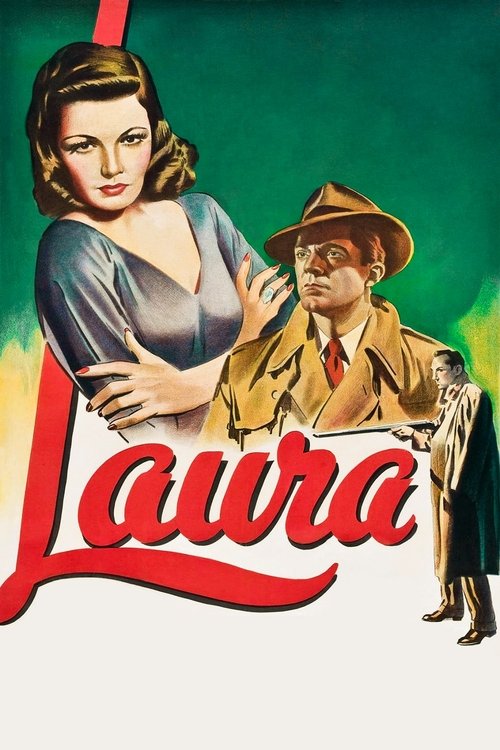
Laura
A velvet-shadowed noir fever dream in which a detective falls for a dead woman's portrait, and desire curls like cigarette smoke around a mystery that refuses to stay buried.
Laura

Laura

"The story of a love that became the most fearful thing that ever happened to a woman!"

11 October 1944 United States of America 88 min 7.6 (885)

Director: Otto Preminger

Cast: Dana Andrews, Gene Tierney, Clifton Webb, Vincent Price, Judith Anderson

Drama Mystery Obsession and idealization Objectification and identity Narrative control and truth Female independence Class and sophistication as masks
Budget: $1,020,000
Box Office: $2,000,000

Overview

In Manhattan, the beautiful and successful advertising executive Laura Hunt (Gene Tierney) has been found murdered in her apartment. Police detective Mark McPherson (Dana Andrews) takes the case and starts questioning the people closest to her. Chief among them is Waldo Lydecker (Clifton Webb), a waspish newspaper columnist who took the young Laura under his wing and made her a success.

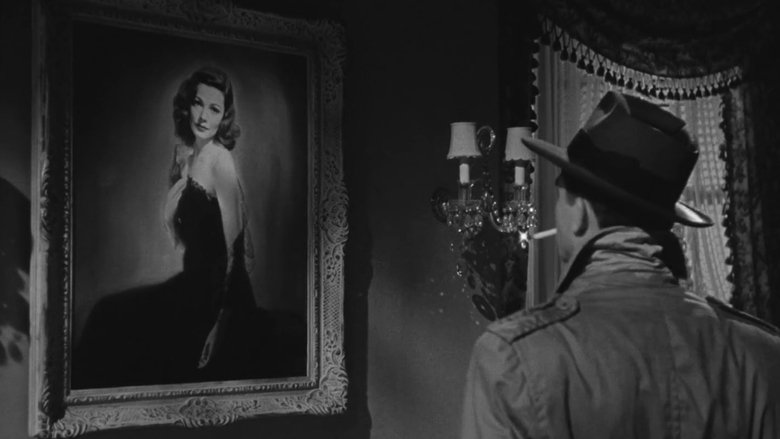
The other suspects include her charming, shiftless fiancé Shelby Carpenter (Vincent Price) and her wealthy aunt Ann Treadwell (Judith Anderson). Each of them remembers a different Laura, and McPherson pieces her together from flashbacks, letters, diaries and the large portrait that hangs over her fireplace.

The more he learns, the more this methodical detective finds himself drawn to the woman he is supposed to be avenging. Laura is a murder mystery, but it's also a strange, dreamlike study of fixation, and it has a famous mid-film turn that changes everything you've watched so far.
Core Meaning

At its heart, Laura is about the gap between a real woman and the images men build of her. Waldo, Shelby and McPherson each love a version of Laura. Critics have noted that the men "hate and want her based upon an illusion: that she is the 'perfect woman.'" Preminger treats this obsessive male gaze as tragic and shows the danger of loving an idealized picture.

The film also asks who gets to tell a woman's story. Waldo opens the film as narrator, claiming he was "the only one who really knew her." When Laura finally speaks for herself, his narration disappears. The message is that people refuse to be owned, whether by possessive love, by the stories others write about them, or by the portraits that stand in for them.

Thematic DNA

Obsession and idealization 30%
Objectification and identity 25%
Narrative control and truth 20%
Female independence 15%
Class and sophistication as masks 10%

Obsession and idealization

McPherson falls in love with a dead woman through her portrait, her letters and her diary. Waldo's love has turned into ownership. The film presents these fixations as romantic on the surface and disturbing underneath.

Objectification and identity

Laura's portrait hangs over the story, and she is known mostly through other people's memories. The film is about forced femininity and the struggle of a woman to be seen as a person rather than an image.

Narrative control and truth

Waldo shapes the story from the first line. He boasts, "My version was obviously superior," because to him the truth doesn't matter. When he loses control of the narration, he loses control of Laura.

Female independence

Laura's power seems at first to come from how attractive men find her. But she is also confident, perceptive and very successful in advertising, which gives the film a quiet, ambivalent strand of female empowerment.

Class and sophistication as masks

Waldo's elegant apartment, Ann Treadwell's wealth and Shelby's easy charm all hide moral emptiness. The working-class detective moves through this polished world as an outsider.

Character Analysis

Laura Hunt

Gene Tierney

Archetype: The idealized woman / enigma Key Trait: Elegant, perceptive independence

Motivation

Independence, a career of her own and genuine love rather than possession.

Character Arc

She starts as an absence, known only through a portrait and flashbacks. Later she speaks for herself and resists the men who want to own her.

Mark McPherson

Dana Andrews

Archetype: The hard-boiled detective Key Trait: Laconic restraint

Motivation

At first, solving the murder. Later, his growing love for Laura.

Character Arc

He begins as a cool, working-class cop and gradually becomes obsessed with the woman at the centre of his case, so the investigation turns into romantic fixation.

All 5 characters and cast

Symbols & Motifs

Laura's portrait

Meaning:

The idealized, frozen image of a woman. It is the illusion men fall in love with, as opposed to the living person.

Context:

The film opens on the portrait, and it looms over the action in Laura's apartment. McPherson gazes at it until he falls asleep beneath it, right before the story changes course.

Waldo's narration

Meaning:

Male authorship and possession: the attempt to own a woman by writing her story.

Context:

Waldo narrates the opening ("I shall never forget the weekend Laura died…"). His voiceover vanishes once Laura returns and speaks for herself.

The clock

Meaning:

Time, sophistication and hidden secrets. Waldo's refined taste is literally the hiding place for violence.

Context:

A distinctive clock appears in both Waldo's apartment and Laura's. It becomes central to solving the mystery.

McPherson's handheld puzzle game

Meaning:

The detective's patience and his emotional detachment, which slowly give way to obsession.

Context:

McPherson fidgets with a small ball-bearing puzzle while he interrogates people, a sign of his calm, methodical approach.

Shadows and light

Meaning:

Moral ambiguity and the line between dream and reality.

Context:

Joseph LaShelle's Oscar-winning photography uses deep shadows and burnished highlights to give the story its dreamlike, noir atmosphere.

Memorable Quotes

I shall never forget the weekend Laura died. A silver sun burned through the sky like a huge magnifying glass. It was the hottest Sunday in my recollection. I felt as if I were the only human being left in New York.
— Waldo Lydecker

Context

Waldo's voiceover opens the film as McPherson arrives at his apartment.

Meaning

One of the most famous openings in noir. It puts Waldo in charge of the story and frames Laura's death as his own personal loss.

I, Waldo Lydecker, was the only one who really knew her.
— Waldo Lydecker

Context

Part of the opening narration.

Meaning

This shows his possessive claim over Laura, the claim the film goes on to take apart.

All 6 quotes

Philosophical Questions

Can we love someone we know only through images and other people's stories?

McPherson falls for Laura through her portrait, her letters and other people's memories. The film asks whether that is love or projection.

Who owns a person's story?

Waldo narrates Laura's life as though it belongs to him. Her return breaks his authorship, which raises questions about identity and self-definition.

Where does devotion end and possession begin?

Waldo calls love the strongest motive in history. The film shows how devotion can turn into jealousy and violence.

Is truth less important than a good story?

Waldo prefers his own "superior" version of events to the facts. The film ties this aesthetic vanity to moral corruption.

How It Ends

Alternative Interpretations

The dream reading: McPherson falls asleep under Laura's portrait just before she comes back, and some critics describe the second half as "hallucinatory." It can be read as the detective's wish-fulfillment dream, in which his obsession makes her real.

Full ending explanation

Cultural Impact

Laura was made in 1944, as American film noir was taking shape, and it became one of the defining titles of the style. Critics note that it mixes the look of German Expressionism and F.W. Murnau's silent films with new ideas about obsession and fetishization.

The film established Otto Preminger as a director after a troubled production in which he replaced Rouben Mamoulian. Joseph LaShelle won an Oscar for the cinematography, and David Raksin's theme became one of the best-known pieces of film music of its time. The AFI ranks it No. 4 among the greatest American mysteries. Critics still write about it: Collider has argued that, 80 years on, no noir mystery has matched its "audacity and brilliance."

Its motif of a man falling in love with the image of a woman he believes is dead has been widely discussed as an influence on later films about obsession. Film writers today often analyze it for its treatment of the male gaze and objectification.

Audience Reception

Audiences and critics still rank Laura among the great noirs. People most often praise Clifton Webb's venomous Waldo Lydecker, Gene Tierney's luminous presence, LaShelle's cinematography, Raksin's haunting theme and the famous mid-film twist. Critics call it "exceptionally stylized" and dreamy.

The usual criticisms are that Dana Andrews's detective is stiff, that the resolution is somewhat conventional compared with the daring premise, and that the film drags in places. Some modern viewers are uneasy about how romantically it treats obsession. Overall, it is regarded as a stylish, witty and unsettling classic.

Interesting Facts

  • The film is based on Vera Caspary's 1943 novel 'Laura'.
  • Otto Preminger secured the rights to the novel, but Darryl F. Zanuck at 20th Century Fox first approved Rouben Mamoulian as director, with Preminger only producing.
  • Mamoulian shot for 18 days before he was fired and left Fox. Preminger then got Zanuck's permission to take over as director.
  • When Preminger took over, he scrapped all of Mamoulian's footage and replaced cinematographer Lucien Ballard with Joseph LaShelle.
  • Joseph LaShelle won the Academy Award for his cinematography on 'Laura'.
  • David Raksin composed the score, including the film's famous haunting theme.
  • The American Film Institute ranks 'Laura' No. 4 on its list of the greatest American mystery films.

Frequently Asked Questions

Explore More About This Movie

Dive deeper into specific aspects of the movie with our detailed analysis pages

Comments (0)

Leave a comment

No comments yet. Be the first to share your thoughts!

Similar Movies