Skip to content
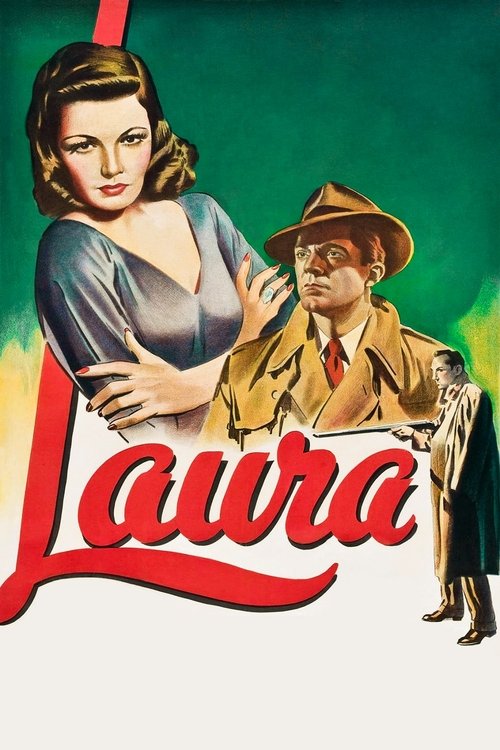
Laura
A velvet-shadowed noir fever dream in which a detective falls for a dead woman's portrait, and desire curls like cigarette smoke around a mystery that refuses to stay buried.
Laura
Laura

"The story of a love that became the most fearful thing that ever happened to a woman!"

11 October 1944 United States of America 88 min 7.6 (885)

Director: Otto Preminger

Cast: Dana Andrews, Gene Tierney, Clifton Webb, Vincent Price, Judith Anderson

Drama Mystery Obsession and idealization Objectification and identity Narrative control and truth Female independence Class and sophistication as masks
Budget: $1,020,000
Box Office: $2,000,000

Laura — Ending Explained

⚠️ Spoiler Analysis

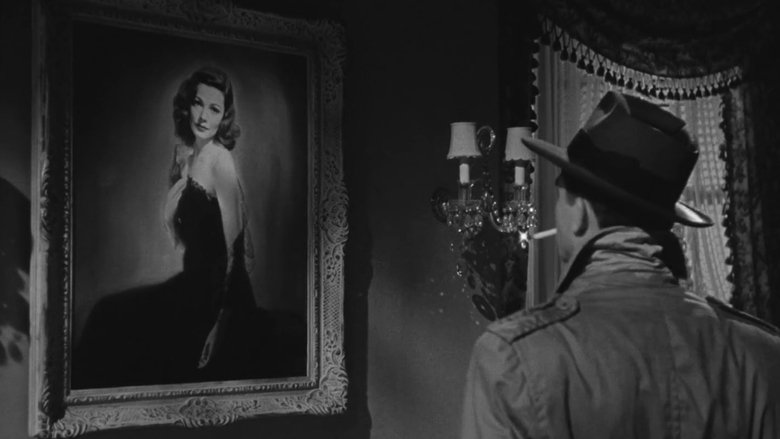
The central twist: Laura isn't dead. Midway through, while McPherson is asleep in her apartment beneath her portrait, Laura walks in alive. She had been away in the country. The woman killed in her doorway was someone else, a model Shelby had brought to the apartment, whose face was destroyed by the shotgun blast. Laura's return makes her a suspect in the murder, and the mystery turns into what critics call a hallucinatory narrative.

Structural meaning: Once Laura returns, Waldo's voiceover disappears for good. She "returns from the dead to speak for herself." Looking back, this shows that the first half was a woman constructed by men's memories and fantasies, and the second half is her taking back her identity.

The killer: Waldo Lydecker committed the murder. He meant to kill Laura out of jealousy, rather than let her belong to another man, and killed the wrong woman. He hid the weapon in the clock. His line \"Murder is my favorite crime\" and his claim to be the only one who \"really knew her\" read very differently once you know this. In the climax he comes back to finish what he started, and his possessive love ends in his own death.

Hidden meaning: Waldo's obsession and McPherson's are mirror images. Both loved the portrait before the woman. The ending contrasts love that insists on owning her with love that has to accept Laura as a living, independent person.

Alternative Interpretations

The dream reading: McPherson falls asleep under Laura's portrait just before she comes back, and some critics describe the second half as "hallucinatory." It can be read as the detective's wish-fulfillment dream, in which his obsession makes her real.

Feminist reading: The film can be seen as a critique of objectification. Laura escapes the portrait and Waldo's narration and takes back her own voice. A more ambivalent view points out that she still ends up defined by the men competing for her.

Waldo as unreliable author: Because Waldo says \"My version was obviously superior,\" the whole first act can be treated as his fiction, a reminder of how much the audience depends on whoever controls the story.

McPherson as Waldo's double: Both men fall for an idealized Laura. The film hints that the detective's romantic fixation is less different from Waldo's possessiveness than it seems.

Explore More About This Movie

Dive deeper into specific aspects of the movie with our detailed analysis pages

Similar Movies