Manhattan
A monochromatic love letter to New York where neurosis meets romance under the Gershwin-scored skyline. Amidst intellectual pretension and moral decay, a middle-aged writer seeks authentic connection, finding it in the most unexpected, fleeting places.
Manhattan

Manhattan

"Woody Allen's New Comedy Hit"

25 April 1979 United States of America 96 min ⭐ 7.7 (2,557)
Director: Woody Allen
Cast: Woody Allen, Diane Keaton, Michael Murphy, Mariel Hemingway, Meryl Streep
Drama Comedy Romance
Idealism vs. Reality The Decay of Culture and Morality Existential Neurosis and the Search for Meaning Innocence vs. Cynicism
Budget: $9,000,000
Box Office: $40,194,067

Overview

Isaac Davis (Woody Allen) is a twice-divorced, 42-year-old television comedy writer who quits his unfulfilling job to write a serious novel. He is currently dating Tracy (Mariel Hemingway), a 17-year-old high school student, though he treats the relationship as a temporary distraction, embarrassed by their age difference. His life complicates further when he meets Mary Wilke (Diane Keaton), the neurotic and intellectually pretentious mistress of his best friend, Yale (Michael Murphy).

As Yale struggles with his own infidelity and indecision, Isaac and Mary begin to bond over their shared cynicism and cultural critiques. Isaac eventually breaks up with Tracy to pursue a relationship with Mary, believing he has found his intellectual equal. However, the shifting dynamics of love and loyalty in their circle of pseudo-intellectual friends force Isaac to confront his own hypocrisy and the realization that he may have discarded the only honest connection he had.
Core Meaning

At its heart, Manhattan is a critique of the narcissism and moral confusion of the modern urban intellectual. Woody Allen contrasts the grandeur of the city—romanticized through black-and-white cinematography and Gershwin's music—with the messy, neurotic, and often selfish lives of its inhabitants. The film suggests that while people may hide behind art, philosophy, and 'sophistication' to rationalize their behavior, true worth is found in simple human decency, honesty, and the courage to trust others, as embodied by the character of Tracy.

Thematic DNA

Idealism vs. Reality 30%
The Decay of Culture and Morality 25%
Existential Neurosis and the Search for Meaning 25%
Innocence vs. Cynicism 20%

Idealism vs. Reality

Isaac romanticizes New York City and the concept of love, yet fails to navigate the messy reality of human relationships. He seeks a 'perfect' partner but is constantly dissatisfied, criticizing Mary's neuroses while dismissing Tracy's genuine affection due to her age. The film juxtaposes the idealized, cinematic city with the flawed, confused people living in it.

The Decay of Culture and Morality

Isaac frequently laments that modern society is losing its moral center, becoming a 'junk-obsessed' culture. He criticizes his friends for their lack of integrity—Yale for cheating, his ex-wife for her tell-all book. However, the film reveals Isaac's own hypocrisy, as he judges others while engaging in questionable behavior himself, such as dating a teenager.

Existential Neurosis and the Search for Meaning

The characters are paralyzed by over-analysis and existential dread. They fill their lives with museum visits, parties, and intellectual debates to avoid facing their inner emptiness. Isaac's list of 'things that make life worth living' is a direct attempt to find tangible reasons to exist in a world he finds increasingly chaotic.

Innocence vs. Cynicism

Tracy represents pure, uncorrupted innocence and emotional maturity, contrasting sharply with the cynical, older characters who believe they are wiser. While Isaac dismisses Tracy as a child, she ultimately proves to be the most emotionally intelligent and honest person in the film, teaching Isaac the final lesson about faith in people.

Character Analysis

Isaac Davis

Woody Allen

Archetype: The Neurotic Anti-Hero
Key Trait: Hypocritical Moralizing

Motivation

To find 'perfection' in life and love, and to create a work of art (his novel) that corrects the flaws he sees in the world.

Character Arc

Isaac starts as a judgmental observer, criticizing everyone's morals while dating a teenager. After leaving Tracy for Mary and subsequently being left by Mary, he realizes his own foolishness. He ends the film rushing back to Tracy, humbled and finally understanding the value of her genuine love, though he is too late to stop her from leaving.

Mary Wilke

Diane Keaton

Archetype: The Intellectual Neurotic
Key Trait: Intellectual Pretentiousness

Motivation

To find validation and emotional security through intellectual superiority and complex relationships.

Character Arc

Mary begins as a confident-sounding intellectual who is actually deeply insecure and 'a mess'. She moves from Yale to Isaac, seeking stability, but ultimately returns to Yale, proving she is just as confused and flawed as the men she critiques.

Tracy

Mariel Hemingway

Archetype: The Innocent / The Moral Compass
Key Trait: Emotional Maturity

Motivation

To experience love and life authentically, without the layers of cynicism that plague the older characters.

Character Arc

Tracy remains consistent throughout the film, offering Isaac unconditional love. She matures not by changing her nature, but by standing firm in her plans to go to London for her studies, refusing to let Isaac's sudden change of heart derail her future, while still offering him hope.

Yale Pollack

Michael Murphy

Archetype: The Weak-Willed Friend
Key Trait: Indecisiveness

Motivation

To have his cake and eat it too; seeking pleasure without consequence.

Character Arc

Yale serves as a foil to Isaac. He is unable to make difficult choices, cheating on his wife and stringing Mary along. He doesn't essentially change; he simply drifts back into the affair when it becomes convenient, highlighting the moral weakness Isaac despises.

Symbols & Motifs

New York City Skyline

Meaning:

It represents the romanticized, timeless ideal of life that Isaac strives for but cannot attain. The black-and-white photography transforms the gritty city into a majestic, almost dreamlike backdrop, symbolizing the gap between Isaac's fantasy world and his messy reality.

Context:

The opening montage features iconic shots of the skyline set to Rhapsody in Blue, establishing the city as a primary character and the idealized setting for the narrative.

The Queensboro Bridge Bench

Meaning:

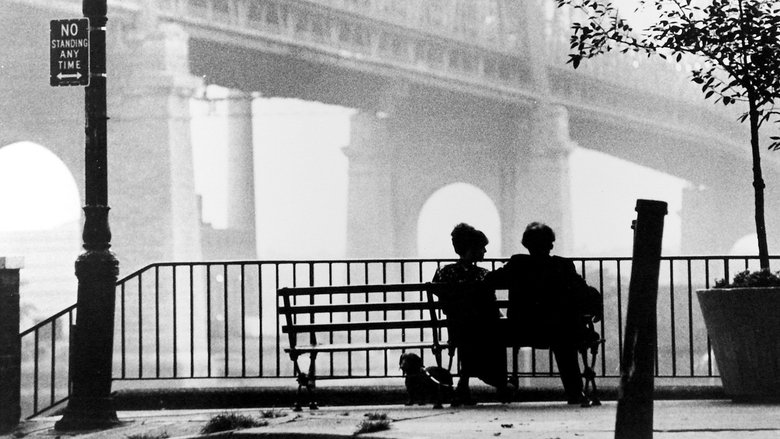
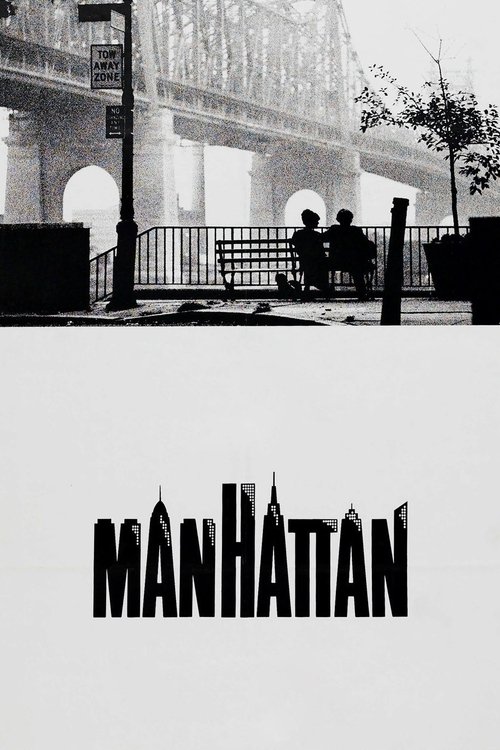
Symbolizes a moment of connection and beauty that is fleeting. It represents the peak of Isaac and Mary's romance—a perfect cinematic image that hides the underlying instability of their relationship.

Context:

Isaac and Mary sit on a bench overlooking the bridge at dawn. Notably, the bridge lights stay on (due to a real-life timer/production issue), creating a magical but artificial atmosphere.

The Planetarium

Meaning:

Represents the insignificance of human problems in the grand scheme of the universe. It suggests that the characters' neuroses and romantic entanglements are trivial against the vastness of space.

Context:

Isaac and Mary take refuge in the Hayden Planetarium during a rainstorm, walking as silhouettes against a backdrop of the moon and stars.

The 'Don't Walk' Sign

Meaning:

A visual warning against the ill-advised romance between Isaac and Mary. It foreshadows the failure of their relationship.

Context:

As Isaac and Mary walk down the street after their first 'date', a flashing red 'Don't Walk' sign is prominently visible in the background between them.

The Skeleton

Meaning:

A reminder of mortality and the primal nature underlying human intellectualism. It mocks the characters' attempts to be sophisticated.

Context:

Isaac lectures Yale about morality in a classroom, standing next to a hanging skeleton and a diagram of an ape, highlighting the contrast between his high-minded speech and basic human instincts.

Memorable Quotes

You have to have a little faith in people.

— Tracy

Context:

Spoken by Tracy in the doorway of her apartment as she prepares to leave for London, while Isaac begs her to stay.

Meaning:

The film's final and most crucial line. It shatters Isaac's cynicism and serves as the ultimate moral lesson of the story: that trust is essential for connection, even if it carries the risk of being hurt.

I think people should mate for life, like pigeons or Catholics.

— Isaac Davis

Context:

Isaac discussing relationships and fidelity, showcasing his humorous but conservative view on love.

Meaning:

Encapsulates Isaac's rigid, often absurd romantic idealism. It highlights his desire for old-fashioned permanence in a modern world of fleeting relationships.

Chapter One. He adored New York City. He idolized it all out of proportion.

— Isaac Davis (Voiceover)

Context:

The opening monologue of the film, as Isaac dictates the draft of his novel while Gershwin's music plays over shots of the city.

Meaning:

Sets the tone of the film immediately. It establishes the unreliable narrator and the film's primary subject: the city itself as seen through Isaac's romanticized lens.

You're God's answer to Job, you know? You would have ended all the argument between them. He would have pointed to you and said, 'I do a lot of terrible things, but I can also make one of these.'

— Isaac Davis

Context:

Isaac talking to Tracy in bed, appreciating her beauty and innocence.

Meaning:

A rare moment of genuine, poetic compliment from Isaac to Tracy, acknowledging her purity and perfection amidst a flawed world.

Talent is luck. The important thing in life is courage.

— Isaac Davis

Context:

Isaac discussing the nature of success and art with his friends.

Meaning:

Reflects Isaac's philosophy that moral character and bravery are more significant than inherent gifts, a standard he often fails to live up to himself.

Philosophical Questions

Can art redeem a flawed existence?

The film constantly juxtaposes the beauty of art (Gershwin, the skyline, museums) with the ugliness of the characters' behaviors. It asks if surrounding oneself with 'high culture' makes one a better person, ultimately suggesting that it does not—honesty and kindness (Tracy) are more valuable than intellectualism.

Is morality absolute or relative?

Isaac argues for absolute morality (lecturing Yale on fidelity), yet he practices relative morality (dating a teenager because she 'doesn't count' as a serious partner). The film challenges the viewer to decide if Isaac's rigid moral code is valid or just a tool for his ego.

Does intellect lead to happiness?

The most intelligent characters (Isaac, Mary) are the most miserable and neurotic, while the 'lesser' intellect (Tracy) possesses the most wisdom and emotional stability. The film questions the value of over-intellectualizing life at the expense of feeling it.

Alternative Interpretations

Isaac as the Villain: While Isaac presents himself as the moral center of the film, an alternative reading suggests he is the true villain. He is emotionally abusive to Tracy, hypocritical in his judgments of Yale, and uses people to validate his own ego. In this view, the film is a dark satire of a narcissist who destroys the only good thing in his life (Tracy) due to his own insecurities.

The 'Peter Pan' Syndrome: The film can be interpreted as a study of male arrested development. Isaac, Yale, and the other men are terrified of death and aging, so they chase youth (Tracy) or constantly switch partners to feel 'alive,' while the women (even the young Tracy) display far more emotional maturity and grounding.

Art vs. Life: Some critics view the film as Allen's admission that art is a poor substitute for life. Isaac tries to rewrite his life like a novel (the opening monologue), but reality refuses to conform to his edits. The perfect cinematic shots of the city contrast with the messy, unhappy lives of the characters, suggesting that the 'Manhattan' of the title is a fantasy that doesn't exist.

Cultural Impact

Manhattan is widely considered one of Woody Allen's greatest works and a definitive film of the 1970s. Visually, it established the iconic 'Woody Allen New York' aesthetic—intellectual, romantic, and jazz-infused—which has influenced countless romantic comedies since. The film's use of Gershwin's music and Gordon Willis's widescreen black-and-white cinematography set a new standard for how New York City was depicted on screen.

Critically, it was an instant success, praised for its sharp wit and emotional depth. However, its cultural legacy has become complicated in recent decades. The central romance between a 42-year-old man and a 17-year-old girl, once viewed as a poignant plot device about innocence versus corruption, is now frequently criticized as problematic and predatory, especially in light of the sexual abuse allegations against Allen and his marriage to Soon-Yi Previn. Despite this, the film remains a touchstone for cinema lovers for its technical mastery and script.

Audience Reception

Praised: Upon release, audiences and critics hailed it as a masterpiece. The cinematography, the chemistry between Allen and Keaton, and the sophisticated wit were universally lauded. It was seen as a more mature, polished follow-up to Annie Hall.

Criticized: In recent years, the audience score and discourse have shifted. Modern viewers often find the age gap between Isaac and Tracy uncomfortable or 'creepy,' making it difficult for them to sympathize with the protagonist. Some also find the characters' intellectual bickering to be pretentious and alienating.

Verdict: It remains a polarizing classic—technically flawless and historically significant, but thematically difficult for many modern audiences to embrace fully due to its treatment of the central relationship.

Interesting Facts

  • Woody Allen disliked the finished film so much that he offered to direct a film for United Artists for free if they would agree not to release 'Manhattan'.
  • The film was shot in 2.35:1 widescreen aspect ratio, which was highly unusual for a comedy at the time, to capture the grandeur of New York City.
  • The famous scene on the bench by the Queensboro Bridge had to be filmed at 5 a.m. The production had to bring their own bench because there wasn't one at that location.
  • During the bridge scene, one string of the bridge's necklace lights went out due to a timer, but they were forced to use the take. Allen decided to keep it, and it adds to the scene's realism.
  • The film features no opening credits, only the title 'MANHATTAN' in white neon letters against a black background, accompanied by George Gershwin's 'Rhapsody in Blue'.
  • Mariel Hemingway was only 16 years old during filming, and her character Tracy is 17. This age gap has become a major point of retrospective controversy.
  • Stacey Nelkin, a girlfriend of Woody Allen's, claims that the character of Tracy was based on her, though Allen has denied this.
  • The film was preserved in the National Film Registry by the Library of Congress in 2001 for being 'culturally, historically, or aesthetically significant'.

Easter Eggs

No Opening Credits

The film breaks tradition by having no opening credits sequence listing the actors. It simply shows the title 'MANHATTAN' and jumps straight into the visual montage of the city, emphasizing that the city is the star.

The 'Don't Walk' Sign

In the scene where Isaac and Mary walk her dog, a 'Don't Walk' sign flashes prominently between them. This is a visual directional cue from the director/cinematographer Gordon Willis, subtly warning the audience that this relationship is a bad idea.

Michael O'Donoghue Cameo

Michael O'Donoghue, the head writer for the original Saturday Night Live, appears as a guest at the art gallery party. This is a nod to the New York comedy scene of the 1970s.

Isaac's List of Worthwhile Things

When Isaac lists things that make life worth living, he includes 'Groucho Marx' and 'Willie Mays'. This serves as a meta-commentary on Allen's own personal heroes and the cultural touchstones of that generation.

References to 'The Cast of a Fellini Movie'

Isaac describes the people at the party as 'the cast of a Fellini movie,' referencing the grotesque and surreal characters often found in Federico Fellini's films, highlighting Isaac's alienation from the 'high society' crowd.

⚠️ Spoiler Analysis

Click to reveal detailed analysis with spoilers

Frequently Asked Questions

Explore More About This Movie

Dive deeper into specific aspects of the movie with our detailed analysis pages

Comments (0)

Leave a comment

No comments yet. Be the first to share your thoughts!