Skip to content
Mr. Sunshine
A sweeping historical melodrama where forbidden desire, fiery patriotism, and unyielding honor collide as brave outcasts and rebels fight for the decaying Joseon Dynasty against looming foreign colonization.
Mr. Sunshine

Mr. Sunshine

미스터 션샤인

"Guns. Glory. Sad endings."

07 July 2018 — 30 September 2018 South Korea 1 season 24 episode Ended 8.4 (194)

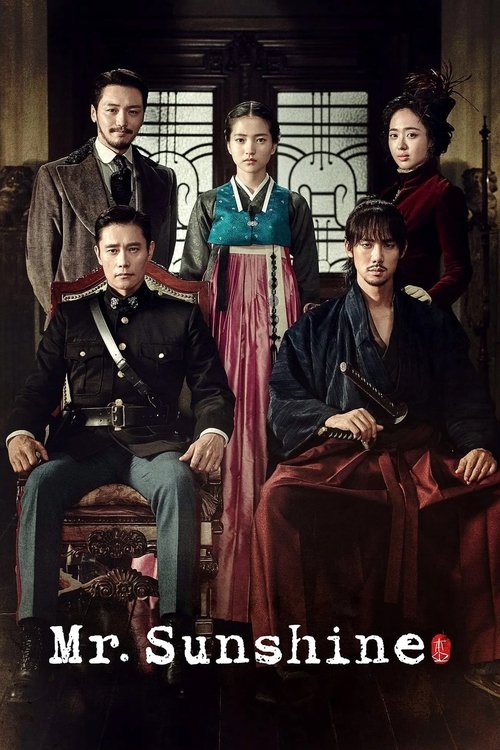
Cast: Lee Byung-hun, Kim Tae-ri, Yoo Yeon-seok, Kim Min-joung, Byun Yo-han

Drama Patriotism, Belonging, and the Abandoned Citizen Love Beyond Caste and Boundaries Sacrifice and the 'Nameless Heroes' Modernity, Imperialism, and Cultural Transition Guilt, Redemption, and Legacy

Overview

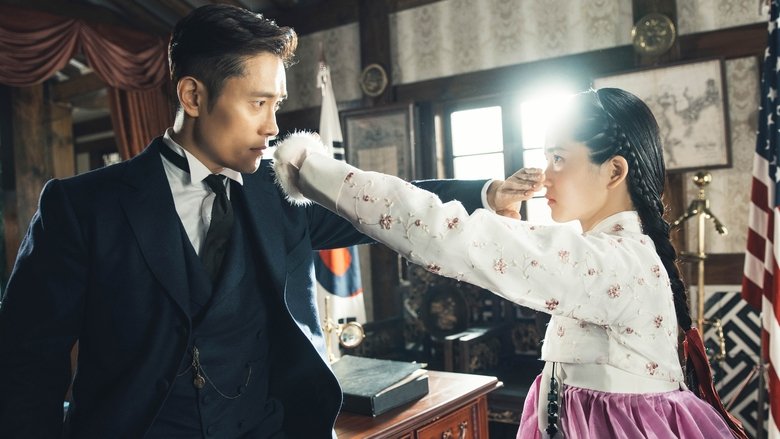
Set during the turbulent transition of late 19th- and early 20th-century Hanseong (modern-day Seoul) prior to the Japanese annexation of Korea, Mr. Sunshine chronicles the converging fates of five distinct individuals caught in the downfall of the Joseon Dynasty and the birth of the Korean Empire. At the epicenter of the story is Eugene Choi (Lee Byung-hun), an officer in the United States Marine Corps who was born into slavery in Joseon but fled to America as a child after his parents were brutally murdered. Assigned to the U.S. legation in Hanseong, Eugene returns to a homeland he once resented, only to encounter Go Ae-shin (Kim Tae-ri), a noblewoman who secretly leads a double life as a lethal sniper for the Righteous Army (uibyeong), a militia fighting for Korean independence.

As imperial foreign powers—primarily Japan, the United States, and Russia—maneuver to assert dominance over the weakening Empire of Korea, Eugene and Ae-shin's dangerous attraction draws in three other key figures: Goo Dong-mae (Yoo Yeon-seok), a ruthless head of a Japanese Yakuza gang born as a despised Joseon butcher's son; Kudo Hina / Lee Yang-hwa (Kim Min-jung), the savvy and influential owner of Hanseong's premier hotel; and Kim Hee-sung (Byun Yo-han), a wealthy nobleman and Ae-shin's arranged fiancé, who carries the burden of his grandfather's corrupt past.

Across 24 epic episodes, Mr. Sunshine weaves personal romance with intense geopolitical intrigue. Rather than focusing on grand royal battles, the narrative elevates the unsung struggles of ordinary citizens, outcasts, and noble rebels who risk everything to shield their decaying nation. As the looming threat of foreign colonization deepens, each character is forced to choose between personal self-preservation, romantic devotion, and ultimate sacrifice for their country's future.

Core Meaning

Through the overarching narrative of Mr. Sunshine, creator Kim Eun-sook and director Lee Eung-bok honor the nameless heroes—the ordinary soldiers, peasants, outcasts, and anonymous rebels of the Righteous Army whose unrecorded sacrifices laid the foundation for modern Korean independence. The series asserts that patriotism and moral duty do not belong solely to monarchs or aristocrats; rather, true devotion to one's homeland arises when individuals choose solidarity and human dignity over personal safety or caste hierarchy.

The show embodies the tragic concept of 'Gun, Glory, Sad Ending': even when a cause appears historically doomed and defeat seems inevitable, the act of standing against tyranny is never meaningless. By contrasting those who sell out their country for personal greed with outcasts who lay down their lives for a nation that once mistreated them, the creators declare that a nation's soul lives in the choices of its people.

Thematic DNA

Patriotism, Belonging, and the Abandoned Citizen 30%
Love Beyond Caste and Boundaries 25%
Sacrifice and the 'Nameless Heroes' 20%
Modernity, Imperialism, and Cultural Transition 15%
Guilt, Redemption, and Legacy 10%

Patriotism, Belonging, and the Abandoned Citizen

The series explores what it means to love a country that has rejected or oppressed you. Eugene Choi was hunted as a child slave, and Goo Dong-mae was treated as subhuman due to his low-caste butcher origins. Yet, both men return to Joseon and ultimately bleed for its people. The arc evolves from bitterness and detachment to profound solidarity with Joseon's struggle for independence.

Love Beyond Caste and Boundaries

Romance in Mr. Sunshine is defined by constraint, social distance, and quiet devotion. Eugene (a former slave and foreign soldier) and Ae-shin (a high-born noblewoman) navigate an impossible social gulf. Their bond evolves from mutual suspicion to strategic alliance, and finally to an enduring love expressed through shared sacrifices rather than overt affection.

Sacrifice and the 'Nameless Heroes'

The core narrative driven by the Righteous Army (uibyeong) showcases collective resistance. Peasants, palanquin bearers, gunsmiths, and aristocrats unite under one cause. Throughout the show, character deaths emphasize that freedom is bought by unsung martyrs who leave behind no written records.

Modernity, Imperialism, and Cultural Transition

Set at the turn of the 20th century, the show captures Joseon's awkward collision with Western and Japanese modernity—electric lights, streetcars, photography, and Western medicine. The theme depicts how technological progress was weaponized by imperial powers for subjugation, while native rebels utilized the tools of modernity to resist.

Guilt, Redemption, and Legacy

Characters like Kim Hee-sung and Kudo Hina grapple with the shame of their families' crimes. Hee-sung transforms his privilege into a weapon by documenting history through journalism, while Hina uses her wealth and intelligence to undermine traitors, demonstrating that one can overcome ancestral guilt through individual righteous action.

Character Analysis

Eugene Choi / Choi Yu-jin

Lee Byung-hun

Archetype: Antihero turned Noble Protector / Tragic Guardian Key Trait: Stoic integrity under an exterior of dry, calm wit

Motivation

Initially seeks closure and self-preservation; shifts to protecting Ae-shin and ensuring Joseon's independence.

Character Arc

Begins as a cynical U.S. Marine Captain who detests Joseon for executing his parents. As he falls in love with Ae-shin and witnesses the noble spirit of commoners, he sacrifices his military status, American citizenship, and life to become a shield for Joseon.

Go Ae-shin

Kim Tae-ri

Archetype: Revolutionary Hero / Patriot Key Trait: Unwavering resolve and moral courage

Motivation

Honor her deceased activist parents and keep Joseon alive.

Character Arc

Starts as a sheltered aristocratic noblewoman secretly training as an assassin. Over time, she matures into a hardened commander of the Righteous Army, enduring the loss of her family, home, and love to lead future generations of resistance fighters.

All 5 characters and cast

Symbols & Motifs

The Music Box ('Greensleeves' / 'What Child Is This')

Meaning:

Symbolizes nostalgia, lost childhood innocence, and the cross-cultural bridge of unspoken romance between Eugene and Ae-shin.

Context:

Belongs to Eugene Choi and serves as a recurring token of emotional connection across their cultural and social divides.

The Red Pinwheel

Meaning:

Serves as a covert signal for resistance operations and member communication.

Context:

Placed outside the traditional medicine shop to signal danger or schedule secret meetings for members of the Righteous Army.

The Cut Braid / Short Hair

Meaning:

Symbolizes the painful rupture of traditional Confucian norms and the ultimate sacrifice of identity.

Context:

Goo Dong-mae forcefully cuts Ae-shin's hair braid to protect her, while Ae-shin later cuts her own hair to fully step into battle as a soldier.

The Glory Hotel

Meaning:

Represents modern, cosmopolitan Hanseong—a neutral zone where spies, diplomats, rebels, and traitors overlap. Its destruction marks the end of diplomacy and the onset of total war.

Context:

Owned by Kudo Hina, acting as the epicenter of social and political encounters in the city.

The Camera and Printing Press

Meaning:

Symbolizes the power of truth and history. While others fight with rifles, these tools ensure the world remembers the resistance.

Context:

Used by Kim Hee-sung to document historical events and expose Japanese war crimes.

The Handkerchief / 'Love' Letter

Meaning:

Symbolizes the duality of their lives—intertwining political rebellion with romantic longing.

Context:

Used to cover faces during covert assassinations, or exchanged as quiet tokens of affection.

Memorable Quotes

러브가 무엇이오? ... Gun, Glory, Sad Ending.
— Go Ae-shin / Eugene Choi

Context

In Episode 2/3, Ae-shin mistakes 'Love' for a foreign diplomatic project, while Eugene somberly warns her of the tragic trajectory that loving across class and war inevitably brings.

Meaning

Underlines the looming tragedy of romantic attachment across deep societal and political divides in wartime.

어제는 먼 훗날 같고, 오늘은 생경하며, 내일은 두려운...
— Narration / Go Ae-shin

Context

Captures the disorienting, rapid modernization and impending colonial doom hanging over Hanseong at the turn of the century.

Meaning

Captures the disorienting, rapid shift of time and anxiety facing a nation on the brink of losing its independence.

All 5 quotes

Episode Highlights

The Seeds of Destiny

S1E1

Establishes the traumatic backstories of the core characters against major historical events.

Significance:

Sets the brutal historical foundation—the 1871 American expedition to Ganghwa Island (Shinmiyangyo), Eugene's parents' death, his escape to New York, and the martyrdom of Ae-shin's activist parents in Japan.

The Confession of Slavery

S1E9

Eugene reveals his former slave status directly to Ae-shin.

Significance:

This pivotal moment shatters her idealized view of her country, forcing her to confront her own noble privilege.

Night Battle at the Hotel

S1E11

Features a high-stakes nighttime encounter between two key female characters inside Glory Hotel.

Significance:

Features an iconic nighttime action duel between a masked Ae-shin and a sword-wielding Kudo Hina inside Glory Hotel as both search for confidential documents.

The Cutting of the Hair

S1E18

Dong-mae cuts Ae-shin's traditional hair braid in a violent attempt to keep her safe.

Significance:

This act triggers an emotional breakdown, pushing Ae-shin closer to taking up arms full-time.

The Disbandment of the Imperial Army

S1E22

Covers the tragic dissolution of Joseon's army and its merger with guerilla forces.

Significance:

Depicts the historical 1907 Battle of Namdaemun. After Japan forcibly disbands the Korean army, regular soldiers join forces with the Righteous Army in a tragic last stand.

The Explosion of Glory Hotel

S1E23

Hina and Ae-shin execute a major attack to eliminate imperial military officers.

Significance:

Hina and Ae-shin plant explosives inside Glory Hotel, detonating it to kill dozens of high-ranking Japanese military officers. Hina is fatally wounded and dies on the beach in Dong-mae's arms.

See You Again

S1E24

The tragic series finale where individual storylines reach their ultimate sacrifices.

Significance:

The final tragic culmination. Dong-mae dies fighting the Yakuza, Hee-sung dies in a Japanese prison, and Eugene sacrifices his last bullet on a train to uncouple Ae-shin's carriage, dying so she can reach Manchuria to continue training the resistance.

Philosophical Questions

Does a person owe loyalty to a homeland that treated them as property or outcasts?

Explored through Eugene Choi and Goo Dong-mae as they struggle between revenge against Joseon's class system and protecting its innocent people.

Is a hopeless fight worth undertaking if defeat is historically inevitable?

Explored through the Righteous Army's refusal to surrender, asserting that fighting for dignity leaves a moral template for future generations.

Can personal love exist independently of historical responsibility during national crises?

Explored through Eugene and Ae-shin's relationship, demonstrating that romantic devotion and national duty become inseparable.

Alternative Interpretations

Tragic Defeat vs. Immortal Legacy: While all four main leads beside Ae-shin die, critics note that the ending is not nihilistic. The final scene shows Ae-shin training new recruits in Manchuria in 1910, symbolizing that resistance is an unbroken chain passed from one generation to the next.

Full ending explanation

Cultural Impact

Mr. Sunshine covers the historical era from the 1871 Shinmiyangyo (U.S. expedition to Korea) to the 1907 forced abdication of Emperor Gojong and army disbandment. This era is painful in Korean memory as it set the stage for 35 years of Japanese colonial rule.

Upon release, the series became a cultural phenomenon, achieving a peak nationwide rating of 18.1% on tvN—one of the highest cable ratings in South Korean television history. Despite minor initial critiques regarding potential historical inaccuracies or pro-Western/pro-Japanese framing of early character backstories, the show won praise for illuminating the contributions of ordinary resistance fighters. Its success opened doors for large-budget, period-specific K-dramas aimed at global streaming platforms.

Audience Reception

Mr. Sunshine received wide acclaim from both critics and audiences, holding top ratings and strong international reviews.

Praised Aspects: Exceptional feature-film level cinematography, sweep of the score/OST, depth of character development, and performance chemistry among the five leads.

Criticisms: Pacing in early-to-mid episodes was criticized by some viewers as slow-burning. Additionally, some audience members initially expressed reservations about the real-life 20-year age gap between Lee Byung-hun and Kim Tae-ri, though these concerns faded as their restrained, non-physical romance played out on screen.

Overall Verdict: Regarded as one of the finest Korean period dramas ever made, celebrated for its emotional depth and historical scale.

Interesting Facts

  • Produced with an estimated budget of ₩40 billion (approx. $35–40 million USD), making it one of the most expensive South Korean television dramas ever produced at the time.
  • A massive 20,000-square-meter open studio set was custom-built in Nonsan, South Korea, recreating 1900s Hanseong, including functional streetcars, the Glory Hotel, and foreign legations.
  • It was one of the earliest South Korean dramas licensed as an exclusive global original simulcast by Netflix, establishing a model for international K-drama distribution.
  • Reunited star writer Kim Eun-sook and director Lee Eung-bok following their back-to-back smash hits Descendants of the Sun (2016) and Goblin / Guardian: The Lonely and Great God (2016).
  • Filming spanned over 10 months across 40,000 kilometers in South Korea to capture all four real seasons, with VFX studio Digital Idea using CGI to render 1900s Brooklyn Bridge and Hanseong.

Easter Eggs

Jin Goo and Kim Ji-won Cameo (Ep 1)

The two actors, who played the beloved secondary couple in Kim Eun-sook's Descendants of the Sun, made a surprise cameo as Ae-shin's freedom-fighter parents who are betrayed and killed in Japan.

Historical Activist Ahn Chang-ho (Ep 22)

In New York, Eugene briefly meets a young Korean activist named Ahn Chang-ho. Historically, Ahn Chang-ho became one of the most prominent real-life leaders of the Korean-American independence movement.

F.A. McKenzie & The Righteous Army Photo (Ep 24)

In the finale, a foreign reporter interviews and photographs the Righteous Army. This recreates the iconic real-life 1907 photograph taken by Daily Mail journalist Frederick Arthur McKenzie.

Cultural Innovations

Features historical debuts of modern imports into late Joseon Korea, including coffee (referred to as gabi), shaved ice dessert (patbingsu), and electric street lighting.

Frequently Asked Questions

Explore More About This Movie

Dive deeper into specific aspects of the movie with our detailed analysis pages

Comments (0)

Leave a comment

No comments yet. Be the first to share your thoughts!

Similar Movies