
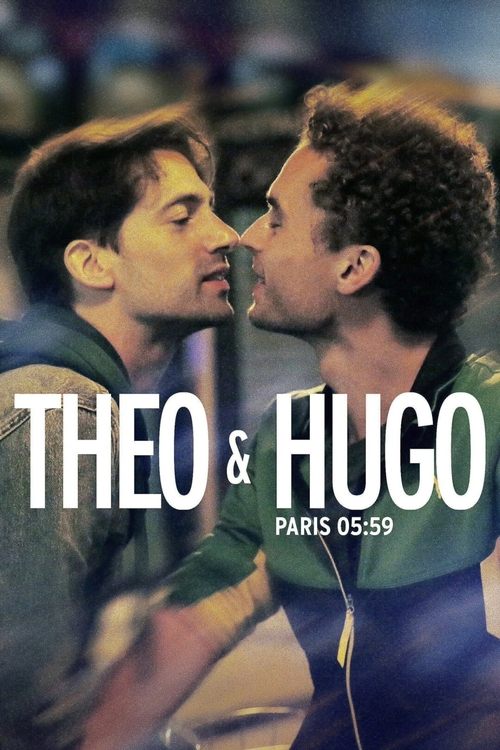
Full spoilers follow.
The film's first act is a sustained, unsimulated sex sequence in a Paris sex club, almost entirely without dialogue, in which Théo and Hugo single each other out from a crowd of anonymous men. When they leave and begin cycling through the empty streets toward Théo's flat, the register changes completely: they start talking, and the film becomes a two-hander.
The turn arrives when it emerges that their encounter involved unprotected penetration and that Hugo is HIV-positive. Hugo, who has long known his status and is treated, tells Théo — and the romance is immediately reorganised around a clock that is now medical as well as narrative. They go to a hospital emergency department so that Théo can begin post-exposure prophylaxis: antiretroviral medication that must be started within hours of exposure to reduce the chance of infection. The sequence is deliberately procedural — intake, questions about the encounter, the beginning of a month-long treatment — and it functions as the emotional centre of the film precisely because it is unromantic.
What becomes clear only in retrospect is that the opening is not a provocation but the film's premise: the directors show desire at its most unaccountable so that the rest of the night can test whether accountability can be built on top of it. The guilt that Hugo carries — for not stopping, for being the one who has to say it — is the film's real subject, and Théo's refusal to leave is its answer.
The remaining hour is the two men filling in the biographies that ordinary couples acquire slowly: family, work, past relationships, fears, what each of them wants. They pass through the parallel Paris of night workers, eat, argue, tell the truth. The film ends at 5:59 a.m., at dawn, with the two still together — not with a declaration or a promise of a future, but with the fact of them having stayed. The ambiguity is deliberate: the film stops before daylight can test the decision, so the ending affirms only that the night was survived together, which is exactly what the French title, "in the same boat," asserts.
Read backwards, the structure is a rebuttal of an entire genre convention. In older HIV narratives, sex is followed by punishment; here, sex is followed by medicine, conversation and love. The virus does not end the story — it starts the relationship.