Skip to content
Pyramid Game
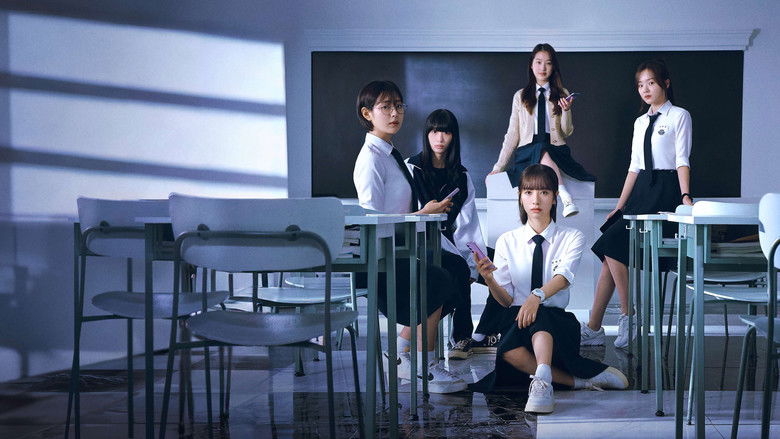
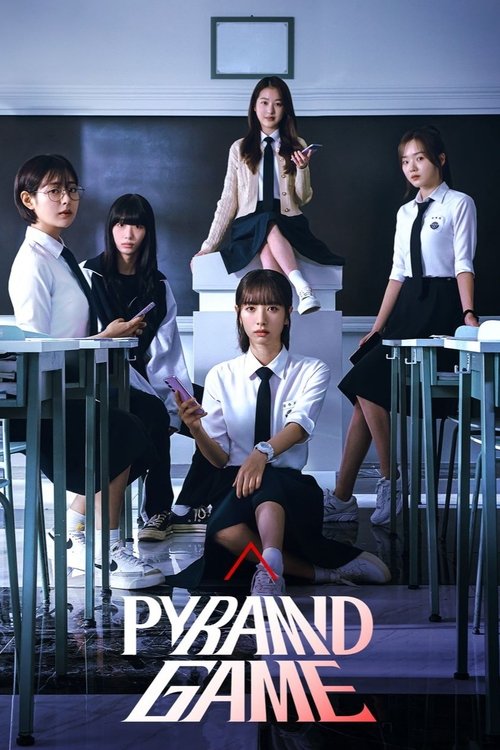
A razor-sharp psychological thriller where icy calculation clashes with desperate human solidarity, portraying an elite high school classroom as a fragile glass pyramid waiting to be shattered from within by its own scapegoats.
Pyramid Game

Pyramid Game

피라미드 게임

"The hierarchy war."

29 February 2024 — 21 March 2024 South Korea 1 season 10 episode Ended 8.1 (148)

Cast: Bona, Jang Da-a, Ryu Da-in, Kang Na-eon, Jeong Ha-dam

Drama Systemic Hierarchy and Class Stratification Bystander Complicity and Moral Neutrality Machiavellian Calculation vs. Genuine Solidarity Trauma, Privilege, and the Cycle of Abuse Individual Survival vs. Collective Liberation

Overview

Pyramid Game (2024) is a South Korean psychological thriller and survival mystery drama adapted from the Naver webtoon of the same name by Dalgonyak. Set within the enclosed, detached Class 2–5 of Baekyeon Girls' High School, the series unveils a monthly popularity vote conducted through a mobile application. The results establish a rigid social caste system from Grade A down to Grade F, where the student receiving zero votes falls into Grade F and becomes the legally sanctioned target of emotional, physical, and psychological bullying by the entire class.

The story begins when Seong Su-ji, a pragmatic transfer student accustomed to adapting to new schools due to her father's military career, transfers into Class 2–5. Immediately targeted and voted into Grade F, Su-ji refuses to play the role of a passive victim. Rather than merely attempting to climb the social ladder, she leverages her tactical intellect to analyze the class's voting psychology, identify key influencers, form secret alliances, and systematically dismantle the game's structure.

As Su-ji delves deeper, she faces off against Baek Ha-rin, the angelic yet psychopathic mastermind who uses her family's corporate wealth and psychological manipulation to maintain control over her classmates. The narrative expands beyond individual survival into a full-scale uprising, exploring the heavy toll of bystander complicity, corporate influence, and childhood trauma in a high-stakes battle of wits.


Core Meaning

The creators of Pyramid Game use the microcosm of a high school classroom to present a scathing commentary on systemic inequality, modern social stratification, and bystander apathy. Through its gamified voting system, the series demonstrates how oppression is normalized when framed as a "democratized" choice. When citizens or students are given the power to vote each other down, they become active participants in their own subjugation and turn on their peers to protect their own standing.

The core message across the series is that tyranny cannot survive without the silent consent of bystanders. True liberation from abusive systems requires breaking individual isolation, rejecting self-serving neutrality, and forming collective solidarity.

Thematic DNA

Systemic Hierarchy and Class Stratification 30%
Bystander Complicity and Moral Neutrality 25%
Machiavellian Calculation vs. Genuine Solidarity 20%
Trauma, Privilege, and the Cycle of Abuse 15%
Individual Survival vs. Collective Liberation 10%

Systemic Hierarchy and Class Stratification

The Pyramid Game mirrors real-world socio-economic caste systems where power is concentrated at the top and the lowest tier is dehumanized. The show illustrates how Grade A students exploit institutional protection while Grade F students are deprived of basic rights. Throughout the series, Su-ji proves that hierarchy is not an unchangeable law of nature, but an artificial construct held together by fear and division.

Bystander Complicity and Moral Neutrality

A central drive of the narrative is criticizing those who stay silent to protect their peace. Characters like Class President Seo Do-ah embody the "neutral observer" who enforces rules without questioning their morality. The show reveals that bystander indifference is the primary engine perpetuating violence, and true change occurs only when bystanders actively take a stand.

Machiavellian Calculation vs. Genuine Solidarity

The conflict pits Su-ji’s game-theory strategy and Ha-rin’s manipulative control against authentic human connection. While Su-ji initially views her classmates as tactical pawns, her growing empathy for outcasts like Myung Ja-eun transforms her scheme from self-preservation into a shared movement of mutual trust.

Trauma, Privilege, and the Cycle of Abuse

The dynamic between Baek Ha-rin and Myung Ja-eun highlights how unresolved childhood trauma breeds destructive behavior. Ha-rin uses her family's vast wealth to institutionalize her revenge, demonstrating how societal privilege shields abusers from accountability until external interventions force transparency.

Individual Survival vs. Collective Liberation

Su-ji starts the show intending to survive her three-month stay before moving again. As the narrative evolves, she realizes that fleeing or climbing higher leaves the underlying violence intact. Her arc shifts from self-serving adaptability to leading a collective revolution that dismantles the entire game.

Character Analysis

Seong Su-ji

Kim Ji-yeon / Bona

Archetype: Antihero turned Rebel Leader Key Trait: Sharp analytical intellect and tactical composure

Motivation

Initially self-preservation and escaping Grade F; evolves into destroying the Pyramid Game permanently.

Character Arc

Begins as a cold, pragmatic transfer student accustomed to cutting ties and keeping her head down. After being cast into Grade F, she uses strategic maneuvering to break the system. She grows from a self-interested tactician into a compassionate friend who risks her own safety for her classmates.

Baek Ha-rin

Jang Da-ah

Archetype: Mastermind Antagonist / Psychopathic Manipulator Key Trait: Chilling deceit under a polite veneer

Motivation

To torment Myung Ja-eun and maintain complete control over Class 2–5.

Character Arc

Appears as the sweet, beloved heiress of the Baekyeon Group, but is revealed as the sadistic architect of the game. As Su-ji systematically dismantles her control, Ha-rin’s composure unravels, culminating in total disgrace, abandonment by her family, and mental breakdown.

All 5 characters and cast

Symbols & Motifs

The Triangular / Pyramid Visual Framing

Meaning:

Symbolizes rigid social hierarchy and top-down oppression.

Context:

Present in seating arrangements, mobile app logos, and camera compositions throughout the series.

The Mobile Voting App

Meaning:

Represents the gamification and dehumanization of violence.

Context:

The digital interface allows students to inflict suffering with a simple click, detaching them from physical consequences.

Lighter / Burning Flame

Meaning:

Symbolizes internal trauma, destructiveness, and past history of arson.

Context:

Used as Baek Ha-rin's signature nervous habit.

Oversized Glasses / Surveillance Cameras

Meaning:

Symbolizes detached observation, surveillance, and passive enforcement of rules.

Context:

Associated with Class President Seo Do-ah and school monitoring systems.

Physical Bruises and Cigarette Smoke

Meaning:

Serve as visible markers of physical abuse, social stigma, and emotional guilt.

Context:

Associated with Myung Ja-eun early on in the series.

Memorable Quotes

이 게임은 절대 너 하나 없어진다고 끝나지 않아... 누군가 마침표를 찍어줘야 끝날 수 있어. 이 반은 변해야 돼. 아니, 말을 바꿀게. 피라미드 게임을 없애자.
— Seong Su-ji

Context

Delivered in Episode 2, while convincing Myung Ja-eun to form an alliance.

Meaning

Represents the fundamental turning point where Su-ji shifts her goal from climbing the hierarchy to completely destroying it.

너는 스스로를 용서했지만, 나는 너를 용서한 적 없어.
— Baek Ha-rin

Context

Delivered in Episode 10, during their final confrontation in the burning facility.

Meaning

Unveils Ha-rin’s core motive—her obsession with punishing Ja-eun over childhood trauma.

All 4 quotes

Episode Highlights

The Target

S1E1

Introduces Seong Su-ji to Class 2–5 and establishes the mechanics of the Pyramid Game app, ending with Su-ji receiving zero votes and being assigned Grade F.

Significance:

Sets the central conflict and immediate survival stake.

The Alliance

S1E2

Su-ji endures brutal Grade F hazing, observes class behavioral dynamics, and makes a pact with fellow outcast Myung Ja-eun.

Significance:

Marks the transition from passive victimhood to active counter-strategy.

The Leaked Plan

S1E4

Su-ji recruits hacker Jo Seung-hwa to expose the app, but faces internal betrayal when Pyo Ji-ae accidentally leaks details to Ha-rin.

Significance:

Escalates the psychological warfare between Su-ji and Ha-rin.

Parent Observation Day

S1E5

The game’s dynamic leaks into the presence of parents, and Ha-rin brings her powerful grandmother (Baekyeon Group Chairwoman) to intimidate the school, forcing Su-ji to pivot to Plan B.

Significance:

Exposes institutional corruption and the involvement of adult elites.

Dodgeball of Terror

S1E6

Ha-rin uses a physical sports game to legally target lower grades, but Su-ji uses the physical rules against the perpetrators to protect her allies.

Significance:

Demonstrates Su-ji's ability to turn the system's rules back on the oppressors.

The Final Vote

S1E9

During the 16th voting session where Ha-rin attempts to enforce a permanent Grade F target, Su-ji launches her master counter-strike by manipulating the app’s constitutional rule.

Significance:

Leads directly to the collapse of the game.

Break the Pyramid

S1E10

In the series finale, Su-ji gets the class majority to delete the app, officially dissolving the game. Ha-rin's past is exposed, leading to her downfall, while corporate consequences hit the school.

Significance:

Resolves the central story arc and sets up future narrative possibilities.

Philosophical Questions

Can voting and democracy be weaponized into tyranny?

The show demonstrates how majority rule without moral boundaries can legitimize cruelty and oppression.

Is moral neutrality possible in the face of active evil?

Through Class President Seo Do-ah, the drama proves that remaining "neutral" actively enforces the oppressor's status quo.

Does childhood trauma excuse adult cruelty?

Juxtaposing Ja-eun and Ha-rin reveals that while both suffered trauma, one chose empathy while the other chose sadism.

Alternative Interpretations

The series offers several key thematic interpretations across its narrative:

Full ending explanation

Cultural Impact

Pyramid Game arrived during a wave of public awareness regarding hakpok (school violence and bullying) and societal privilege in South Korea. The show critiques how elite families use money and institutional power to cover up abuse. Critics praised the series for avoiding generic revenge melodrama tropes, relying instead on high-IQ psychological strategy and character development.

Audience Reception

Pyramid Game earned high critical acclaim, with Rotten Tomatoes Tomatometer recording positive scores centered on Bona's lead performance, Jang Da-a's villainous debut, tight writing, and slick visual style.

Praised aspects include its smart female-led cast, unpredictable psychological battles, soundtrack by GroovyRoom, and the subversion of typical romantic or school tropes. However, main points of criticism noted that some viewers found the physical bullying scenes in early episodes difficult to digest, and a few minor side characters received limited screen time compared to the original webtoon.

Interesting Facts

  • Pyramid Game was the only Korean title officially invited to the prestigious Series Mania 2024 festival in Lille, France, where its first two episodes received a special European screening.
  • The series was executive produced by Lee Jae-kyoo, director of Netflix’s global hit All of Us Are Dead and Intimate Strangers.
  • Marked the acting debut of Jang Da-a (older sister of IVE’s Jang Wonyoung) and Shin Seul-ki (breakout star of Netflix's Single's Inferno 2).
  • The original soundtrack and score were produced by acclaimed K-pop hitmaking duo GroovyRoom (Hwi-min and Gyu-jung).
  • Following the drama's release, multiple school boards and educational authorities in South Korea issued formal advisories warning parents and teachers after students began imitating the app-based ranking system in real classrooms.
  • The series remains faithful to Dalgonyak's original Naver Webtoon while tweaking certain character backstories and updating digital interface details for modern streaming audiences.

Easter Eggs

Jang Gyuri Cameo

Actress Jang Gyuri makes a surprise appearance in the final scene of Episode 10 as one of the incoming transfer Miryo Group twin sisters.

School Name Change

Following the public scandal of the Baekyeon Group in the finale, Baekyeon Girls' High School is renamed Miryo Girls' High School.

Western Pop-Culture References

International critics frequently highlighted visual and thematic homages to classic Western high school thrillers like Heathers, Mean Girls, and Lord of the Flies combined with Squid Game survival elements.

Frequently Asked Questions

Explore More About This Movie

Dive deeper into specific aspects of the movie with our detailed analysis pages

Comments (0)

Leave a comment

No comments yet. Be the first to share your thoughts!

Similar Movies