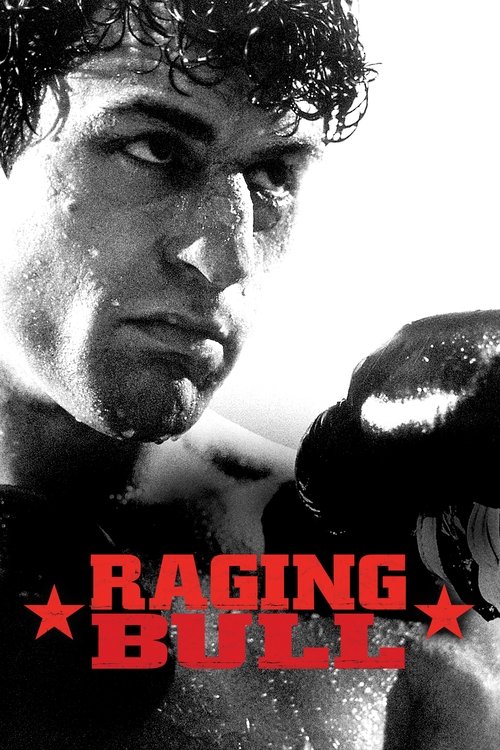
Raging Bull
"I don’t go down for nobody."
Overview
Directed by Martin Scorsese, "Raging Bull" is a searing, biographical drama that chronicles the life of middleweight boxing champion Jake LaMotta. The film is not simply about boxing; it's a profound character study of a man consumed by his own demons. We follow Jake's rise through the boxing ranks in the 1940s, fueled by a ferocious, punishing style in the ring. However, this same rage, coupled with intense sexual jealousy and paranoia, poisons his life outside of it.
His relationships, particularly with his sharp-witted brother and manager, Joey, and his beautiful, young wife, Vickie, are torn apart by his uncontrollable temper and baseless suspicions. LaMotta's violent outbursts and inability to trust those closest to him lead to a devastating personal and professional downfall. The film unflinchingly portrays his descent from a celebrated champion to an overweight, washed-up nightclub entertainer, a man alienated from everyone he ever loved.
Core Meaning
The core meaning of "Raging Bull" is an exploration of self-destruction rooted in masculine insecurity and rage. Martin Scorsese uses the boxing ring not as a stage for athletic triumph, but as a brutal allegory for Jake LaMotta's internal life. The ring is the one place where his rage is rewarded, serving as a form of confession and penance for his sins outside it. The film posits that LaMotta's greatest opponent was never in the ring, but was always himself—his crippling jealousy, inability to express his emotions except through violence, and deep-seated self-loathing. Ultimately, it's a tragic examination of how a man's violent nature, fueled by fear and sexual inadequacy, can lead to complete alienation and the loss of everything he holds dear, questioning the very nature of redemption for such a deeply flawed individual.
Thematic DNA
Self-Destruction and Masochism
Jake LaMotta is the primary architect of his own downfall. His success in the ring is built on an ability to absorb incredible punishment, a trait that bleeds into his personal life. He seems to crave punishment as a form of absolution for his sins. This is evident when he goads his brother Joey into hitting him, his refusal to go down in the final fight against Sugar Ray Robinson, and his general pattern of destroying any happiness he achieves. The film is a powerful study of a man who systematically dismantles his career and family due to an inability to control his inner demons.
Jealousy and Sexual Insecurity
At its core, the film is a portrait of overwhelming jealousy. Jake's obsession with his wife Vickie's perceived infidelity drives most of the narrative's conflict. This paranoia is rooted in a profound sexual insecurity and a Madonna-whore complex, where he idealizes Vickie before marriage and then becomes consumed by suspicion after possessing her. Every innocent glance or comment from another man is twisted in his mind into proof of her guilt, leading to brutal physical and emotional abuse that ultimately drives her and everyone else away.
Toxic Masculinity and Violence
"Raging Bull" is a stark critique of toxic masculinity. Jake defines his manhood through aggression, dominance, and violence. He is incapable of articulating his feelings of fear, love, or insecurity, resorting instead to his fists to communicate and solve problems, both inside and outside the ring. His lament over his "little girl's hands" reveals his deep-seated anxiety about not being masculine enough, which he compensates for with hyper-aggression that devastates his relationships.
Alienation and Redemption
As a consequence of his actions, Jake becomes completely alienated. From the film's opening shot of him shadowboxing alone, he is presented as an isolated figure. He drives away his brother, his wife, and his connections to the boxing world, leaving him a lonely, washed-up figure. The film's ending offers a complex and ambiguous take on redemption. After hitting rock bottom in a jail cell, the final scene shows an older Jake reciting a monologue from "On the Waterfront" in a mirror. This moment suggests a flicker of self-awareness and perhaps the beginning of a painful reconciliation with himself, though whether it constitutes true redemption is left for the viewer to decide.
Character Analysis
Jake LaMotta
Robert De Niro
Motivation
Jake is driven by a toxic cocktail of professional ambition, deep-seated sexual insecurity, and a desperate need for control. He is terrified of being perceived as weak or feminine, which manifests as extreme jealousy and possessiveness over his wife, Vickie. His violence is both an expression of his inability to articulate his emotions and a masochistic desire for punishment, which he believes absolves him of his sins.
Character Arc
Jake's arc is one of tragic downfall fueled by his own character flaws. He begins as a powerful, rising middleweight contender whose aggression serves him in the ring. As he achieves success, winning the championship and marrying Vickie, his paranoia and jealousy grow uncontrollably. He systematically destroys every important relationship in his life, culminating in the brutal assault on his brother, Joey. His career declines, he gains a massive amount of weight, loses his family, and ends up in jail. The final scenes show him as a lonely, washed-up nightclub entertainer, attempting to piece together a semblance of dignity and self-awareness after losing everything.
Joey LaMotta
Joe Pesci
Motivation
Joey's primary motivation is to protect his brother and secure their financial future through Jake's boxing career. He is loyal to a fault, but he is also pragmatic, understanding the need to deal with the mob to get Jake a title shot. He is constantly trying to be the voice of reason against Jake's irrational rage and jealousy.
Character Arc
Joey starts as Jake's loyal and pragmatic brother and manager, trying to navigate Jake's career and shield him from his worst impulses. He attempts to manage Jake's temper and make sound business decisions, but is constantly undermined by Jake's paranoia. The relationship reaches a breaking point when Jake, in a fit of baseless jealous rage, brutally attacks Joey in front of his family. This act irrevocably severs their bond. Years later, when Jake tries to reconcile, Joey's reluctant, pained acceptance shows the permanent scar of Jake's betrayal.
Vickie LaMotta
Cathy Moriarty
Motivation
Initially, Vickie is drawn to Jake's status and power as a rising boxing star. Her motivation becomes survival as she finds herself trapped in an abusive and controlling marriage. She tries to navigate Jake's moods and placate his jealousy, but ultimately her motivation is to escape and protect herself and her children from his destructive behavior.
Character Arc
Vickie is introduced as a confident, alluring 15-year-old who catches Jake's eye. She enters the relationship seemingly aware of her power but quickly becomes the primary victim of Jake's suffocating jealousy and abuse. Her arc is one of gradual entrapment and disillusionment. She endures years of psychological and physical torment, her spirit slowly eroded by Jake's paranoia. Eventually, she finds the strength to leave him after his career and life have completely fallen apart, taking their children with her.
Symbols & Motifs
The Boxing Ring
The ring is an allegory for Jake's life and internal state. It is the only place where his rage and self-destructive tendencies are celebrated and given purpose. It functions as a stage for his violent psychodrama, a place of both confession and punishment. Scorsese alters the ring's size throughout the film; it appears larger and more isolating when Jake feels helpless, and smaller or claustrophobic during moments of intense, personal conflict.
The ring is the setting for all of the film's boxing sequences. In his final, brutal fight against Sugar Ray Robinson, Jake willingly absorbs a horrific beating, leaning on the ropes in a pose reminiscent of a crucifixion, finding a perverse sense of absolution in the punishment.
Mirrors
Mirrors symbolize self-reflection and Jake's fractured self-perception. Throughout the film, Jake confronts his own image during moments of contemplation or crisis. Lacking the vocabulary to express his inner turmoil, gazing into a mirror is his primary method of self-examination.
The film is bookended by scenes of an older Jake LaMotta looking at himself in a dressing room mirror. The final, powerful scene has him reciting Marlon Brando's "I coulda been a contender" speech from "On the Waterfront" to his own reflection, suggesting a final, painful reckoning with the man he has become.
Water and Ice
Water serves as a motif with dual meanings. Early in the film, the sun-drenched swimming pool where he meets Vickie represents desire and a brief period of domestic hope. Conversely, cold water and ice symbolize suppression, detachment, and punishment.
After becoming aroused by Vickie before a fight, Jake pours a bucket of ice water on his lap to suppress his sexual desire, an act of self-denial that foreshadows his later destructive behavior. He also plunges his swollen hands into buckets of ice after fights, connecting the cold with the pain and consequence of his violent profession.
Animal Imagery
The motif of animals underscores Jake's primal, instinctual nature. His nickname is "The Bronx Bull," and his behavior is often described as animalistic. This symbolism culminates in his breakdown in jail where he screams, "I'm not an animal!", a desperate assertion of the humanity he fears he has lost.
Jake wears a leopard-print robe for his fights. After a domestic dispute, a neighbor yells, "He's an animal!" The sound design of the fight scenes reportedly includes distorted animal roars and screeches, blending the human and the beastial.
Memorable Quotes
You never got me down, Ray.
— Jake LaMotta
Context:
After the final, bloody bout against his rival Sugar Ray Robinson, a battered and defeated Jake stumbles over to Robinson's corner and speaks this line directly to him, just before the officials pull him away.
Meaning:
This line, spoken to Sugar Ray Robinson after a brutal beating that costs him his title, encapsulates Jake's core identity. It's a defiant cry of masochistic pride. Even in a devastating loss, his refusal to be knocked down is his only victory. It highlights his philosophy that absorbing punishment is a form of strength and control.
I'm the boss. I'm the boss. I'm the boss. I'm the boss. I'm the boss.
— Jake LaMotta
Context:
In their home, after an argument where Jake has been physically aggressive and accusatory towards Vickie, he stands over her, repeating this line in a desperate attempt to reassert his dominance.
Meaning:
This frantic, repetitive chant reveals Jake's profound insecurity and his desperate need for control within his marriage. He repeats the phrase after a violent confrontation with Vickie, trying to convince both her and himself of an authority he feels slipping away due to his own paranoia and jealousy.
Did you f**k my wife?
— Jake LaMotta
Context:
Jake confronts his brother Joey at home, asking him this question point-blank. When Joey's sarcastic and dismissive answers fail to satisfy him, Jake explodes, leading to a savage beating in front of Joey's wife and children.
Meaning:
This question is the raw, brutal embodiment of Jake's all-consuming and unfounded jealousy. It is the catalyst for the film's most tragic moment of violence, the point of no return where Jake's paranoia leads him to destroy his most important relationship—the one with his brother.
I coulda been a contender. I could've been somebody, instead of a bum, which is what I am, let's face it.
— Jake LaMotta
Context:
In the final scene of the film, an older, overweight Jake practices his nightclub act alone in a dressing room. He shadowboxes lightly before looking into the mirror and reciting this monologue to his own reflection.
Meaning:
By reciting this iconic line from "On the Waterfront," Jake is not just mimicking Marlon Brando; he is adopting the words of another broken man to articulate his own profound sense of failure and regret. It is a moment of painful self-awareness where he confronts his wasted potential and the life his own actions have ruined. It's not a direct imitation of Brando, but rather Jake LaMotta's interpretation of another character's pain, making it a powerful and layered conclusion.
Philosophical Questions
Can a person find redemption without being forgivable?
The film forces the audience to grapple with the nature of redemption for a character who is, by most measures, irredeemable. Jake LaMotta is abusive, violent, and cruel. He never truly apologizes or atones in a conventional way. The film questions whether redemption is an external act of forgiveness from others or an internal state of self-awareness. Jake's final moments suggest a quiet reconciliation with himself, a recognition of his own failings. Does this personal, lonely acknowledgment count as redemption, even if he remains unforgiven by those he hurt and the world at large?
What is the relationship between violence, masculinity, and identity?
"Raging Bull" explores how identity, particularly a certain form of masculinity, can be pathologically intertwined with violence. For Jake, violence is not just an act; it is his primary mode of communication, self-expression, and self-worth. The film asks whether such a man can exist outside the context that rewards his violence (the boxing ring). When his ability to fight is gone, his identity collapses, leading to his pathetic downfall. It poses the uncomfortable question of how society shapes and rewards aggressive masculinity, only to condemn the man who cannot turn it off.
Is there a distinction between humanity and animalism?
The film constantly blurs the line between man and beast through its central "Raging Bull" metaphor. Jake's neighbors call him an animal, and his actions are often primal and instinct-driven. The film culminates in Jake's desperate cry, "I'm not an animal!" from his jail cell. This moment forces the question: what separates us from animals? Is it self-awareness? The capacity for guilt? The film suggests that this line is dangerously thin, and that denying one's own brutality and capacity for destruction is a path toward losing one's humanity entirely.
Alternative Interpretations
While the dominant reading of "Raging Bull" focuses on self-destruction, there are alternative ways to interpret the film, particularly its ending. One perspective views the ending not as a moment of redemption, but as one of profound damnation and delusion. In this reading, when Jake recites the "I coulda been a contender" speech, he is not achieving self-awareness but rather deflecting blame. The original line from "On the Waterfront" is about blaming one's brother for a ruined career. By reciting it, Jake may be subtly shifting responsibility for his downfall, demonstrating that he hasn't truly changed and is still trapped in denial.
Another interpretation frames the film through a spiritual or religious lens, a common element in Scorsese's work. The boxing ring becomes an altar, and Jake's suffering is a form of penance. The final fight with Sugar Ray Robinson, where Jake takes an immense beating on the ropes in a crucifix-like pose as blood splatters the crowd like holy water, can be seen as a ritual of sacrificial suffering. His time in jail, where he pounds the walls and cries "I'm not an animal," is his dark night of the soul. From this perspective, his final, quiet recitation in the mirror is a form of prayer or confession, a man who has passed through the inferno and found a quiet, albeit broken, state of grace.
Cultural Impact
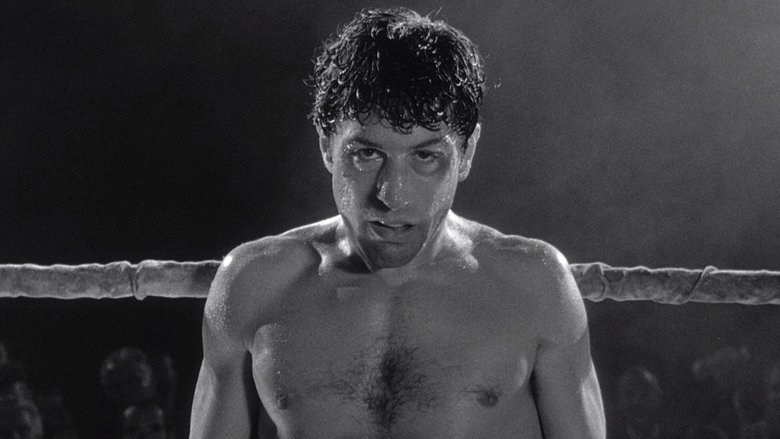
"Raging Bull" is widely regarded as one of the greatest films ever made and a high point in American cinema. Upon its release in 1980, it received critical acclaim, though it was not a major box office success. Its reputation grew exponentially over the decade, and it was voted the best film of the 1980s in numerous prestigious critics' polls. The film cemented the legacies of Martin Scorsese as a master filmmaker and Robert De Niro as one of his generation's finest actors, earning De Niro his second Academy Award.
Its influence on cinema is profound. The film's brutal, subjective, and highly stylized boxing sequences revolutionized how fight scenes were depicted, moving the camera inside the ring and using expressionistic techniques—slow motion, jarring sound design, and distorted perspectives—to convey the boxer's psychological state rather than just the sport's mechanics. This visceral approach has been emulated in countless films since. The black-and-white cinematography by Michael Chapman was a bold artistic choice that flew in the face of commercial trends, inspiring future filmmakers to use monochrome for aesthetic and thematic purposes.
De Niro's method acting and extreme physical transformation became legendary, setting a new standard for commitment to a role. The film's unflinching portrayal of domestic violence and toxic masculinity was raw and ahead of its time, presenting an antiheroic protagonist who was deeply unlikable yet tragically human. "Raging Bull" is more than a sports biopic; it's considered a cinematic opera, a powerful and personal work of art that continues to be studied for its technical mastery and profound exploration of human frailty.
Audience Reception
Audiences have generally held "Raging Bull" in high esteem, though it is often described as a difficult and painful film to watch. Praise is almost universally directed at Robert De Niro's transformative and powerful performance, which is considered one of the greatest in cinema history. Martin Scorsese's masterful and artistic direction, particularly the innovative and brutal fight sequences, is also frequently lauded. Many viewers appreciate the film's unflinching psychological depth and its refusal to offer a simple, feel-good narrative like more conventional sports films such as "Rocky." The striking black-and-white cinematography is another aspect that audiences often cite as a major strength.
The main points of criticism from some viewers center on the very aspects that others praise. The relentless bleakness of the story and the unlikable nature of the protagonist, Jake LaMotta, make it a grueling experience for some. The graphic violence, both in the ring and in the domestic scenes, is intense and can be off-putting. Some viewers find the pacing slow, especially in the scenes depicting Jake's life outside of boxing. Despite these criticisms, the overall verdict among cinephiles and serious film watchers is overwhelmingly positive, with many considering it a masterpiece of filmmaking.
Interesting Facts
- To portray the older, overweight Jake LaMotta, Robert De Niro gained approximately 60 pounds by going on an eating tour of Italy and France, a record-breaking weight gain for a film role at the time.
- Martin Scorsese was initially reluctant to make a film about boxing, a sport he disliked. He was persuaded by Robert De Niro after a near-fatal drug overdose, seeing the story as a parallel to his own self-destructive path and a way to save his own life and career.
- The film was shot in black and white for several reasons: to create period authenticity, to distinguish it from "Rocky," and because Scorsese was concerned about the long-term fading of color film stock.
- The graphic-looking blood in the fight scenes was Hershey's chocolate syrup, which shows up better on black-and-white film than standard fake blood.
- To achieve an authentic home-movie feel for the film's only color sequences, Scorsese had the camera operated by teamsters and personally scratched the negative to make it look aged.
- Joe Pesci, who plays Joey LaMotta, had practically given up on acting before De Niro saw him in a low-budget film and recommended him for the part.
- During the scene where Jake confronts Joey, De Niro actually cracked one of Joe Pesci's ribs during a sparring take. The shot, and Pesci's audible groan, made it into the final cut.
- The sound effects for punches were created by smashing melons and tomatoes, while the flashbulb sounds were made from actual gunshots.
⚠️ Spoiler Analysis
Click to reveal detailed analysis with spoilers
Frequently Asked Questions
Explore More About This Movie
Dive deeper into specific aspects of the movie with our detailed analysis pages
Comments (0)
No comments yet. Be the first to share your thoughts!