
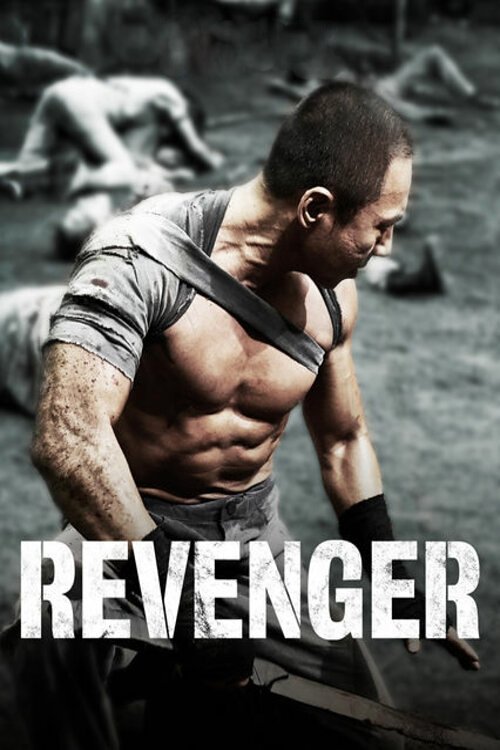
Full spoilers follow. The film's structure is a reversal of the usual revenge template. Kim Yool is not a man setting out on a quest — he is a man finishing one. A policeman whose wife and daughter were murdered by the reckless gangster Carlos Kuhn, he has already hunted down and killed everyone involved in their deaths except Kuhn himself. That backstory is the engine and it arrives essentially pre-completed, which is why Yool has almost nothing to say: he has no future to discuss.
Kuhn, meanwhile, is a convict on an isolated island penitentiary where he has seized power and rules the prison outright. Yool's plan is not escape or infiltration by stealth; because of the severity of his own crimes he is sentenced to the same island. His imprisonment is the delivery system. The film's most quietly devastating implication is that being condemned costs him nothing — a cell is simply where he already lived.
On the island he encounters Maly, who has every reason to hate him: he is the one responsible for her being imprisoned there. She is a formidable archer whose entire existence is organised around protecting the child, Jin. The relationship does not soften through conversation. It turns on a single act — when Kuhn's henchmen threaten the child's life and Yool saves them, Maly forgives him. This is the hinge of the whole picture: the moment Yool's violence stops serving the dead and starts serving the living is the only moment anyone in the story grants him anything. Bao, leading a band of marauders, occupies the unstable middle ground, a reminder that most people under a tyranny neither resist nor rule but simply adapt.
The confrontation with Kuhn resolves the plot but pointedly does not resolve Yool. And then comes the detail that has kept the film in discussion: a post-credits scene in which Yool appears in a robe, in a dusty, windswept environment, with structures that are hard to make out. Reviewers have openly asked what it is — the world beyond the island, his home, or somewhere the ships have taken him. Nothing in the film answers this.
Read back through that final image, the whole film changes character. If the landscape is real, Revenger is a story about a man who survived his own revenge and must now discover whether anything remains to be done with a life he had already written off. If it is not real — if the illegibility of the place is the point — then the island was purgatory and the ending is the arrival of a man who died with his family and has only now been permitted to stop fighting. Either way, the meaning that becomes clear only in retrospect is that the target was never really Carlos Kuhn. Kuhn was the last reason Yool had to be a person. Killing him removes it. The post-credits scene is the film asking, without answering, what is supposed to happen to a weapon once the war is over.