Spirited Away
千と千尋の神隠し
Overview
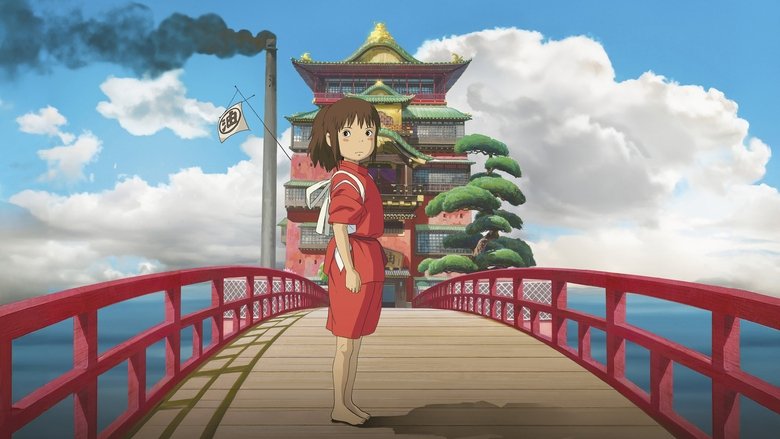
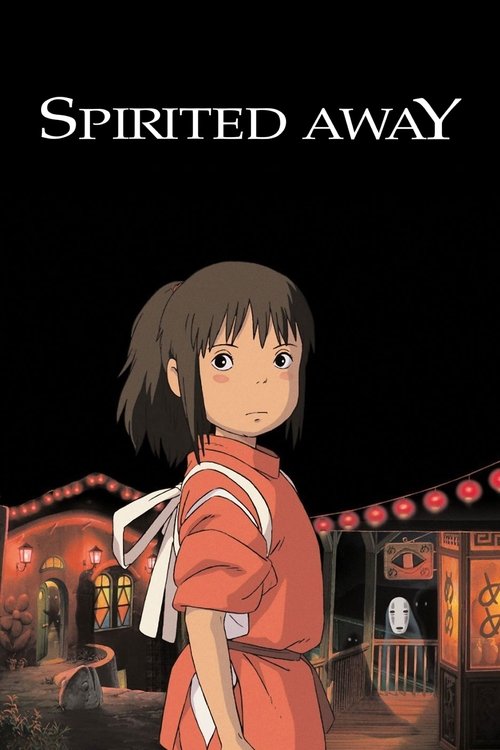
"Spirited Away" tells the story of Chihiro, a sullen ten-year-old girl who is unhappy about moving to a new town. When her father takes a wrong turn, they discover what appears to be an abandoned amusement park. Against Chihiro's wishes, her parents explore a food stall and greedily begin to eat, which causes them to mysteriously transform into pigs.
As dusk falls, the park reveals itself to be a vibrant town inhabited by spirits, gods, and monsters. Trapped in this supernatural world, Chihiro finds an ally in a mysterious boy named Haku. He advises her that to survive and find a way to rescue her parents, she must get a job at the local bathhouse, which is run by the powerful and tyrannical witch, Yubaba.
Core Meaning
The core meaning of "Spirited Away" revolves around Chihiro's journey from a state of childish apathy to one of responsibility, courage, and self-awareness. Director Hayao Miyazaki intended the film to be a story for ten-year-old girls, creating a heroine they could look up to who isn't a traditional hero but an ordinary girl who finds her strength through perseverance.
The film serves as a powerful allegory for the challenges of navigating the adult world and the importance of holding onto one's identity in the face of societal pressures that seek to commodify and control. It critiques modern greed and consumerism, symbolized by Chihiro's parents turning into pigs, reflecting Japan's bubble economy of the 1980s. Ultimately, it is a story about adaptation, the pain and beauty of change, and the idea that love, hard work, and maintaining one's inner self are the keys to overcoming adversity.
Thematic DNA
Coming-of-Age and Identity
The central theme is Chihiro's transition from childhood to adulthood. Initially whiny and dependent, she is forced to become resourceful, brave, and hardworking to survive. This journey is intrinsically linked to the theme of identity. Yubaba controls her workers by stealing their names; Chihiro becomes 'Sen'. Haku warns her not to forget her real name, as doing so would mean she could never leave the spirit world. Her struggle to remember who she is, while adapting to her new role, is central to her growth.
Critique of Greed and Consumerism
Miyazaki uses the spirit world to critique modern society's avarice. Chihiro's parents' transformation into pigs is a direct symbol of gluttony and consumerism. The bathhouse itself is a hierarchical, capitalist society where workers serve wealthy gods, and gold incites a frenzy of greed. The character No-Face reflects this theme powerfully; initially shy, he becomes a monstrous, consuming creature when exposed to the greed of the bathhouse staff, offering fake gold in exchange for endless service.
Environmentalism
A subtle but persistent theme is the importance of respecting nature. This is most vividly portrayed through the 'Stink Spirit' that visits the bathhouse. Chihiro discovers it is actually a polluted River Spirit, choked with human waste, including a bicycle. By cleaning it, she restores its true, powerful form. Haku's backstory also carries an environmental message; he is the spirit of the Kohaku River, which was filled in to build apartments, causing him to lose his home and his name.
The Blurred Line Between Good and Evil
"Spirited Away" avoids simple dichotomies of good versus evil. Most characters exhibit a mix of positive and negative traits. Yubaba is greedy and cruel but is also a fair rule-keeper and shows deep love for her baby, Boh. Haku helps Chihiro but also carries out dark tasks for Yubaba. No-Face is destructive but also lonely and seeking connection. Even Yubaba's seemingly kinder twin sister, Zeniba, is initially vengeful. The film suggests that actions, not inherent nature, define a character's morality.
Character Analysis
Chihiro Ogino / Sen
Rumi Hiiragi
Motivation
Her primary motivation is to rescue her parents from Yubaba's spell and return to the human world. This goal expands as she develops relationships, and she becomes motivated by a desire to help her friends, particularly to free Haku from his servitude to Yubaba.
Character Arc
Chihiro begins the film as apathetic, fearful, and childish, clinging to her mother's arm. Thrown into the spirit world, she is forced to mature rapidly. She learns the value of hard work, perseverance, and compassion. By taking on the name Sen, she develops a new, more capable persona, but her core kindness remains. She evolves from a passive child into a brave young woman who takes initiative to save not only her parents but also her friends, Haku and No-Face. Her final act of correctly identifying that her parents are not among the pigs shows her newfound wisdom and intuition.
Haku / Nigihayami Kohakunushi
Miyu Irino
Motivation
Haku's motivation is twofold. He feels a connection to Chihiro and is driven to protect her. Simultaneously, he seeks to break free from Yubaba's control and reclaim his lost identity. He made a deal with Yubaba to learn magic, but it cost him his freedom and memories.
Character Arc
Haku is first introduced as a mysterious and knowledgeable guide who helps Chihiro. However, he also has a cold, ruthless side as Yubaba's apprentice. His arc is one of rediscovering his lost identity. Having forgotten his real name, he is trapped and controlled by Yubaba. Through Chihiro's help and her memory of him as the Kohaku River spirit who once saved her, he is able to remember his name and break free. He transforms from a conflicted servant to a free spirit who reciprocates Chihiro's loyalty.
Yubaba
Mari Natsuki
Motivation
Yubaba is motivated almost entirely by profit and the accumulation of wealth. She maintains absolute control over the bathhouse and its employees to maximize her earnings. Her secondary motivation is the protection and coddling of her son, Boh.
Character Arc
Yubaba is the powerful witch who runs the bathhouse. She is characterized by her greed, short temper, and domineering nature. Her character does not have a significant arc of change but is instead revealed to have more complexity than initially apparent. While she is the primary obstacle for Chihiro, she is bound by the rules of the spirit world and honors her contracts. Her fierce, over-the-top love for her giant baby, Boh, reveals a softer, albeit still selfish, side to her personality, preventing her from being a purely evil villain.
No-Face (Kaonashi)
Akio Nakamura
Motivation
No-Face's motivation stems from a deep-seated loneliness and a desire for connection and validation. He initially focuses this desire on Chihiro because she was the first to acknowledge him. His destructive behavior is a misguided attempt to win her and others' affection through material wealth.
Character Arc
No-Face begins as a silent, lonely spirit who seems to be seeking a connection. After being shown kindness by Chihiro, he enters the bathhouse and becomes corrupted by the greed he witnesses, transforming into a ravenous monster that consumes others and creates fake gold. His arc is one of being pacified and finding a true sense of belonging. Chihiro is able to calm him, and by taking him away from the toxic environment of the bathhouse to the gentle home of Zeniba, he reverts to his peaceful nature and finds a place where he is accepted.
Symbols & Motifs
Names
Names symbolize identity and control. To lose one's name is to lose one's sense of self and past. Yubaba enslaves her workers by taking their names, binding them to the bathhouse. Chihiro must hold on to her real name to remember her mission and her connection to the human world. Haku has forgotten his name and is thus trapped in servitude. Chihiro remembering his true name, Kohaku River, frees him.
When Chihiro signs a work contract with Yubaba, the witch magically removes characters from her name (千尋) to rename her Sen (千). Haku repeatedly warns Sen not to forget her true name. The climax of Haku's arc occurs when Chihiro remembers he is the spirit of the Kohaku River, breaking Yubaba's control over him.
The Bathhouse (Aburaya)
The bathhouse is a microcosm of modern Japanese society, with its strict hierarchies, relentless labor, and focus on profit. It represents a world governed by rules and transactions, where value is determined by one's usefulness and ability to generate wealth. It's a place of purification for the spirits, but also a site of corruption and greed.
The entire middle section of the film takes place within the bathhouse. Its structure reflects its hierarchy, with the workers' quarters at the bottom and Yubaba's opulent penthouse at the very top. Chihiro's journey involves learning to navigate this complex social structure, from cleaning floors to serving the highest-ranking spirits.
Pigs
Pigs are a potent symbol of greed, gluttony, and the loss of humanity due to consumerism. Miyazaki stated that the transformation of Chihiro's parents was a metaphor for people during Japan's bubble economy who became greedy and never realized they had lost their humanity.
At the beginning of the film, Chihiro's parents gorge themselves on food meant for the spirits and are unceremoniously turned into pigs. They remain this way for most of the film. In the final test, Chihiro must identify her parents from a pen of pigs to break the spell.
No-Face (Kaonashi)
No-Face symbolizes loneliness and the search for identity in a consumerist society. He has no voice or personality of his own, instead reflecting the desires and emotions of those he encounters. In the bathhouse, surrounded by greed, he becomes a monstrous consumer, demanding attention by offering gold. He represents a personality shaped and corrupted by its environment.
No-Face first appears as a shy, translucent spirit whom Chihiro shows kindness to by letting him inside out of the rain. Inside the bathhouse, he observes the staff's obsession with gold and begins to magically produce it, growing larger and more aggressive as he consumes workers and food. He is only pacified when Chihiro feeds him a magic emetic cake and leads him away from the corrupting influence of the bathhouse.
The Train
The train journey represents a passage or transition, both literally and metaphorically. It is a journey into the unknown, a moment of quiet reflection and a departure from the chaotic world of the bathhouse. It symbolizes Chihiro's growth, as she embarks on a selfless mission not for herself, but to save Haku.
To return a stolen seal to Zeniba, Chihiro takes a one-way train that travels across a vast, shallow sea. The journey is quiet and contemplative, with shadowy, featureless figures as fellow passengers. This scene marks a significant shift in the film's tone and in Chihiro's personal development.
Memorable Quotes
一度あったことは忘れないものさ、思い出せないだけで。 (Ichido atta koto wa wasurenai mono sa, omoidasenai dake de.)
— Zeniba
Context:
Zeniba says this to Chihiro at her cottage when Chihiro is struggling to remember Haku. This encouragement helps Chihiro later recall her memory of falling into the Kohaku River, which in turn helps her remember Haku's true name and set him free.
Meaning:
Translated as, "Once you've met someone, you never really forget them. It just takes a while for your memories to return." This quote speaks to the enduring impact of relationships and experiences. It suggests that memories and connections are never truly lost, merely buried, and can be rediscovered. It reinforces the central theme of identity and memory in the film.
お前の本当の名前は… コハク川だ! (Omae no hontō no namae wa... Kohakugawa da!)
— Chihiro
Context:
As Haku flies Chihiro back to the bathhouse from Zeniba's home, a memory surfaces for Chihiro of when she fell into a river as a small child but was safely washed ashore. She realizes the river was named Kohaku, and that Haku is its spirit. Upon hearing his name, Haku's dragon form shatters away, and he becomes free.
Meaning:
Translated as, "Your real name... is the Kohaku River!" This is a climactic line where Chihiro finally remembers Haku's true identity. The act of speaking his name is the key to his liberation, symbolizing the power of memory, connection, and identity to break spells and overcome oppression.
ここで働かせてください! (Koko de hatarakasete kudasai!)
— Chihiro
Context:
Following Haku's instructions, Chihiro confronts the boiler man Kamaji and then the formidable witch Yubaba, repeatedly asking for a job. Despite Yubaba's intimidation and refusal, Chihiro's persistence eventually forces the witch to grant her a contract, as Yubaba is bound by an oath to give work to anyone who asks for it.
Meaning:
Translated as, "Please let me work here!" This simple, repeated plea represents Chihiro's first major act of courage and defiance. In a terrifying new world, she overcomes her fear and insists on a right to exist through labor, as Haku instructed her. It marks the beginning of her transformation from a passive child to a determined individual.
Philosophical Questions
What is the relationship between memory, name, and identity?
The film deeply explores the idea that one's identity is inextricably linked to one's name and past. Yubaba's control is predicated on stripping individuals of their names, thereby severing them from their history and sense of self. Haku is a powerful being, yet he is completely subservient because he cannot remember who he is. The film posits that true freedom is impossible without self-knowledge, which is rooted in memory. Chihiro's journey is not just about survival, but about actively holding onto her identity, and in doing so, she is able to liberate others by helping them remember theirs.
How does an environment shape an individual's morality and behavior?
"Spirited Away" uses the character of No-Face to powerfully illustrate this question. He arrives as a blank slate, a quiet and seemingly harmless spirit. However, when he enters the bathhouse, an environment driven by greed and transactional relationships, he learns to behave in the only way that gets him attention: by offering gold and consuming everything in his path. He becomes a monster. It is only when Chihiro removes him from this toxic environment and brings him to Zeniba's simple, nurturing home that he can return to a gentle, calm state. The film suggests that morality is not always inherent but can be profoundly influenced by the values of the society one is immersed in.
Can one mature without losing the core of one's childhood self?
The film charts Chihiro's significant growth from a frightened child to a capable young woman. She learns to work hard, be responsible, and confront her fears. Yet, the very qualities that allow her to succeed are rooted in her childlike nature: her innate kindness, her lack of greed, and her capacity for empathy. She shows compassion to the Stink Spirit, Haku, and No-Face when others will not. The film suggests that true maturity is not the abandonment of childhood virtues but the integration of them with newfound strength and wisdom. Chihiro becomes more capable without becoming cynical.
Alternative Interpretations
One popular alternative interpretation views "Spirited Away" as an allegory for child prostitution. In this reading, the bathhouse (a 'yūya') is a stand-in for a 'yūjo-ya' (brothel) from Japan's Edo period. The girls who work there, like Chihiro (now 'Sen'), have their names taken and are forced into servitude under a powerful 'Yubaba' (literally 'bathhouse hag,' but also a term for a brothel madam). The clients are the spirits or 'kami-sama' ('gods' or 'customers'). This interpretation casts No-Face's obsession with Sen and his offers of gold in a much darker light. While Hayao Miyazaki has not explicitly confirmed this, he has acknowledged that Japan's burgeoning sex industry was on his mind and that he wanted to create a story where a young girl could navigate such a world and emerge unscathed.
Another interpretation posits that the entire experience is a dream or a psychological journey representing Chihiro's anxieties about moving to a new place. The spirit world is a manifestation of her fears of the unknown and the challenges of growing up. Each character she meets represents a facet of her own developing personality or an external pressure she must overcome. Her parents' transformation is her fear of them becoming distant or unrecognizable, and her success in the spirit world is a metaphor for her gaining the confidence to face her new life.
Cultural Impact
"Spirited Away" had a monumental cultural impact, both in Japan and internationally. Upon its release in 2001, it became the highest-grossing film in Japanese history, a title it held for 19 years, shattering records and solidifying animation's place as a mainstream artistic and commercial force. The film's success challenged the perception in Japan that anime was a niche genre.
Globally, its influence was transformative. The film's win for Best Animated Feature at the 75th Academy Awards was a landmark moment; it was the first, and to this day only, non-English-language, hand-drawn film to win the award. This victory significantly raised the profile of anime in the Western world, moving it beyond a cult following and into mainstream critical and popular consciousness. It introduced a global audience to the depth and maturity of Japanese storytelling, proving that animation could tackle profound, universal themes with artistic sophistication. Critics like Roger Ebert championed the film, further legitimizing it as high art. The film's success paved the way for other anime films to gain wider international distribution and recognition, fundamentally changing the global market for Japanese animation.
The film's exploration of Shinto folklore, environmentalism, and critiques of modernity resonated deeply with viewers worldwide, bridging cultural gaps through its universal story of growth and resilience. Its characters, particularly the enigmatic No-Face, have become iconic in pop culture, inspiring countless pieces of fan art, cosplay, and merchandise, ensuring its legacy continues to endure decades after its release.
Audience Reception
"Spirited Away" received near-universal acclaim from audiences worldwide and is widely considered one of the greatest animated films ever made. Viewers consistently praise its breathtakingly imaginative world, stunning hand-drawn animation, and profound emotional depth. The story of Chihiro's growth resonates strongly with audiences of all ages, who find her journey from a timid child to a courageous heroine inspiring and relatable. The complex and morally ambiguous characters, such as Haku and No-Face, are frequently highlighted as a source of the film's enduring appeal.
The main points of praise focus on the film's rich symbolism, its gentle yet powerful storytelling, and its ability to blend enchanting fantasy with serious themes like environmentalism, greed, and the loss of tradition. The musical score by Joe Hisaishi is also frequently cited as a key component of the film's magical atmosphere. Criticisms are exceptionally rare, though some first-time Western viewers occasionally note feeling bewildered by the deep immersion in Japanese Shinto folklore and cultural specifics without much exposition. However, most find this aspect adds to the film's unique and immersive quality rather than detracting from it. Overall, the audience verdict is that "Spirited Away" is a timeless masterpiece that offers new discoveries with every viewing.
Interesting Facts
- The film was created without a script, a common practice for director Hayao Miyazaki, who develops the story organically through drawing storyboards.
- Miyazaki was inspired to create Chihiro after observing his friend's sullen 10-year-old daughter, wanting to make a film for ordinary girls of that age.
- The scene with the Stink Spirit was based on Miyazaki's own experience of cleaning a polluted river near his home, where he and others pulled a bicycle out of the sludge.
- The film became the first hand-drawn and non-English-language animated feature to win the Academy Award for Best Animated Feature.
- The design of the bathhouse was partly inspired by a real bathhouse Miyazaki visited in his youth and the Edo-Tokyo Open-Air Architectural Museum.
- To celebrate the film's completion, Hayao Miyazaki cooked a meal for the entire production team.
- John Lasseter of Pixar was a huge admirer of Miyazaki and served as the executive producer for the English-language dub, convincing Disney to purchase the distribution rights.
- The original Japanese title is "Sen to Chihiro no Kamikakushi," which translates to "Sen and Chihiro's Spiriting Away," highlighting the dual identity of the protagonist.
Easter Eggs
The Soot Sprites (Susuwatari) that work in Kamaji's boiler room previously appeared in another Studio Ghibli film.
These helpful, coal-carrying creatures first appeared in Hayao Miyazaki's 1988 film "My Neighbor Totoro." Their inclusion in "Spirited Away" is a fun callback for fans of Studio Ghibli's work, connecting the magical worlds of two of its most beloved films.
A pillow in Boh's playroom has a picture of Jiji, the black cat from "Kiki's Delivery Service," on it.
This is another subtle nod to a previous Studio Ghibli film, "Kiki's Delivery Service" (1989). Miyazaki often includes small references to his other works, creating a sense of a shared, whimsical universe for attentive viewers.
The director's note on the storyboard for the scene where Yubaba blasts No-Face with energy explicitly said 'Dragon Ball style'.
This is a fun, behind-the-scenes reference to another iconic Japanese anime, "Dragon Ball." It shows how even a master like Miyazaki draws inspiration from other popular works within the medium, in this case, to convey a sense of overwhelming power in Yubaba's attack.
⚠️ Spoiler Analysis
Click to reveal detailed analysis with spoilers
Frequently Asked Questions
Explore More About This Movie
Dive deeper into specific aspects of the movie with our detailed analysis pages
Comments (0)
No comments yet. Be the first to share your thoughts!