Skip to content
The Battleship Island
Drenched in coal dust, suffocating heat, and grim wartime desperation, this historical action epic captures agonizing survival through the image of a bloodstained concrete fortress surrounded by black ocean waves.
The Battleship Island

The Battleship Island

군함도

"1945 Hashima. We called it hell on earth."

26 July 2017 South Korea 132 min 7.2 (297)

Director: Ryoo Seung-wan

Cast: Hwang Jung-min, So Ji-sub, Song Joong-ki, Lee Jung-hyun, Kim Su-an

Drama War Parental Love and the Fight for the Next Generation Systemic Dehumanization and Forced Labor Internal Treachery and Complicity Collective Solidarity and Resistance
Budget: $21,000,000
Box Office: $46,183,383

Overview

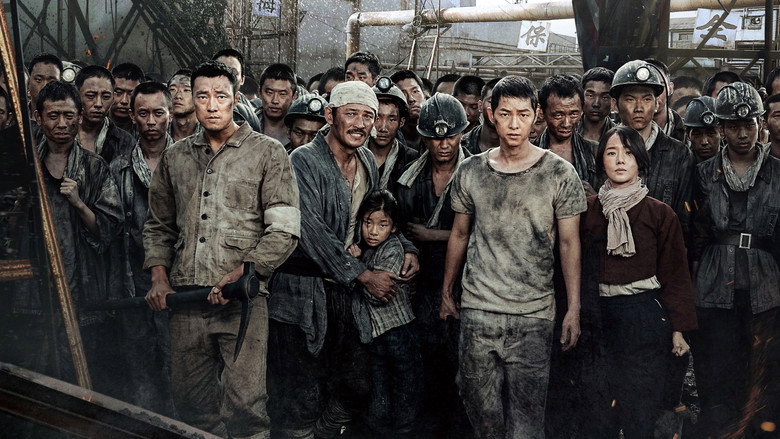
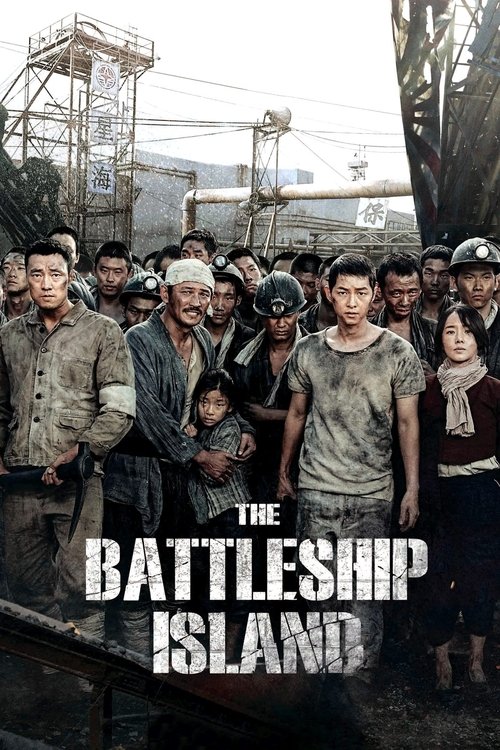
Set during the waning months of World War II in 1945, The Battleship Island centers on Hashima Island (nicknamed "Battleship Island" due to its silhouette resembling a warship), a grim, heavily fortified concrete outcrop off the coast of Nagasaki. Under Imperial Japanese rule, hundreds of Koreans are lured or coerced into arriving on the island under false pretenses of legitimate employment. Instead, they are plunged into a brutal underground penal colony where men are subjected to deadly labor in submarine coal mines reaching deep under the seabed, and women are coerced into sexual slavery.

The narrative weaves the fates of disparate Korean arrivals: Lee Kang-ok (Hwang Jung-min), a shrewd jazz bandmaster desperate to shield his young, talented daughter So-hee (Kim Su-an); Choi Chil-sung (So Ji-sub), a formidable street brawler from Seoul; and Oh Mal-nyeon (Lee Jung-hyun), a resilient woman scarred by colonial exploitation. As conditions deteriorate and the Pacific War turns against Japan, Park Moo-young (Song Joong-ki), a trained operative of the Korean Liberation Army, infiltrates the fortress on a covert extraction mission.

As the garrison commanders attempt to erase all traces of war crimes and forced labor before Allied forces arrive, tensions escalate into a struggle for survival. The disparate laborers must overcome internal divisions, class conflicts, and hidden betrayals to attempt an escape from the concrete prison.

Core Meaning

Director Ryoo Seung-wan conceived the film not merely as a black-and-white nationalist grievance story, but as an exploration of human behavior in extreme, dehumanizing systems. The tragedy of imperial atrocities was compounded by internal betrayal and exploitation—where ordinary individuals turned into exploiters or heroes when tested by war.

The core message asserts that human solidarity and paternal/fraternal devotion represent the final bulwark against systemic oppression. By depicting both cruel Japanese military personnel and treacherous Korean collaborators alongside selfless everyday victims, the film emphasizes that true villainy lies in the mechanisms of exploitation, while dignity is reclaimed through collective resistance and sacrifice.

Thematic DNA

Parental Love and the Fight for the Next Generation 30%
Systemic Dehumanization and Forced Labor 25%
Internal Treachery and Complicity 25%
Collective Solidarity and Resistance 20%

Parental Love and the Fight for the Next Generation

The emotional core rests on the bond between Lee Kang-ok and his daughter So-hee. Kang-ok is not an ideologue or a patriot; his sole motivation is ensuring his daughter's physical and psychological survival. His willingness to clown, flatter, and barter highlights how parental instinct persists even when dignity is stripped away.

Systemic Dehumanization and Forced Labor

The film presents Hashima Island as a merciless industrial machine. Miners work half-naked in cramped mine shafts with temperatures exceeding 40°C, risking gas explosions and cave-ins for microscopic wages that are immediately deducted for food and lodging.

Internal Treachery and Complicity

Unlike conventional anti-colonial cinema, the film highlights pro-Japanese Korean collaborators (chinilpa). Figures who pose as spiritual leaders of the laborers exploit their own countrymen, illustrating how oppressive systems maintain control by turning victims against one another.

Collective Solidarity and Resistance

Individual survival gives way to collective rebellion. The disparate Korean factions—gangsters, musicians, comfort women, and political activists—unite, proving that liberation requires setting aside personal grievances.

Character Analysis

Lee Kang-ok

Hwang Jung-min

Archetype: The Opportunist / Devoted Father Key Trait: Shrewd adaptability, comedic warmth, paternal devotion.

Motivation

Keep his daughter So-hee safe and escape alive.

Character Arc

Starts as an apolitical, self-serving bandleader; evolves into a courageous protector willing to lay down his life for his child and community.

Park Moo-young

Song Joong-ki

Archetype: The Idealist Soldier / Liberator Key Trait: Tactical discipline, moral clarity, combat skill.

Motivation

Complete his mission and liberate the captive workers.

Character Arc

Arrives on an elite, narrowly focused extraction mission; broadens his objective after uncovering leadership betrayal to orchestrate a mass evacuation.

All 5 characters and cast

Symbols & Motifs

The Subterranean Coal Mine (The "Underworld")

Meaning:

Symbolizes the literal and metaphorical descent into hell, representing complete physical entrapment where human beings are reduced to fuel for an imperial war machine.

Context:

Used in the narrow, suffocating underground shafts where Korean forced laborers toil under extreme temperatures and hazards.

The Clarinet / Musical Instruments

Meaning:

Serves as a symbol of humanity, joy, and emotional insulation, acting as both a survival currency and a protective shield that preserves familial bonds amidst brutality.

Context:

Utilized throughout the film by Kang-ok and So-hee to navigate camp politics and maintain their emotional purity.

The Concrete Sea Walls

Meaning:

Represents the boundary between isolation and liberty, while crashing waves serve as a constant reminder of natural and artificial imprisonment.

Context:

Surrounds the perimeter of Hashima Island, encasing the prisoners within the concrete fortress.

Candles / The Candlelight Assembly in the Shaft

Meaning:

Symbolizes grassroots unity and collective democratic awakening in the dark, directly echoing modern Korean civil society protests.

Context:

Featured in a pivotal scene inside the mine shaft where Korean laborers gather holding small candles.

The Tattered Rising Sun Flag

Meaning:

Symbolizes the shattering of imperial authority and the physical reclamation of autonomy by the oppressed.

Context:

Slashed in half during the climactic battle and escape sequence.

Memorable Quotes

소희야, 아빠만 믿어. 우리 꼭 여기서 나갈 수 있어.
— Lee Kang-ok (Hwang Jung-min)

Context

Spoken in quiet moments to calm his terrified child.

Meaning

Encapsulates the core human motivation driving the film—familial survival rather than grand political ideology.

부끄러운 줄 알아야지! 우리가 왜 여기서 이러고 싸워야 해?
— Choi Chil-sung (So Ji-sub)

Context

Delivered during internal strife among the laborers.

Meaning

Underscores the tragic futility of subjugated people turning against their fellow victims instead of their oppressors.

All 3 quotes

Philosophical Questions

Does extreme suffering justify moral compromise?

Through Kang-ok's self-abasement and Yoon's treacherous collaboration, the film examines the fine boundary between justifiable self-preservation and corrupt complicity.

Can historical truth be conveyed through fictionalized spectacle?

The film questions whether action-driven cinematic dramatization preserves traumatic collective memory or distorts historical reality.

What constitutes true leadership during crisis?

The contrast between a revered intellectual exploiting his people and a cynical street fighter sacrificing his life illustrates that genuine leadership is defined by selflessness rather than status or rhetoric.

Alternative Interpretations

Genre Blockbuster vs. Historical Realism: Viewers and critics debated whether blending real wartime tragedy with Hollywood-style blockbuster tropes honored history or diluted it, particularly regarding the dramatized mass breakout that did not occur in reality.

Full ending explanation

Cultural Impact

The film's production and release coincided with significant diplomatic friction surrounding Japan's 2015 registration of Hashima Island as a UNESCO World Heritage Site under "Sites of Japan's Meiji Industrial Revolution," which South Korea opposed due to the omission of wartime forced labor history.

Upon its domestic theatrical release, the film screened across more than 2,000 screens—occupying over 80% of cinema screens in South Korea during its opening weekend—which ignited widespread public backlash regarding theater conglomerate monopolies. Despite drawing over 6.59 million admissions, it fell short of the 10-million milestone expected by investors given its high production costs.

Audience Reception

Critical and audience reception highlighted several key strengths and criticisms:

  • Strengths: Praised for monumental production design, immersive practical sets, technical action choreography, and standout performances by Hwang Jung-min and Kim Su-an.
  • Criticisms: Criticized for a melodramatic tone, an overblown final escape sequence, an overcrowded ensemble cast, and the controversy surrounding screen distribution dominance.

Overall, it was recognized as a visually ambitious wartime epic whose genre spectacle provoked debate over historical authenticity.

Interesting Facts

  • The production chose not to film on Hashima Island and instead constructed an open set in Chuncheon, Gangwon Province, spanning roughly 66,000 square meters that recreated about two-thirds of the actual island's infrastructure.
  • With a production budget estimated at around 22–25 billion KRW (approx. $21 million USD), it was one of the costliest South Korean film productions of its era.
  • Actors underwent severe physical transformations: Lee Jung-hyun dropped her weight down to 36.5 kg to portray a starved comfort woman, while So Ji-sub and Hwang Jung-min underwent intense combat training.
  • The film reunited director Ryoo Seung-wan with lead actor Hwang Jung-min following their record-breaking collaboration on the 2015 action comedy Veteran.
  • Following divided theatrical reactions, Ryoo released a Director's Cut adding roughly 18 minutes of footage to expand character nuances and historical context.

Easter Eggs

Homage to Classic Prison Break Cinema

The narrative structure deliberately evokes Hollywood classics such as The Great Escape (1963) and Henri Charrière's Papillon by transitioning midway from social realism into a grand escape thriller.

Echo of Veteran Dynamic

The playful, rhythmic rapport between Hwang Jung-min and Kim Su-an echoes the quick-witted dialogue rhythms director Ryoo Seung-wan established in his previous film Veteran.

Cinematic Historical Resonance

Kim Su-an's casting as the imperiled daughter followed her breakout performance in Train to Busan (2016), reinforcing her cultural image as the face of innocent survival in disaster situations.

Frequently Asked Questions

Explore More About This Movie

Dive deeper into specific aspects of the movie with our detailed analysis pages

Comments (0)

Leave a comment

No comments yet. Be the first to share your thoughts!

Similar Movies