Skip to content
The King's Affection
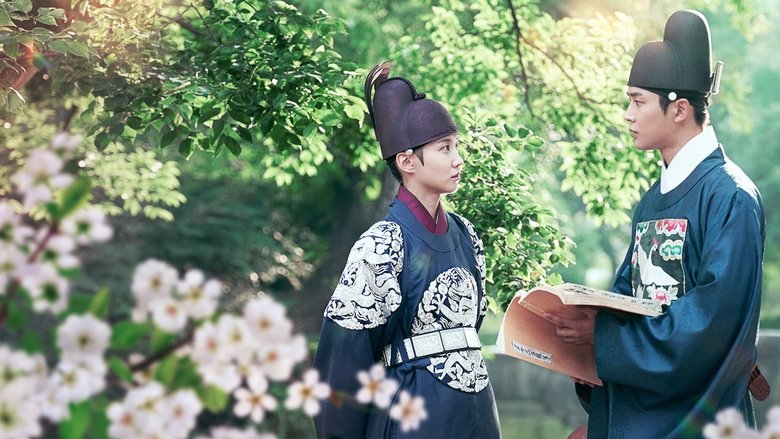
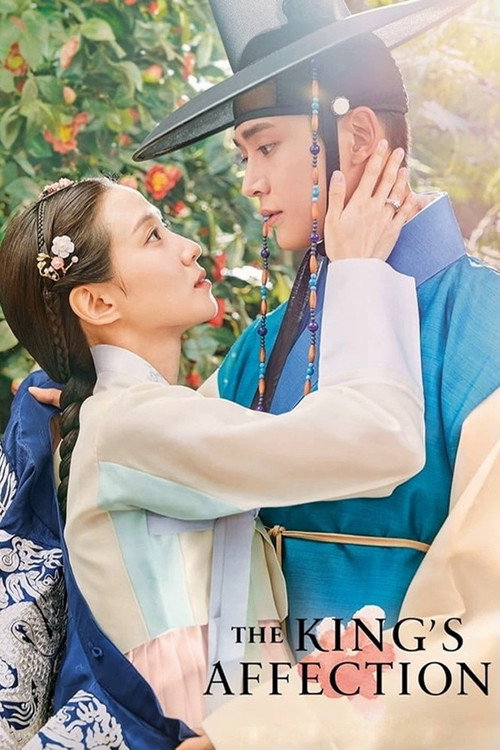
Set within the perilous halls of the Joseon court, this historical romance weaves a bittersweet tapestry of forbidden passion and hidden identity, evoking a haunting sensation of walking a tightrope over an abyss.
The King's Affection

The King's Affection

연모

11 October 2021 — 14 December 2021 South Korea 1 season 20 episode Ended 8.1 (298)

Cast: Park Eun-bin, Rowoon, Nam Yoon-su, Bae Yoon-kyung, Choi Byung-chan

Drama Identity, Authenticity, and Performance of Duty Love as Liberation and Refuge Tyranny, Political Corruption, and Moral Responsibility Gender Expectations and Agency Sacrificial Loyalty and Familial Legacy

Overview

The King's Affection (Yeonmo) is a 20-episode Korean historical drama set during the Joseon Dynasty. The story begins with a royal birth: the Crown Princess Consort gives birth to fraternal twins, a boy and a girl. Due to royal superstition viewing twins as a threat to royal authority, the female child, Dam-yi, is ordered to be killed, but her mother secretly smuggles her out to save her life. Years later, Dam-yi returns to the palace as a young court maid.

Through a twist of fate, Dam-yi encounters her twin brother, Crown Prince Lee Hwi, who asks her to swap clothes so he can sneak out. Royal assassins mistakenly target and execute the Prince in commoner's clothing. To protect everyone who concealed her survival, her mother forces Dam-yi to permanently assume the identity of her dead brother, growing into adulthood as Crown Prince Lee Hwi—distant, cold, and carrying a lethal secret.

The narrative follows Lee Hwi navigating deadly palace politics, ruthless court factions led by her power-hungry grandfather Lord Sangheon, and her growing feelings for Jung Ji-woon, her new royal tutor and childhood first love. Across its episodes, the series transitions from a gender-bender romantic comedy into a high-stakes political thriller about sovereign agency and justice.
Core Meaning

The core thesis of The King's Affection revolves around the human right to self-determination against oppressive institutional systems. Using its historical setting and gender-swap trope, the show critiques rigid societal hierarchies, patriarchy, and political corruption. Through Dam-yi's journey, it questions whether a person's worth and duty are dictated by birth or by conscious moral actions.

Ultimately, love and personal integrity are presented not as weaknesses, but as the ultimate strength capable of dismantling tyrannical structures. By surviving an imposed identity and stepping down from absolute authority to live authentically, Dam-yi demonstrates that true sovereignty lies in mastering one's own fate rather than ruling over others.

Thematic DNA

Identity, Authenticity, and Performance of Duty 30%
Love as Liberation and Refuge 25%
Tyranny, Political Corruption, and Moral Responsibility 20%
Gender Expectations and Agency 15%
Sacrificial Loyalty and Familial Legacy 10%

Identity, Authenticity, and Performance of Duty

The narrative continually explores the psychological toll of wearing a mask. Dam-yi must suppress her feminine identity, personal desires, and grief to perform the hyper-masculine role of a stern Joseon prince. Her performance evolves into an active effort to become a benevolent ruler who protects the vulnerable, culminating in shedding her royal disguise to live authentically as Dam-yi.

Love as Liberation and Refuge

Love serves as a sanctuary that keeps characters human rather than an obstacle to responsibility. Jung Ji-woon's love for Lee Hwi transcends gender and social rank, falling in love with the soul of the 'King' before knowing her female identity. Their romance acts as a catalyst allowing Dam-yi to feel visible and loved for who she truly is.

Tyranny, Political Corruption, and Moral Responsibility

This political conflict pits absolute power driven by greed against compassionate leadership. While figures like Lord Sangheon treat human lives as expendable pawns, Dam-yi and Ji-woon refuse to treat human life cheaply, arguing that a government sacrificing its people for prestige loses its right to exist.

Gender Expectations and Agency

The show subverts Joseon patriarchy through Dam-yi's exceptional intellect, martial skill, and political acumen, proving capability is not dictated by gender. Simultaneously, male characters like Ji-woon and Lee Hyun display tenderness, vulnerability, and emotional depth, challenging conventional masculine tropes.

Sacrificial Loyalty and Familial Legacy

Loyalty is continuously tested, with figures like Court Lady Kim, Eunuch Hong, and Commander Yoon putting their lives on the line for Dam-yi. The story also examines inherited sin, particularly through Ji-woon's struggle with his father Inspector Jung Seok-jo, who enforced violent orders.

Character Analysis

Crown Prince Lee Hwi / Dam-yi

Park Eun-bin

Archetype: The Hero in Disguise / Reluctant Ruler Key Trait: Unyielding resilience combined with quiet empathy

Motivation

To keep her loved ones safe, honor her brother's memory, and live a life where no one else dies because of her existence.

Character Arc

Starts as a terrified girl forced into a dead prince's identity who constructs a cold exterior to survive. She matures into a bold, compassionate leader confronting palace corruption, ultimately choosing personal authenticity over the throne.

Jung Ji-woon

Rowoon (Kim Seok-woo)

Archetype: The Devoted Scholar / Morally Grounded Lover Key Trait: Unwavering idealism, emotional warmth, and courage

Motivation

To live according to his moral code and protect Dam-yi at all costs.

Character Arc

Initially a free-spirited physician avoiding government posts due to trauma from his father's violence. Upon becoming royal tutor, he finds purpose in protecting Lee Hwi, embraces his feelings regardless of taboos, and becomes her primary emotional anchor.

All 4 characters and cast

Symbols & Motifs

The Lotus Flower / Lotus Seed (Yeonmo)

Meaning:

Symbolizes purity blooming out of muddy, corrupt waters, representing Dam-yi retaining her humanity despite the palace's bloody political games.

Context:

Ji-woon gives Dam-yi a lotus seed during their childhood, giving her the name Yeon-seon (lotus).

The Royal Dragon Robe (Gonryongpo)

Meaning:

Symbolizes both absolute sovereign authority and a suffocating golden cage. The weight of the robes reflects her emotional burden, and removing them at the end signifies her freedom.

Context:

Worn throughout her adult life while performing the hyper-masculine role of Crown Prince and King in the palace court.

The Silver Dagger / Ornamental Knife

Meaning:

Serves as a constant reminder of her mother's love, the danger surrounding her, and her resolve to take control of her own life rather than become a passive victim.

Context:

Given to Dam-yi by her mother for self-defense and kept throughout her journey.

The Jade Ring

Meaning:

Symbolizes silent, unrequited devotion and selfless love that demands nothing in return.

Context:

Worn and cherished by Prince Lee Hyun (Jaeun).

The Gat (Traditional Male Hat) & Hairpin

Meaning:

Visually highlights the tension between her male public persona and female private self.

Context:

Used during the act of tying or untying the gat and adjusting court attire throughout the series.

Memorable Quotes

여자로 태어난 것이 죽어야 할 이유는 되지 않습니다.
— Crown Princess Consort / Crown Prince Lee Hwi

Context

Spoken by Crown Princess Consort (Dam-yi's mother) in Episode 1 and referenced by Crown Prince Lee Hwi throughout Season 1.

Meaning

Encapsulates the central thematic conflict of the series—challenging misogynistic palace customs and asserting the intrinsic value of female lives.

하찮은 목숨이란 없습니다. 그 어떤 이유로도 죽어야 마땅한 사람은 없습니다.
— Crown Prince Lee Hwi (Dam-yi)

Context

Spoken by Crown Prince Lee Hwi to the royal court in Season 1, Episode 11.

Meaning

Marks Lee Hwi's decisive moral growth from a fearful, self-preserving prince to an assertive leader standing up against the ruling elite's disregard for human life.

All 4 quotes

Episode Highlights

The Tragic Birth and Swapped Destiny

S1E1

Establishes the premise—the birth of the royal twins, the secret saving of Dam-yi, and the bloody palace purge to conceal the birth.

Significance:

Sets up the high stakes of the series.

The Fatal Mistake

S1E2

Dam-yi and Prince Lee Hwi swap places, and Prince Lee Hwi (in girl's clothing) is assassinated by Jung Seok-jo.

Significance:

Forces Dam-yi to assume the role of Crown Prince forever.

The Royal Tutor Arrives

S1E5

Ji-woon enters the palace as Lee Hwi's Royal Tutor, leading to an intellectual clash that turns into mutual respect.

Significance:

Reignites the unspoken bond from their childhood.

Decisions and Weddings

S1E10

Under pressure from her grandfather, Lee Hwi agrees to take a Crown Princess.

Significance:

Deepens the tragedy of her hidden identity while Ji-woon struggles with his intense feelings.

Confession in the Wilderness

S1E12

Ji-woon confesses his love to Lee Hwi, explicitly stating that he loves the person regardless of gender or crown.

Significance:

Represents an emotional peak that solidifies their unconditional romantic connection.

The King is Dead, Long Live the King

S1E16

King Hyejong is assassinated via poison by Lord Sangheon's faction.

Significance:

Forces Dam-yi to step up and ascend the throne as King to prevent total factional tyranny.

The Secret Disclosed

S1E19

Ji-woon discovers Lee Hwi is Dam-yi, and Lord Sangheon learns the King is actually a woman.

Significance:

Initiates the grand, violent climax of the series.

The Final Reckoning and Rebirth

S1E20

Dam-yi engages in a poisoned-tea confrontation with Lord Sangheon, resulting in the fall of the corrupt regime.

Significance:

Lee Hyun becomes King, Dam-yi's record is legally expunged, and she lives peacefully as a free woman with Ji-woon.

Philosophical Questions

Is identity defined by societal duty or internal truth?

The show explores how society imposes rigid labels based on birth. Dam-yi demonstrates that one's true identity resides in individual choice and internal integrity.

Can a leader remain morally pure within a corrupt political system?

Represented by the lotus flower motif, the show asks if power inherently corrupts. Dam-yi shows that holding onto compassion is possible, though it requires immense personal sacrifice.

What constitutes true sovereignty?

The series contrasts Lord Sangheon's tyrannical control over the state with Dam-yi's moral self-sovereignty, proposing that true power is the ability to govern oneself righteously.

Alternative Interpretations

Critics and scholars have analyzed the narrative through multiple lenses:

Full ending explanation

Cultural Impact

The King's Affection arrived during a major global surge of interest in South Korean television. While cross-dressing sageuks have long been a staple of K-dramas, this series took the subgenre further by elevating the protagonist to the actual position of reigning Monarch rather than a scholar or court attendant.

Its International Emmy win in 2022 was celebrated in South Korea as a landmark achievement, proving that traditional period dramas could resonate with global streaming audiences on platforms like Netflix. It also cemented Park Eun-bin's status as one of South Korea's premier lead actresses prior to her role in Extraordinary Attorney Woo.

Audience Reception

Critical Praise:

  • Park Eun-bin's Acting: Received unanimous acclaim for carrying the heavy emotional weight of a monarch without exaggerated gestures.
  • Production Value & Visuals: Praised for exquisite traditional costumes, lush lighting, and art direction.
  • Chemistry: The dynamic between Park Eun-bin and Rowoon was lauded for its gentle build-up and mutual emotional maturity.

Main Points of Criticism:

  • Pacing Issues: Pacing slowed down significantly during Episodes 13–16 due to formulaic court political scheming.
  • Overused Tropes: Certain palace conspiracy plots and love triangle elements felt predictable.
  • Animal Welfare Controversy: The production faced brief online criticism regarding a scene involving a horse fall during filming.

Interesting Facts

  • The King's Affection became the first South Korean television drama in history to win an International Emmy Award, winning Best Telenovela at the 50th International Emmy Awards in 2022.
  • The series is based on the popular manhwa (comic) Yeonmo by Lee So-young, which featured a noticeably darker, more somber tone than the television adaptation.
  • To convincingly play a Joseon king, Park Eun-bin trained extensively to lower her vocal pitch, adjusted her posture, and studied male court speech patterns.
  • Actor Rowoon stands at 6 ft 3 in (190 cm), while Park Eun-bin is 5 ft 4 in (163 cm), requiring cinematographers to use customized wooden boxes and strategic angle shots for romantic close-ups.
  • The series was shot at several famous open-air historical film sets in South Korea, including Yongin Dae Jang Geum Park, Mungyeongsaejae Open Set, and Cheongnamdae Presidential Villa.
  • VFX split-screen compositions were heavily utilized in Episode 1 to allow Park Eun-bin's child-counterpart actors to appear simultaneously as twin brother and sister in the same shot.

Easter Eggs

The Fairy and the Woodcutter Reference

In Episode 3, the dreamy encounter by the riverbank uses soft light and framing derived from the famous Korean folktale The Fairy and the Woodcutter (Seonnyeo wa Namuggun), visually styling Dam-yi as an ethereal creature stepping into the human world.

Historical Twin Superstition

The premise leverages real historical Joseon-era beliefs where royal opposite-sex twins were viewed as disturbing the harmony of Yin and Yang, portending disaster for the royal bloodline.

Name Wordplay (Yeonmo)

The original title Yeonmo (연모) translates directly to 'Affection' or 'Yearning', and functions as an intentional homonym tying into 'Lotus' (Yeon), linking the title directly to Dam-yi's childhood name Yeon-seon.

Frequently Asked Questions

Explore More About This Movie

Dive deeper into specific aspects of the movie with our detailed analysis pages

Comments (0)

Leave a comment

No comments yet. Be the first to share your thoughts!

Similar Movies