Skip to content
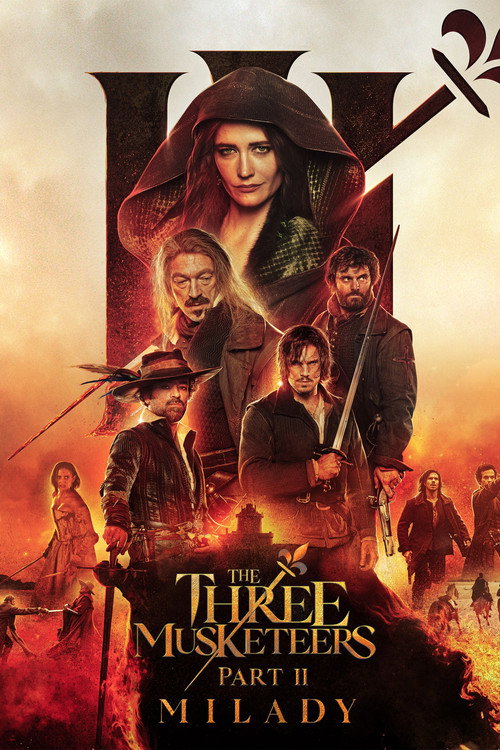
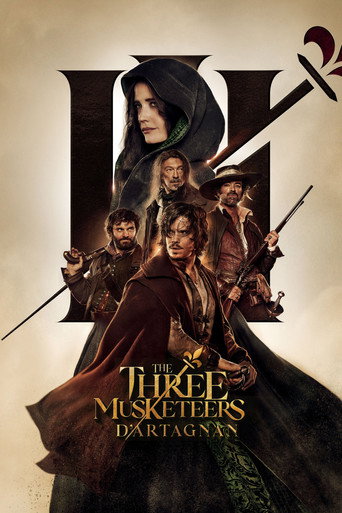
The Three Musketeers: Milady
A storm-drenched, gunpowder-blackened swashbuckler cloaked in candlelit shadows, the film bleeds vengeance and tragic romanticism as fractured souls clash against the crushing gears of statecraft and inescapable destiny.
The Three Musketeers: Milady

The Three Musketeers: Milady

Les Trois Mousquetaires : Milady

"The epic adventure continues..."

13 December 2023 France 115 min 6.4 (861)

Director: Martin Bourboulon

Cast: François Civil, Vincent Cassel, Romain Duris, Pio Marmaï, Eva Green

Drama Action Adventure The Burden of the Past and Retribution Female Autonomy vs. Patriarchal Oppression Brotherhood and the Fragility of Honor Political Machination and Religious Conflict
Budget: $39,000,000
Box Office: $21,730,766

Overview

The Three Musketeers: Milady (Les Trois Mousquetaires : Milady) is the concluding chapter of director Martin Bourboulon’s ambitious two-part cinematic adaptation of Alexandre Dumas’s classic 1844 novel. Picking up immediately after the cliffhanger of Part I: D'Artagnan, the story finds the young Gascon swordsman D'Artagnan desperately searching for his beloved Constance Bonacieux, who was abducted before his eyes. To rescue her, D’Artagnan is forced into an uneasy, dangerous alliance with the enigmatic and lethal Milady de Winter.

Meanwhile, France stands on the brink of catastrophic civil and religious war. Athos, Porthos, and Aramis have joined the front lines at the Siege of La Rochelle, where royalist forces confront Protestant rebels backed by the English crown. As dark secrets from Athos’s past re-emerge to shatter existing loyalties, Cardinal Richelieu’s web of political espionage tightens.

The narrative expands beyond Paris into battlefield trenches, English strongholds, and candlelit chambers, shifting the focus toward Milady herself. Blending historical realism with breathless swordplay and high-stakes intrigue, the film follows the four companions as their individual loyalties and vows are tested to their absolute limits.
Core Meaning

The central thesis of Bourboulon’s adaptation is that heroism and villainy are messy constructs forged in trauma, survival, and political expedience. The film demystifies traditional swashbuckling romanticism, presenting 17th-century France not as a fairy-tale kingdom of chivalric pageantry, but as a fractured, mud-and-blood-soaked world where personal agency is perpetually constrained by statecraft, religious fanaticism, and patriarchal power.

By shifting narrative weight to Milady de Winter, the film frames her not merely as a two-dimensional femme fatale, but as a victim-turned-avenger created by the unforgiving society that branded and discarded her. Bourboulon highlights the tragic cost of blind devotion—whether to an empire, a creed, or a code of honor.

Thematic DNA

The Burden of the Past and Retribution 30%
Female Autonomy vs. Patriarchal Oppression 25%
Brotherhood and the Fragility of Honor 25%
Political Machination and Religious Conflict 20%

The Burden of the Past and Retribution

Athos’s unresolved past with Milady and the literal/symbolic scars they share drive the dramatic core of the narrative. The film explores how past sins and betrayal continue to poison the present.

Female Autonomy vs. Patriarchal Oppression

Milady, Queen Anne of Austria, and Constance operate in an era where women are treated as pawns, collateral, or scapegoats. Milady’s lethal independence is presented as an existential survival response against a world run by powerful men.

Brotherhood and the Fragility of Honor

The iconic motto "Tous pour un, un pour tous" is tested under the brutal conditions of open warfare and personal grief. Chivalric brotherhood must withstand moral compromise and severe loss.

Political Machination and Religious Conflict

The backdrop of the Siege of La Rochelle illustrates how grand geopolitical and religious rhetoric often conceals cold, pragmatic power plays and self-interest.

Character Analysis

Milady de Winter

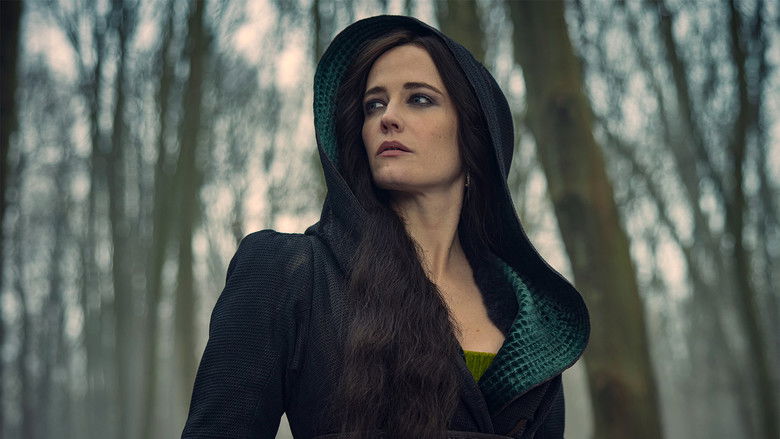
Eva Green

Archetype: Antihero / Tragic Antagonist Key Trait: Lethal intelligence and ruthless adaptability

Motivation

Retribution, self-preservation, and complete independence from patriarchal subjugation.

Character Arc

Evolves from a shadowy agent in Part I to a multidimensional figure whose tragic backstory with Athos exposes her raw vulnerabilities beneath her calculating exterior.

D'Artagnan

François Civil

Archetype: Romantic Hero Key Trait: Relentless courage and impulsive loyalty

Motivation

Rescuing Constance and proving himself worthy of the Musketeer mantel.

Character Arc

Stripped of his youthful naivety, he experiences deep grief and moral ambiguity, emerging as a hardened, mature fighter.

All 5 characters and cast

Symbols & Motifs

The Fleur-de-lis Brand

Meaning:

Serves as a physical manifestation of institutional violence, societal condemnation, and the permanent stigma imposed upon fallen women.

Context:

Branded directly onto Milady’s shoulder by royal and judicial authority.

Mud and Smoke of La Rochelle

Meaning:

Symbolizes the brutal, unglamorous reality of war, stripping the musketeers of their romantic aura.

Context:

Pervades the battlefield and siege lines, contrasting with the sparkling ballrooms of the royal court.

Flames and Fire

Meaning:

Symbolizes Milady's consuming rage, purification, and chaotic defiance against her persecutors.

Context:

Accompanies Milady throughout the narrative, from burning châteaux to the conflagration during her final confrontation.

Letters and Cardinal Seals

Meaning:

Represents the arbitrary nature of 17th-century royal justice and state control.

Context:

Unsigned or sealed pardons and orders signed by Cardinal Richelieu where life and death hang on scraps of paper.

The Musketeer’s Rapier

Meaning:

Embodies the duality of being both a weapon of chivalric honor and an instrument of state violence.

Context:

Used by the musketeers in combat, highlighting the tension between personal duty and royal command.

Memorable Quotes

Tous pour un, un pour tous.
— The Musketeers

Context

Uttered in moments where personal divides must yield to collective brotherhood on the battlefield.

Meaning

The quintessential Dumas oath, encapsulating the necessity of collective unity over individual division.

Le passé ne meurt jamais, il attend son heure.
— Milady de Winter

Context

Spoken as her entangled and painful history with Athos comes to light.

Meaning

Reflects the central narrative theme of inescapable history and inevitable retribution.

All 3 quotes

Philosophical Questions

Can justice exist outside the law when institutions are corrupt?

The characters repeatedly bypass official law through illegal duels, clandestine operations, and secret pardons, exploring whether individual morality can supersede state decrees.

Is redemption possible for acts committed under societal coercion?

Athos and Milady embody the struggle between inescapable past guilt and the desire to break free from self-destructive cycles of vengeance.

What is the true cost of unyielding loyalty?

The narrative questions whether the musketeers' sworn allegiance to crown and country elevates their character or morally compromises them in service of ruthless political goals.

Alternative Interpretations

Milady as Modern Anti-Heroine vs. Romantic Nemesis: One prominent reading views Milady not as a traditional villain, but as the only character who sees the 17th-century French court for what it truly is: a hypocritical patriarchy that weaponizes morality against women while engaging in ruthless political slaughter.

Full ending explanation

Cultural Impact

Produced during a renaissance of European grand-scale historical filmmaking, the production was conceived by Chapter 2 and Pathé to prove that European cinema can mount high-budget, technically superior blockbuster spectacles capable of rivaling Hollywood IPs while remaining deeply rooted in national heritage.

Both installments performed strongly at the French and European box offices, revitalizing public interest in classic French literature and period action cinema.

Audience Reception

Aggregated critical and audience responses praised Eva Green’s charismatic, nuanced performance, the gritty practical action choreography, authentic set design, and Nicolas Bolduc’s torchlit cinematography, as well as Guillaume Roussel’s propulsive orchestral score.

Criticism centered on pacing issues in the middle act during the military campaigns, as well as deviations from Dumas’s original ending. Some literary purists debated the alterations made to the third act—specifically regarding the fates of Constance and Milady compared to the 1844 novel. Overall, it was regarded as a visually sumptuous, visceral, and dark historical blockbuster that successfully modernizes Dumas’s saga with emotional depth.

Interesting Facts

  • Both D'Artagnan and Milady were filmed simultaneously over an intensive 150-day production run from August 16, 2021, to June 3, 2022.
  • The two films had a combined budget of €72 million (roughly €36.1 million per film), making them the most expensive French film productions of 2023.
  • The production avoided green screens wherever possible, filming across historic French monuments including the Château de Fontainebleau, the Palace of Versailles, the Louvre courtyards, Saint-Malo, and the Citadel of Besançon.
  • Director Martin Bourboulon mandated practical combat choreography, requiring actors to undergo months of historical fencing and equestrian training for long-take action sequences in natural mud and rain.
  • This two-part epic marked the first major French-language cinematic adaptation of The Three Musketeers produced in France since Bernard Borderie’s 1961 classic.

Easter Eggs

Inclusion of Hannibal (Louis Anniaba)

Played by Ralph Amoussou, Hannibal is directly inspired by the real-life historical figure Louis Aniaba (Prince of Assinie), who served as an officer at the court of Louis XIV and is often cited as the historical basis for France's first Black musketeer.

Long-Take Battle Choreography

The siege sequences pay visual homage to classic gritty war cinema such as Stanley Kubrick's Paths of Glory and Alejandro G. Iñárritu's The Revenant by employing mobile tracking shots through trenches rather than rapid swashbuckling montage.

Sequel Dialogue and Foreshadowing

Several background dialogue exchanges and secondary character interactions nod directly to passages from Dumas’s sequel novel, Twenty Years After (Vingt ans après), setting up narrative threads for future adaptations.

Frequently Asked Questions

Explore More About This Movie

Dive deeper into specific aspects of the movie with our detailed analysis pages

Comments (0)

Leave a comment

No comments yet. Be the first to share your thoughts!

Similar Movies