Pride & Prejudice
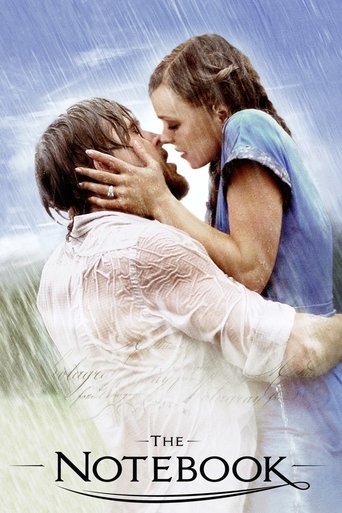
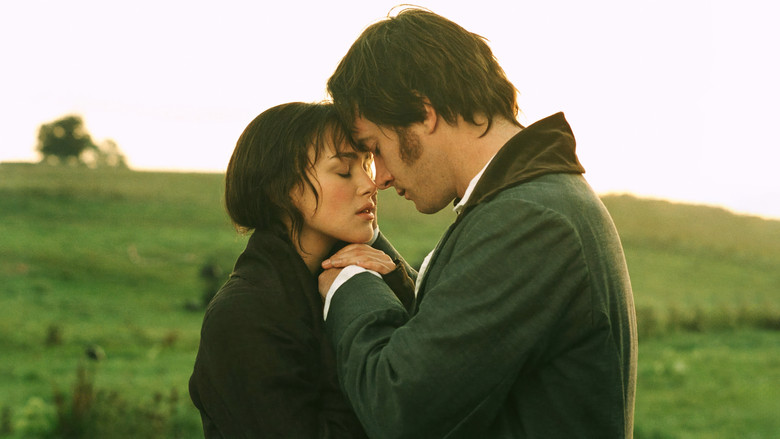
A rain-swept emotional landscape where societal constraints clash with the raw, untamed beauty of first love, painting a portrait of yearning against the lush backdrop of the English countryside.
Pride & Prejudice

Pride & Prejudice

"Sometimes the last person on earth you want to be with is the one person you can't be without."

16 September 2005 France 127 min ⭐ 8.1 (8,436)
Director: Joe Wright
Cast: Keira Knightley, Matthew Macfadyen, Brenda Blethyn, Rosamund Pike, Carey Mulligan
Drama Romance
Love and Marriage Pride and Prejudice Social Class and Reputation Family
Budget: $28,000,000
Box Office: $124,604,345

Overview

Set in late 18th-century England, Joe Wright's "Pride & Prejudice" tells the story of the five Bennet sisters, whose lives are thrown into turmoil by the arrival of a wealthy and eligible bachelor, Mr. Bingley, and his proud friend, Mr. Darcy. The film centers on the spirited and intelligent second daughter, Elizabeth Bennet, and her tumultuous relationship with the enigmatic and seemingly arrogant Mr. Darcy. As their paths cross at social gatherings, their initial impressions give way to a series of misunderstandings and judgments, fueled by societal pressures, family interference, and their own pride and prejudices.

While a genuine affection blossoms between the eldest Bennet daughter, Jane, and the amiable Mr. Bingley, Elizabeth finds herself repelled by Mr. Darcy's condescending demeanor. Her negative opinion is further solidified by the charming soldier Mr. Wickham, who shares a tale of being wronged by Darcy. The narrative follows Elizabeth's journey as she navigates the complexities of love, class, and family duty, leading her to question her own judgments and discover the true character of the man she thought she despised.


Core Meaning

Joe Wright's "Pride & Prejudice" is a passionate exploration of love's ability to transcend the rigid barriers of social class, preconceived notions, and personal pride. The film's core message is that true understanding and connection require looking beyond superficial first impressions and societal expectations to see the genuine character of a person. It suggests that love is not a simple, straightforward emotion but a transformative journey of self-discovery, humility, and the courage to challenge one's own biases. The director's focus on the emotional reality of its young characters, portraying them as people experiencing profound feelings for the first time, underscores the universal and timeless nature of love and the struggle for individual happiness in a world bound by convention.

Thematic DNA

Love and Marriage 35%
Pride and Prejudice 30%
Social Class and Reputation 25%
Family 10%

Love and Marriage

The film delves into the complexities of love and marriage in a society where matrimony was often a pragmatic, economic decision rather than a romantic one. It contrasts the pure, blossoming love between Jane and Bingley with Charlotte Lucas's practical marriage to Mr. Collins for security. Ultimately, the central romance between Elizabeth and Darcy champions the idea that true love, built on mutual respect and understanding, can overcome societal pressures and personal impediments. Elizabeth's rejection of two proposals—one from the ridiculous Mr. Collins and the other, initially, from the proud Mr. Darcy—highlights her conviction to marry for love and respect, a revolutionary idea for her time.

Pride and Prejudice

As the title suggests, the film is a deep dive into the destructive nature of pride and the blinding effect of prejudice. Darcy's pride in his social standing initially prevents him from seeing Elizabeth's worth, while Elizabeth's prejudice, fueled by a poor first impression and Wickham's lies, causes her to completely misjudge Darcy's character. The narrative charts their individual journeys toward self-awareness, as they must shed their respective flaws to find happiness together. The film poignantly illustrates that first impressions can be deceiving and that understanding another requires introspection and a willingness to admit fault.

Social Class and Reputation

The rigid class structure of late 18th-century England is a constant presence, influencing characters' decisions and destinies. The Bennet family's lower social standing and precarious financial situation create immense pressure on the daughters to marry well. Darcy's initial proposal to Elizabeth is marred by his condescending remarks about her family's inferiority. Furthermore, Lydia's elopement with Wickham threatens the entire family's reputation, demonstrating how a woman's honor was paramount and easily destroyed. The film scrutinizes a society where an individual's worth is often measured by wealth and connections rather than character.

Family

The film presents a lively and nuanced depiction of family dynamics. The Bennet household, with its five distinct sisters, overbearing mother, and detached but loving father, feels authentic and lived-in. The sisterly bond, particularly between Elizabeth and Jane, provides a strong emotional core. The family's actions and reputation directly impact each daughter's prospects, highlighting the interconnectedness of their fates. Mrs. Bennet's frantic obsession with marriage, while often comedic, stems from a genuine fear for her daughters' futures in a society that offers women few opportunities outside of a good match.

Character Analysis

Elizabeth Bennet

Keira Knightley

Archetype: The Heroine
Key Trait: Witty and Judgmental

Motivation

Elizabeth is motivated by a desire for a life of intellectual and emotional authenticity. She is determined to marry for the "deepest love" and not for convenience or security, which puts her at odds with the values of her society and her mother. Her actions are driven by her strong sense of justice and her loyalty to her sister, Jane.

Character Arc

Elizabeth begins as a witty, intelligent, and fiercely independent young woman who is quick to judge based on first impressions. Her initial prejudice against Darcy is strong and deeply felt. Her journey is one of emotional and intellectual growth; she is forced to confront her own fallibility and realize that her prized judgment can be flawed. Through Darcy's letter and her experiences at Pemberley, she learns humility and the importance of seeing beyond surface appearances. Her arc culminates in her ability to admit she was wrong and embrace a love she once scorned, without sacrificing her essential spirit.

Mr. Darcy

Matthew Macfadyen

Archetype: The Byronic Hero
Key Trait: Proud and Honorable

Motivation

Initially, Darcy is motivated by a sense of social duty and a desire to protect his friend Bingley and his own family's reputation. However, his primary motivation becomes his overwhelming, ardent love for Elizabeth. This love compels him to defy his own better judgment, his family's expectations, and the rigid social conventions he has always upheld.

Character Arc

Mr. Darcy is introduced as an immensely wealthy, proud, and socially awkward aristocrat who disdains the provincial society he finds himself in. His character arc is a journey of humbling. His disastrous first proposal, in which he insults Elizabeth and her family, forces him to confront his own arrogance and prejudice. Humbled by her rejection, he demonstrates his true character through his selfless actions—secretly saving the Bennet family from disgrace by arranging Lydia's marriage. He learns to express his love with humility and respect, transforming from a proud snob into a devoted and honorable man worthy of Elizabeth's love.

Jane Bennet

Rosamund Pike

Archetype: The Ingenue
Key Trait: Gentle and Kind

Motivation

Jane is motivated by a desire to see the good in everyone and to maintain peace and happiness within her family. Her primary motivation is her sincere and gentle love for Mr. Bingley. Unlike other characters, her actions are not driven by social ambition or pride, but by genuine affection and a kind heart.

Character Arc

Jane is the eldest, most beautiful, and gentlest of the Bennet sisters. Her arc is simpler than Elizabeth's but still poignant. She falls deeply in love with Mr. Bingley but is too reserved to show the full extent of her feelings, leading Darcy to believe she is indifferent. She suffers heartbreak and disillusionment when Bingley abruptly leaves. Her journey is one of quiet endurance and maintaining her good nature despite sorrow. Her arc is resolved when Bingley returns, proving that her patient, steadfast love was not in vain, and she finds her own well-deserved happiness.

Catherine "Kitty" Bennet

Carey Mulligan

Archetype: The Follower
Key Trait: Impressionable

Motivation

Kitty's motivation is largely to be included and to partake in the social excitement that her younger sister Lydia often instigates. She is driven by a youthful desire for amusement, attention from officers, and the general frivolity of balls and social calls. Her motivations are less complex than her older sisters', reflecting her immaturity at the start of the film.

Character Arc

In what was her debut film role, Carey Mulligan plays Kitty Bennet, the fourth daughter. Kitty is initially portrayed as being under the influence of her younger, more frivolous sister, Lydia. She is often seen giggling and following Lydia's lead. While her arc is not as pronounced as her older sisters', there are subtle hints of development. After Lydia's scandalous elopement, Kitty is shown to be more subdued and thoughtful, suggesting the beginning of a maturation process as she separates from her sister's reckless influence and begins to find her own sense of propriety.

Symbols & Motifs

Hands

Meaning:

Hands symbolize connection, repressed desire, and the bridging of social divides. They are a recurring visual motif representing the unspoken emotions between Elizabeth and Darcy.

Context:

The most famous instance is Darcy's unscripted hand flex after helping Elizabeth into her carriage—a moment that conveys the profound impact of their brief physical contact. The camera also focuses on their hands when they dance, and later at Pemberley, emphasizing the tension and growing connection between them. This focus on hands offers a glimpse into their inner turmoil and burgeoning feelings in a society where open displays of emotion were constrained.

Nature and Landscapes

Meaning:

The natural landscapes of the English countryside reflect the characters' emotional states and the freedom from societal constraints. Nature represents a space for authenticity and introspection.

Context:

Elizabeth is frequently shown walking or standing in vast, beautiful landscapes, like the cliff edge. These scenes visually represent her independent spirit and contemplative nature. The raw, untamed scenery often contrasts with the formal, confined interiors of the stately homes, highlighting the difference between natural feeling and social artifice. The final proposal scene, set in the misty dawn fields, uses nature to create a backdrop of pure, unadorned romance.

Statues at Pemberley

Meaning:

The classical statues in Darcy's gallery at Pemberley symbolize his true character, stripped of his pride and the public's perception. They represent a timeless, idealized beauty and nobility that Elizabeth begins to see in him.

Context:

As Elizabeth tours Pemberley, she wanders through a hall of marble statues. The camera lingers on her as she observes the art, and then on a bust of Darcy himself. In this moment, surrounded by classical beauty and seeing him through the eyes of his housekeeper's fond testimony, her prejudice begins to dissolve. The statues represent a more permanent, essential truth about Darcy that lies beneath his difficult exterior.

The Swing

Meaning:

The swing Elizabeth uses at the Bennet home symbolizes both her youthful freedom and the contemplative, circular journey of her feelings and perspectives throughout the story.

Context:

Elizabeth is seen on the swing at different emotional points in the film. It represents a small, private space for thought and escape. The circular motion of the swing can be seen as a metaphor for her changing opinions of Darcy, moving from dislike to love as she revisits her initial judgments and gains new understanding.

Memorable Quotes

You have bewitched me, body and soul, and I love, I love, I love you. I never wish to be parted from you from this day on.

— Mr. Darcy

Context:

Darcy says this to Elizabeth during their second encounter in the fields at dawn, after Lady Catherine de Bourgh's failed attempt to intimidate Elizabeth. Encouraged by Elizabeth's defiance of his aunt, Darcy approaches her, and in the misty, dreamlike landscape, he finally makes his feelings known with vulnerability and utter devotion, leading to their engagement.

Meaning:

This is the climax of Darcy's transformation. The line, written for the film, encapsulates the depth and sincerity of his love. It is a complete surrender of his former pride, a raw and passionate declaration that stands in stark contrast to his insulting first proposal. It signifies that his love has completely overcome all his rational and social objections.

From the first moment I met you, your arrogance and conceit, your selfish disdain for the feelings of others made me realize that you were the last man in the world I could ever be prevailed upon to marry.

— Elizabeth Bennet

Context:

Elizabeth delivers this scathing line in the pouring rain at Hunsford Parsonage, immediately after Darcy's arrogant proposal in which he details all the reasons he shouldn't love her. Shocked and insulted by his words and already believing him to be responsible for Jane's unhappiness and Wickham's misfortune, she unleashes her pent-up anger and disdain for him.

Meaning:

This is Elizabeth's powerful and cutting rejection of Darcy's first proposal. It represents the peak of her prejudice against him, as she articulates all the reasons for her animosity. The quote is a pivotal turning point, as its brutal honesty is the catalyst for Darcy's self-examination and change.

Only the deepest love will persuade me into matrimony, which is why I will end up an old maid.

— Elizabeth Bennet

Context:

Elizabeth says this in a conversation with her sisters and Charlotte Lucas early in the film. While discussing the marriage market and Mr. Bingley's arrival, Elizabeth expresses her firm belief that she will only marry for true, profound love, even if it means never marrying at all.

Meaning:

This quote succinctly establishes Elizabeth's core philosophy regarding marriage. It demonstrates her independent spirit and her romantic idealism, setting her apart from the more pragmatic views of her time, such as Charlotte Lucas's. It foreshadows the high standards she will hold for her future partner.

I'm 27 years old. I've no money and no prospects. I'm already a burden to my parents. And I'm frightened.

— Charlotte Lucas

Context:

Charlotte says this to Elizabeth to explain her shocking decision to accept Mr. Collins' proposal, just after Elizabeth had rejected him. This scene, improvised by Emma Thompson, highlights the different paths available to women and challenges Elizabeth's (and the audience's) judgment of Charlotte's choice.

Meaning:

This quote provides a stark, realistic counterpoint to Elizabeth's romanticism. It reveals the harsh reality for women of the era, for whom marriage was often a matter of survival and economic security rather than love. It is a moment of vulnerability that adds depth to Charlotte's character and justifies her seemingly cynical decision to marry Mr. Collins.

Philosophical Questions

To what extent do first impressions and societal prejudices shape our understanding of others, and can we ever truly overcome them?

The film's central conflict revolves around this question. Elizabeth's and Darcy's initial meeting is a disaster of mutual misunderstanding. The narrative meticulously explores how their prejudices—Elizabeth's against Darcy's arrogance and Darcy's against her family's social standing—are constructed and then deconstructed. It suggests that overcoming these biases is an arduous process requiring self-reflection, humility, and a willingness to accept new information that contradicts one's initial beliefs. The film ultimately offers a hopeful answer: that through reason, empathy, and love, we can correct our flawed initial judgments to see the true nature of a person.

Is it possible to reconcile personal desire with social duty and expectation?

This question is explored through multiple characters. Elizabeth is a champion of personal desire, refusing to marry for any reason other than deep love, directly defying the social expectation for a woman in her position. Darcy, in contrast, is initially a figure of social duty, who is taught by his love for Elizabeth to prioritize his personal feelings. Charlotte Lucas provides the counter-argument, choosing social duty and security over personal desire entirely. The film seems to conclude that while reconciling the two is difficult and rare, the most fulfilling life is one where personal desire and authenticity are honored, even if it means challenging the status quo.

What is the true basis of a successful marriage: love, economic security, or social compatibility?

The film presents a spectrum of marriages. Lydia and Wickham's is based on fleeting passion and scandal. Charlotte and Mr. Collins's is a pragmatic business arrangement for security. Jane and Bingley's is a union of sweet, genuine affection and social suitability. The central relationship of Elizabeth and Darcy, however, suggests the ideal marriage is a deeper union. It is founded not just on passionate love, but on mutual respect, intellectual equality, and the growth that comes from challenging and improving one another. The film champions love as the foundation, but shows that the strongest love is one that has been tested and is built on a profound understanding of each other's character.

Alternative Interpretations

While largely a faithful and romantic interpretation, some critics and viewers have offered alternative readings of the film's choices. One interpretation focuses on the film's heightened romanticism and modern sensibilities. Some argue that the passionate, almost breathless tone, particularly in scenes like the final proposal, injects a modern, Hollywood-esque romantic ideal that deviates from the more restrained and witty social satire of Austen's novel. The decision to add the final, intimate "Mrs. Darcy" scene for American audiences is a key example, with some feeling it over-explains the happiness that Austen leaves to the reader's imagination, while others see it as a emotionally satisfying conclusion.

Another perspective analyzes the film through a more class-conscious lens, suggesting that Wright's earthy, "muddy-hem" approach, while visually striking, sometimes romanticizes the Bennet family's relative poverty. Their chaotic, lively home is depicted with a bohemian charm that might downplay the very real and dire economic anxieties that underpin the novel's marriage plot. From this viewpoint, the film prioritizes romantic emotion over the novel's sharp critique of the economic realities facing women.

Cultural Impact

Joe Wright's "Pride & Prejudice" reinvigorated the period drama for a new generation upon its release in 2005. It presented a more naturalistic and emotionally raw version of Jane Austen's world, a departure from the more formal adaptations that came before it. This "muddy hem" aesthetic, emphasizing realism over a pristine Regency fantasy, influenced subsequent period films. The film was a critical and commercial success, earning Keira Knightley an Academy Award nomination for Best Actress at the age of 20 and launching the feature film careers of both director Joe Wright and actress Carey Mulligan. It remains beloved for its passionate romanticism, sweeping cinematography, and the palpable chemistry between Knightley and Matthew Macfadyen. For many, this version has become the definitive screen adaptation of the novel, creating iconic moments like Darcy's hand-flex and his rain-soaked proposal that have become ingrained in pop culture and spawned countless memes and online discussions. The film's enduring popularity, including a 20th-anniversary theatrical re-release, speaks to its status as a modern classic that continues to captivate audiences and introduce Austen's timeless story to new fans worldwide.

Audience Reception

Audience reception for "Pride & Prejudice" has been overwhelmingly positive and has only grown more passionate over time, cementing its place as a beloved modern classic. Viewers consistently praise the palpable chemistry between Keira Knightley and Matthew Macfadyen, often citing their performances as the definitive on-screen Elizabeth and Darcy. The film's stunning cinematography, beautiful locations, and the evocative score by Dario Marianelli are frequently highlighted as key elements that create its immersive and romantic atmosphere. Moments like Darcy's hand-flex and the two proposal scenes are iconic and have become fan-favorites, widely celebrated for their emotional intensity. The primary points of criticism, particularly among Jane Austen purists, sometimes center on the film's departure from the novel's tone, favoring overt romanticism over Austen's sharp social satire. The different endings for UK and US audiences also sparked debate, with some finding the added romantic scene in the US version to be unnecessary, while others found it to be a deeply satisfying conclusion. Overall, the verdict from audiences is that the film is a visually beautiful, emotionally resonant, and passionately romantic adaptation that captures the heart of Austen's story.

Interesting Facts

  • The film is set in 1797, the year Jane Austen first wrote the novel (then titled 'First Impressions'), rather than 1813 when it was published. Director Joe Wright made this choice to capture a more 'muddy hem' realism and reflect the youthful spirit of the author and characters.
  • The iconic, swoon-worthy hand flex from Mr. Darcy (Matthew Macfadyen) after he helps Elizabeth into a carriage was unscripted. Macfadyen did it instinctively during a rehearsal, and director Joe Wright loved it so much he had the cinematographer capture a close-up of it.
  • Actress Emma Thompson, who won an Oscar for her screenplay of Austen's 'Sense and Sensibility', did an uncredited script polish on "Pride & Prejudice". She notably wrote the poignant scene where Charlotte Lucas explains her reasons for marrying Mr. Collins to Elizabeth.
  • Director Joe Wright initially thought Keira Knightley was too pretty to play Elizabeth Bennet. However, upon meeting her, he changed his mind, reportedly saying, "Oh no, you're fine!"
  • The American and British versions of the film have different endings. Test audiences in the UK found a final romantic scene with Elizabeth and Darcy too sentimental, so it was cut, ending with Mr. Bennet's blessing. The scene was retained for the US release.
  • To build a genuine sense of family, the actresses playing the five Bennet sisters spent time living in the house used for Longbourn before filming began, playing games and getting to know one another.
  • Rosamund Pike (Jane Bennet) and Simon Woods (Mr. Bingley), who play lovers in the film, had previously dated in real life while at Oxford University.
  • Carey Mulligan made her feature film debut as Kitty Bennet at the age of 20.
  • Matthew Macfadyen later admitted that he didn't fully enjoy the experience of playing Mr. Darcy because he felt insecure and "a bit miscast," worrying that he wasn't "dishy enough" for the iconic role.
  • At the beginning of the film, Elizabeth is seen reading a book titled 'First Impressions,' which was Jane Austen's original title for 'Pride and Prejudice'.

Easter Eggs

At the beginning of the film, the book Elizabeth Bennet is reading is titled "First Impressions."

This is a direct homage to Jane Austen, as "First Impressions" was the original title of her manuscript for what would eventually be published as "Pride and Prejudice." It's a clever nod for literary fans, immediately grounding the film in its authentic Austen roots.

When Mr. Collins is listing the assets of Rosings Park, he mentions the chimneypiece in the second drawing room cost eight hundred pounds.

This is a direct line from Jane Austen's novel. Including such a specific, and seemingly trivial, detail is a way of winking at the audience familiar with the book and showcases the screenwriter's attention to preserving the original text's humor and characterization of the obsequious Mr. Collins.

⚠️ Spoiler Analysis

Click to reveal detailed analysis with spoilers

Frequently Asked Questions

Explore More About This Movie

Dive deeper into specific aspects of the movie with our detailed analysis pages

Comments (0)

Leave a comment

No comments yet. Be the first to share your thoughts!