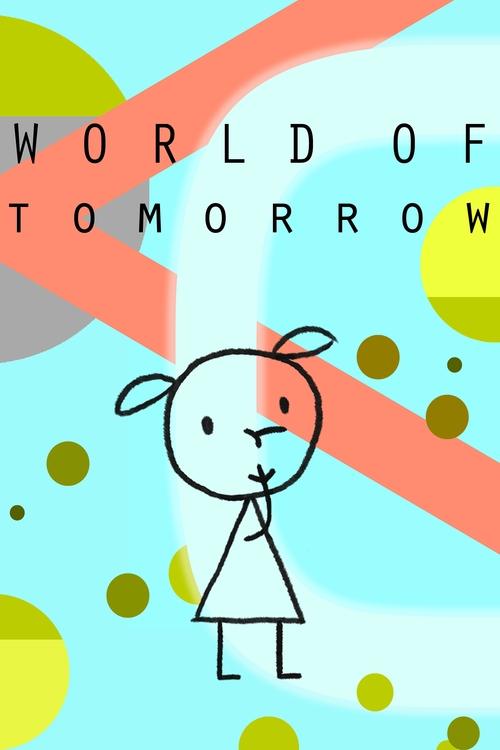
World of Tomorrow
An existential science fiction odyssey where minimalist stick figures navigate a vibrant, neon-hued dystopia. A hauntingly beautiful meditation on memory and the bittersweet tragedy of the human quest for immortality.
World of Tomorrow

World of Tomorrow

22 January 2015 United States of America 17 min ⭐ 7.8 (346)
Director: Don Hertzfeldt
Cast: Julia Pott, Winona Mae, Sara Cushman
Drama Animation Science Fiction
The Burden of Memory Mortality vs. Immortality Class Disparity and Consumerism Technological Alienation Childhood Innocence

Overview

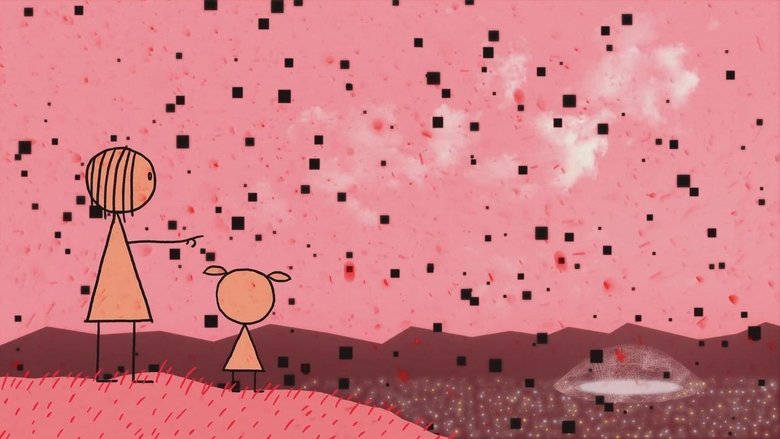
World of Tomorrow is a seminal animated short film that follows a young toddler named Emily Prime who is suddenly contacted by a third-generation clone of herself from 227 years in the future. Using advanced time-travel technology, the adult clone brings the young girl to her own era to give her a tour of the strange, technologically advanced, and often bleak world that humanity has built in its pursuit of eternal life.

As they journey through the 'Outernet'—a neural-network successor to the internet—the clone recounts her long, complicated life, including memories of tragic romances with rocks and aliens, the existence of brainless clone vessels, and the societal decay of a future where the wealthy upload their consciousness into cubes while the poor perish. The narrative juxtaposes the toddler's spontaneous, innocent reactions with the clone's detached, monotone reflections on existence.
Core Meaning

The core of the film is a poignant reminder to appreciate the present moment. Through the contrast between a child who lives entirely in the 'now' and a clone who is burdened by centuries of fragmented, often secondhand memories, Don Hertzfeldt argues that the essence of being human lies in the fleeting, unrecorded experiences of life. The film suggests that the technological pursuit of immortality is a hollow endeavor if it results in the loss of emotional depth and the ability to experience genuine, spontaneous joy.

Thematic DNA

The Burden of Memory 30%
Mortality vs. Immortality 25%
Class Disparity and Consumerism 20%
Technological Alienation 15%
Childhood Innocence 10%

The Burden of Memory

The film explores how memories define identity. The clones are essentially living archives, yet they lack the emotional weight of the original experiences. This is revealed through the clone's desperate need to 'retrieve' a forgotten memory from her original self to find comfort before the world ends.

Mortality vs. Immortality

Humanity's obsession with avoiding death leads to a future of 'end-of-life procedures' and cloning. However, this immortality is portrayed as a decaying process where each successive generation becomes more detached and 'glitchy,' suggesting that death is what gives life its value.

Class Disparity and Consumerism

The future is a hyper-consumerist dystopia where even immortality is a product. The film highlights the gap between the wealthy, who can afford safe 'backups,' and the poor, who use 'discount' time travel that often ends in horrific death.

Technological Alienation

The 'Outernet' and neural connections represent a world where humans are constantly connected but profoundly lonely. Technology has turned even love into a bizarre, detached observation of inanimate objects or 'anonymous' harvested memories.

Childhood Innocence

Emily Prime represents the pure, unscripted state of humanity. Her non-sequiturs and focus on simple things like 'daffodils' and 'triangles' act as a counterpoint to the clone's heavy, existential dread.

Character Analysis

Emily Prime

Winona Mae

Archetype: The Innocent
Key Trait: Spontaneous curiosity

Motivation

Driven by immediate sensory curiosity and the simple joys of the present, like drawing or 'wiggling.'

Character Arc

Does not have a traditional development arc; instead, she serves as a static anchor of purity. She remains blissfully unaware of the horrors described, ending the film exactly as she began: a curious child.

Emily (3rd Generation Clone)

Julia Pott

Archetype: The Herald / Mentor
Key Trait: Melancholic detachment

Motivation

To find comfort in her final days by reclaiming a piece of her 'original' self's genuine emotional history.

Character Arc

She journeys from a state of detached, monotone observation to a moment of vulnerable emotional clarity. By retrieving a lost memory of her mother, she finds a final piece of humanity to hold onto before the end.

Additional Voices

Sara Cushman

Archetype: Peripheral Voices
Key Trait: Detached efficiency

Motivation

N/A (Functional roles within the world-building).

Character Arc

Provides various atmospheric voices that flesh out the background of this future society, contributing to the feeling of a populated but sterile world.

Symbols & Motifs

Stick Figures

Meaning:

Symbolize the fragility and simplicity of the human form amidst a complex, overwhelming universe. They represent a 'universal' human that allows the viewer to project their own emotions onto the characters.

Context:

Used for all human characters, contrasting sharply with the intricate, digital backgrounds of the future.

Shooting Stars

Meaning:

Symbolize the grim reality of the future's failures masked as beauty. They represent the discarded lives of those who couldn't afford 'proper' technology.

Context:

Emily Prime sees beautiful streaks in the sky, but the clone explains they are actually dead bodies of poor people falling back into the atmosphere from failed space travel.

The Rock

Meaning:

Symbolizes desperate, misplaced affection in a world where genuine human connection has become impossible.

Context:

The clone recounts falling in love with a rock on the moon and later being heartbroken when they are separated.

David (The Brainless Clone)

Meaning:

Represents the dehumanization inherent in the quest for physical immortality. He is a 'vessel' without a soul, treated as a museum exhibit.

Context:

A clone body named David is kept in a gallery for 72 years, aging in real-time while visitors observe him.

The Meteor

Meaning:

A symbol of inevitable fate and the ultimate insignificance of human technology in the face of nature.

Context:

The clone reveals that Earth will be destroyed by a meteor in sixty days, rendering all the cloning and memory-saving efforts moot.

Memorable Quotes

Now is the envy of all the dead.

— Emily (Clone)

Context:

The clone says this to Emily Prime as a final piece of advice before sending her back to her own time.

Meaning:

This is the film's most famous line, emphasizing that the living possess the one thing the dead (and the hollow clones) desire most: the vibrancy of the present moment.

I had lunch today.

— Emily Prime

Context:

Spoken in response to the clone explaining the grand, complex process of achieving immortality through cloning.

Meaning:

Highlights the absurdity of childhood innocence compared to existential weight. It grounds the film in the mundane reality of the present.

I am very proud of my sadness.

— Emily (Clone)

Context:

The clone reflects on her various tragic 'loves' and the comfort she finds in her own grief.

Meaning:

Suggests that in a sterile future, pain and sadness are the only proofs of humanity left. It is better to feel sadness than to feel nothing at all.

Do not lose time on daily trivialities. Do not dwell on petty detail.

— Emily (Clone)

Context:

Part of the clone's final monologue to her younger self.

Meaning:

An ironic warning, as the film simultaneously shows that the 'trivialities' of Emily Prime's life are exactly what the clone lacks and desires.

Philosophical Questions

Are we merely the sum of our memories?

The film asks if transferring memories into a new body preserves the 'self' or if the physical and emotional context of the original moment is required for true identity.

Is sadness essential to the human experience?

Through the clone's 'pride' in her sadness, the film explores whether negative emotions are a necessary anchor for empathy and self-awareness in an automated world.

Does immortality destroy the value of time?

The clones live for centuries but seem to value time less than the toddler who has only had 'lunch.' The film explores if the scarcity of time (death) is what creates its worth.

Alternative Interpretations

Critics and audiences are often split on whether the film is ultimately optimistic or pessimistic. Don Hertzfeldt himself has called it one of his 'happier' films, viewing the retrieval of the memory as a victory for the human spirit. Conversely, many viewers see it as a tragedy, interpreting the clone as a hollow shell that can never truly 'reclaim' the life it missed. Another interpretation focuses on identity continuity: some argue the clones are entirely different people merely playing back a file, while others believe the shared memories create a single, tragic soul stretched across centuries.

Cultural Impact

World of Tomorrow had a massive impact on the independent animation scene, proving that minimalist 'stick figure' aesthetics could convey profound philosophical depth rivaling live-action feature films. It solidified Don Hertzfeldt's transition from a cult animator (known for Rejected) to a critically adored filmmaker. The film won the Grand Jury Prize at Sundance and was widely cited by critics as one of the best science fiction films of the decade. Its success led to a trilogy of films, creating a small but dense cinematic universe that continues to be studied for its unique blend of gallows humor and existentialism.

Audience Reception

The film received universal critical acclaim, maintaining a 100% score on Rotten Tomatoes. Audiences praised the film for its ability to make them laugh and cry within a 17-minute runtime. While some viewers initially found the 'stick figure' style simplistic, most were won over by the 'thick philosophy' and emotional resonance. The main point of controversy usually involves the ending—specifically whether the clone's message to Emily Prime is a genuine gift or a cruel preview of her inevitable doom.

Interesting Facts

  • The voice of Emily Prime was provided by Don Hertzfeldt's four-year-old niece, Winona Mae. He recorded her while she was playing and drawing, then edited the script around her spontaneous reactions.
  • This was Don Hertzfeldt's first venture into digital animation. He originally intended it as a 'test' to learn the software before realizing it was becoming a complete film.
  • The film was nominated for Best Animated Short Film at the 88th Academy Awards, though it lost to Pixar's 'Piper'.
  • The music used in the opening sequence is from Richard Strauss's 'Der Rosenkavalier', a specific nod to Stanley Kubrick’s plans for his unmade version of 'A.I. Artificial Intelligence'.
  • Rolling Stone ranked 'World of Tomorrow' #10 on its list of the 'Greatest Animated Movies Ever'.

Easter Eggs

Kubrick Reference

The use of Der Rosenkavalier is an intentional homage to Stanley Kubrick. Hertzfeldt used it because Kubrick had noted the waltz for use in A.I. Artificial Intelligence, a film with similar themes of robots and humanity.

La Jetée Connection

The film's premise of a person from the future contacting someone from the past to 'save' a memory is a thematic reference to Chris Marker's 1962 short film La Jetée.

The Simpsons Guest Spot

Hertzfeldt directed a surreal couch gag for The Simpsons around the same time, which shares the 'World of Tomorrow' aesthetic and themes of futuristic decay.

⚠️ Spoiler Analysis

Click to reveal detailed analysis with spoilers

Frequently Asked Questions

Explore More About This Movie

Dive deeper into specific aspects of the movie with our detailed analysis pages

Comments (0)

Leave a comment

No comments yet. Be the first to share your thoughts!