Big Time Rush
A high-energy comedic crescendo following four hockey players thrust into the chaotic, neon-lit whirlwind of pop stardom, chasing dreams with infectious charm.
Big Time Rush

Big Time Rush

28 November 2009 — 25 July 2013 United States of America 4 season 70 episode Ended ⭐ 8.6 (1,663)
Cast: Kendall Schmidt, Logan Henderson, James Maslow, Carlos PenaVega, Stephen Kramer Glickman
Comedy Kids
The Power of Friendship Chasing the Dream vs. Reality Navigating Fame and Identity The Manufactured Nature of Pop Music

Overview

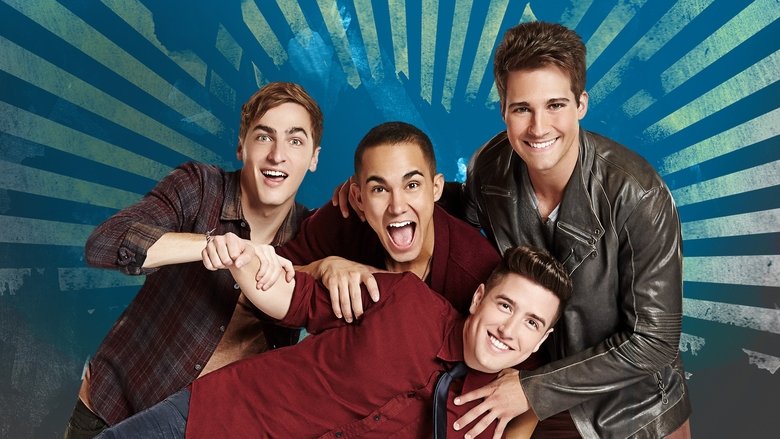
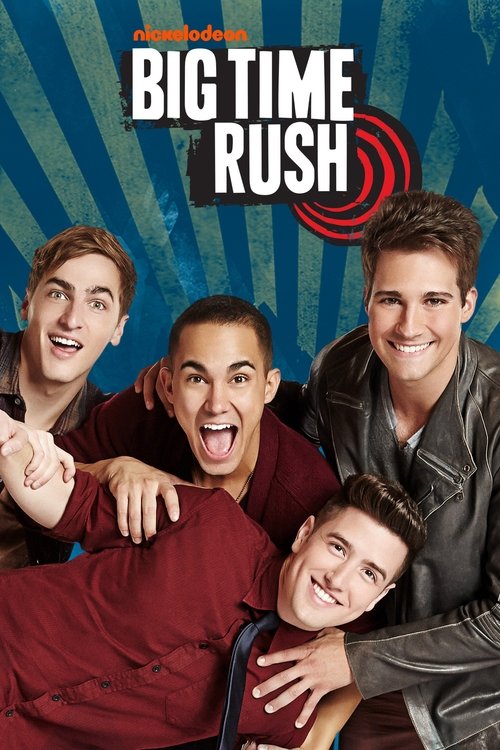
"Big Time Rush" chronicles the whirlwind journey of four best friends and hockey players from Minnesota—Kendall, James, Carlos, and Logan—who are unexpectedly given the opportunity to form a boy band. After being discovered by the eccentric and demanding record producer Gustavo Rocque, the quartet relocates to the Palm Woods Hotel in Los Angeles, a temporary home for aspiring young stars. The series follows their hilarious misadventures as they navigate the treacherous waters of the music industry, from grueling recording sessions and complex choreography to photo shoots and navigating fame.

Throughout its four seasons, the show balances the boys' professional struggles with their personal lives. They grapple with romance, friendship, and staying true to their small-town roots amidst the glitz and glamour of Hollywood. Each episode presents a new, often absurd, challenge that tests their bond, forcing them to rely on each other to overcome obstacles thrown at them by Gustavo, their record label, and the unpredictable nature of celebrity. The overarching narrative is a comedic yet heartfelt exploration of chasing a dream and the importance of friendship in the face of sudden, life-altering success.

Core Meaning

The core meaning of "Big Time Rush" revolves around the themes of friendship, perseverance, and authenticity in the pursuit of dreams. Created by Scott Fellows, the series emphasizes that success is not just about talent, but about the support system you have and staying true to yourself. The boys' constant loyalty to each other, even when fame and industry pressures threaten to tear them apart, is the central message. It's a story about navigating the transition from childhood to adulthood under extraordinary circumstances, teaching that with the right friends by your side, any obstacle can be overcome and any dream is achievable.

Thematic DNA

The Power of Friendship 35%
Chasing the Dream vs. Reality 30%
Navigating Fame and Identity 20%
The Manufactured Nature of Pop Music 15%

The Power of Friendship

The foundational theme of the series is the unbreakable bond between Kendall, James, Carlos, and Logan. From the pilot episode, Kendall refuses a solo deal unless his friends come with him, setting the precedent that their success is a collective endeavor. Throughout the series, their loyalty is constantly tested by internal disagreements, romantic rivalries, and external industry pressures. However, they consistently choose their friendship above all else, combining their different strengths to solve problems. Their unity is their greatest asset, proving that true success is shared.

Chasing the Dream vs. Reality

"Big Time Rush" demystifies the fantasy of overnight success. While the boys are thrust into the glamorous world of pop music, the show comedically highlights the grueling work, absurd demands, and frequent setbacks involved. From dealing with a tyrannical producer to navigating media training and manufactured scandals, they learn that the reality of the music industry is far from what they imagined. The series explores the tension between their ambitious dreams and the often harsh, sometimes ridiculous, reality of achieving them.

Navigating Fame and Identity

The boys are constantly trying to balance their new celebrity personas with their authentic selves. James, in particular, struggles with his vanity and desire for fame, while Logan tries to reconcile his intellectual pursuits with the often silly demands of being in a boy band. The show explores how fame can change a person and the importance of staying grounded. They are frequently reminded of their origins as hockey players from Minnesota, a fact that helps them maintain their identities outside of their "Big Time Rush" fame.

The Manufactured Nature of Pop Music

The series often satirizes the music industry's tendency to create and control artists. Gustavo Rocque is the embodiment of a producer trying to mold the boys into a marketable product, from their image to their song choices. Episodes tackle issues like ghostwriters, fabricated public images, and the pressure to appeal to a specific demographic. While the show is a comedy, it offers a surprisingly candid look at how boy bands are often manufactured for commercial success.

Character Analysis

Kendall Knight

Kendall Schmidt

Archetype: The Leader
Key Trait: Loyal and Level-headed

Motivation

Kendall's primary motivation is the well-being and unity of his friends. He agrees to go to Los Angeles only on the condition that all four of them are made into a band. Throughout the series, his drive comes from a desire to protect his friends from the negative aspects of the industry and to ensure that their shared dream doesn't corrupt them.

Character Arc

Initially the reluctant leader, Kendall starts as the only one unimpressed by Hollywood's allure. His journey is about accepting his role as the band's anchor and moral compass. He evolves from a skeptical teenager into a confident leader who learns to navigate the music industry's challenges without compromising his integrity. His arc is defined by his unwavering loyalty to his friends, consistently putting the group's well-being before personal gain and becoming the glue that holds them together through every crisis.

James Diamond

James Maslow

Archetype: The Vain One (The Face)
Key Trait: Ambitious and Charismatic

Motivation

Fame and adoration are James's initial motivators. He dreams of being a pop superstar and sees the band as his vehicle to achieve that. Over time, his motivation evolves to include not just personal success, but the success and happiness of the band as a whole. He is driven by a need to be seen and loved, which eventually extends to his desire for the group to be loved.

Character Arc

James begins as the most ambitious and self-obsessed member, solely focused on becoming famous. His arc is a journey of learning that success is meaningless without his friends. While he never fully loses his vanity, he grows to be more selfless and genuinely supportive of his bandmates. He learns to value their friendship over his personal image, understanding that his identity is part of a team, not just a solo star. His initial shallowness gives way to a deeper appreciation for the people around him.

Logan Mitchell

Logan Henderson

Archetype: The Smart One (The Brains)
Key Trait: Intelligent and Anxious

Motivation

Logan is motivated by a desire for stability, logic, and doing the "right" thing, which often clashes with the chaos of his life. He initially wants to become a doctor. His evolving motivation involves finding a way to succeed in the band without sacrificing his intelligence and eventually embracing the unique path he's on, even if it wasn't the one he planned.

Character Arc

Logan starts as the cautious, studious, and perpetually stressed-out member who often gets dragged into his friends' chaotic schemes. His arc is about learning to let go, take risks, and embrace the unpredictable nature of his new life. He evolves from being purely academic and logical to understanding the value of spontaneity and creativity. He finds a balance between his intellectual side and the performative demands of being in a boy band, becoming more confident and assertive in the process.

Carlos Garcia

Carlos PenaVega

Archetype: The Wild One (The Jester)
Key Trait: Optimistic and Energetic

Motivation

Carlos is motivated by fun, friendship, and his iconic helmet. He wants to enjoy the adventure and keep the group's spirits high. He is driven by simple pleasures and the happiness of his friends. While not as ambitious as James or as pragmatic as Logan, his motivation is to live in the moment and make the most of their incredible journey.

Character Arc

Carlos is the fun-loving, impulsive, and slightly goofy heart of the group. His arc isn't about dramatic change, but about maturing slightly without losing his infectious optimism and kindness. He remains the comic relief, but over the seasons, he shows moments of surprising insight and loyalty. He learns to channel his boundless energy more productively, proving that his seemingly carefree attitude is an essential part of the group's dynamic and spirit.

Gustavo Rocque

Stephen Kramer Glickman

Archetype: The Mentor (Cynical)
Key Trait: Temperamental and Demanding

Motivation

Gustavo is motivated by a desperate need to reclaim his former glory by producing another hit record. His reputation is on the line, and he sees the boys as his last chance. As the series progresses, his motivation expands from simply wanting a hit to genuinely wanting to see his "dogs" succeed, both professionally and personally.

Character Arc

Gustavo begins as a stereotypical, high-strung, and comically angry record producer who views the boys as annoying "dogs" he must shape into stars. His arc is a gradual softening as he develops a begrudging, and eventually genuine, affection for them. He evolves from a purely business-minded tyrant into a protective, albeit still yelling, mentor figure who truly cares about their success and well-being, recognizing that their chaotic friendship is the key to their magic.

Symbols & Motifs

Hockey Sticks

Meaning:

The hockey sticks symbolize the boys' origins, friendship, and their authentic selves before fame. They represent their life in Minnesota and the camaraderie they built as a team, a foundation that they carry into their new life as a band.

Context:

Hockey is a recurring motif throughout the series. The boys often bring their sticks out for impromptu games in the Palm Woods courtyard or use hockey metaphors to solve problems. It's a physical reminder of where they came from and the genuine friendship that predates their manufactured boy band personas, keeping them grounded in the chaotic world of Hollywood.

The Palm Woods Hotel

Meaning:

The Palm Woods symbolizes a transitional space between obscurity and stardom. It's a microcosm of Hollywood's aspiring youth, filled with hopeful actors, singers, and performers, all chasing their dreams. It represents both the opportunities and the pitfalls of Hollywood.

Context:

As the primary residence for the boys and other young talents, the Palm Woods is the setting for much of the series' comedy and drama. Its quirky rules, managed by the ever-annoyed Mr. Bitters, and the diverse group of residents create a unique community where the boys learn to navigate the social hierarchies and challenges of their new lives.

Gustavo's Recording Studio (Rocque Records)

Meaning:

Rocque Records represents the demanding, often absurd, world of the professional music industry. It is the place where the boys' raw talent is shaped, challenged, and sometimes comically tortured into a polished, commercial product.

Context:

The studio is where the boys clash with Gustavo's explosive temper and perfectionism. Scenes in the recording booth, with the infamous "soundproof" glass, are recurring gags that highlight the creative struggles and the pressure to produce a hit song. It's the crucible where their dreams of being pop stars are forged through hard work and hilarious conflict.

Memorable Quotes

It's a song about four hockey players from Minnesota, who have an amazing opportunity in front of them, and they're gonna take their best shot.

— Kendall Knight

Context:

From the pilot episode, "Big Time Audition," Kendall says this to Gustavo Rocque to convince him that their song should reflect their real story and journey, establishing the show's core theme of authenticity.

Meaning:

This quote, explaining the meaning of the theme song, encapsulates the entire premise and spirit of the show. It highlights their origins, the massive opportunity, and their determination to succeed together.

Oh oh oh oh-oh!

— Big Time Rush (Band)

Context:

This hook is featured at the beginning of the theme song in every single episode. It's the musical cue that signals the start of another one of the boys' misadventures in Hollywood.

Meaning:

This is the iconic opening vocal hook of the theme song, instantly recognizable to any fan. It's not a line of dialogue, but it symbolizes the energy, excitement, and pop-centric nature of the series. It's a call to fun and adventure.

You dogs!

— Gustavo Rocque

Context:

Gustavo yells this in nearly every episode, usually when the boys have caused some sort of chaos or failed to meet his impossibly high standards. It is his most frequent and iconic line.

Meaning:

Gustavo's signature exclamation for the band. It starts as an insult, reflecting his frustration with their goofy and undisciplined nature. Over time, it becomes a term of begrudging affection, his unique way of referring to his guys.

Episode Highlights

Big Time Audition

S1E1

The pilot episode establishes the entire premise of the series. Four hockey players from Minnesota travel to Los Angeles so James can audition for a record producer. When James is rejected, the hot-headed Kendall stands up to the producer, Gustavo Rocque, and inadvertently lands himself a deal, which he refuses to accept unless his three best friends can join him to form a band.

Significance:

This episode is crucial as it sets up the central conflict and character dynamics. It introduces the core themes of friendship over individual success and establishes the boys' distinct personalities and their relationship with their cantankerous mentor, Gustavo.

Big Time Concert

S1E19

The boys are finally set to have their first major concert, but a series of mishaps threatens to derail the entire event. Griffin, the eccentric CEO of the record label, cancels the show, forcing the boys to find a way to put on the concert themselves and prove their worth.

Significance:

This episode serves as the climax of the first season, showcasing the boys' growth from novices to determined performers. It's a testament to their perseverance and ability to succeed against the odds, solidifying their status as a legitimate band.

Big Time Break-Up

S2E18

Kendall faces a difficult decision when his girlfriend, Jo, gets a movie role in New Zealand that will require her to leave for three years. The episode follows their emotional and difficult breakup, as Kendall tries to be supportive despite his own heartbreak.

Significance:

This episode is a fan favorite for its emotional depth and mature handling of a difficult topic for a kids' show. It showcases a more serious side of the series and represents a significant moment of character development for Kendall, dealing with real sacrifice and loss.

Big Time Movie

S3E1

In this feature-length special, the boys travel to London for their first world tour. Their trip turns into a spy-adventure when their luggage is switched, and they become entangled in a mission to save the world, all while performing songs by The Beatles.

Significance:

This movie-episode elevated the scale of the series, combining action, comedy, and musical numbers in a homage to James Bond and The Beatles. It was a major television event for Nickelodeon, drawing in a massive audience and showcasing the band's global appeal.

Big Time Dreams

S4E12

The series finale features the boys preparing for the 24th annual Tween Choice Awards. The episode is a blend of their typical comedic chaos and heartfelt moments as they reflect on their journey. The main plot involves a brain-washing scheme by the awards show host, but the emotional core is the boys' realization that they've achieved their dreams together.

Significance:

As the final episode, "Big Time Dreams" serves as a satisfying conclusion to the series. It brings the band's journey full circle, culminating in a major awards show performance that reaffirms their success and, more importantly, their enduring friendship. It acts as a celebration of everything the show stood for.

Philosophical Questions

Is authentic success possible within a manufactured system?

The series constantly grapples with this question. The boys are hand-picked and molded by Gustavo and the record label, a classic example of a manufactured pop group. However, their success on the show is attributed not to this formula, but to their genuine friendship and authentic personalities that shine through. They constantly push back against inauthentic marketing ploys and fight for their own ideas. The show suggests that while the system may be artificial, one can achieve genuine success by staying true to one's values and relationships, carving out an authentic space within an inauthentic world.

What is the relationship between friendship and professional ambition?

"Big Time Rush" places this question at its core. From the very first episode, Kendall sacrifices a solo career for the sake of his friends. The series repeatedly presents situations where individual ambition (mostly from James) clashes with the needs of the group. The resolution is almost always in favor of friendship, proposing that collective success is more fulfilling than individual glory. The show explores the idea that true ambition should include lifting up those around you, and that professional goals are hollow if they come at the cost of meaningful relationships.

Alternative Interpretations

While "Big Time Rush" is presented as a lighthearted sitcom, some interpretations view it as a subtle satire of the music industry's manufactured nature. Gustavo Rocque's character can be seen as a caricature of the controlling, profit-driven music executive, and the boys' frequent, absurd challenges (like being forced to record a song called "Girl Time") highlight the lack of creative freedom often given to young pop acts. From this perspective, the show isn't just a silly comedy; it's a commentary on the formulaic and often ridiculous process of creating a chart-topping boy band. The entire series could be interpreted as a cautionary tale about the price of fame, wrapped in a comedic, kid-friendly package.

Cultural Impact

"Big Time Rush" emerged in 2009 as a key part of Nickelodeon's live-action programming block, blending the sitcom format with the boy band phenomenon that was seeing a resurgence. Created by Scott Fellows, the show was a deliberate throwback to "The Monkees," featuring a fictional band that simultaneously existed as a real-life recording group signed to Sony Music. This hybrid model was a significant marketing strategy, allowing the network to cross-promote the TV series and the band's music, a tactic also used effectively by Disney with shows like "Hannah Montana."

The show was a ratings success for Nickelodeon and helped launch the band to real-world fame, producing several albums and sell-out tours. For a time, they were one of the most prominent boy bands in the U.S., famously having One Direction as an opening act before the British group's meteoric rise. However, the show's close ties to a children's network also limited the band's ability to be taken seriously in the broader music industry, a struggle faced by many artists who start on youth-oriented platforms. Critics were often dismissive of their music, viewing it as generic and manufactured for a young audience.

Despite this, the series and the band have maintained a dedicated and nostalgic fanbase. After a hiatus following the show's end in 2013, the band reunited in 2021 to immense fan excitement, embarking on successful new tours and releasing new music. This resurgence speaks to the show's lasting legacy among the Gen Z audience that grew up with it, solidifying its place in early 2010s pop culture as a cherished source of comedy, catchy music, and feel-good entertainment.

Audience Reception

Audience reception for "Big Time Rush" has been largely positive, particularly among its target demographic of children and teenagers. When it first aired, it quickly became one of Nickelodeon's highest-rated live-action series. Fans were drawn to the show's slapstick humor, catchy original music, and the charismatic, distinct personalities of the four main characters. The chemistry between the leads was a frequent point of praise, and the comedic timing of supporting characters like Gustavo Rocque and Katie Knight was also well-received.

Criticism from audiences often centered on the show's perceived silliness and reliance on cartoonish sound effects, with some finding the humor to be too juvenile. However, for its intended audience, these elements were part of the appeal. Over the years, the show has developed a strong nostalgic following. Many who grew up watching the series now look back on it fondly, leading to a massive outpouring of support for the band's reunion in 2021. This enduring affection demonstrates that, for its fans, the show's positive messages about friendship and its fun, lighthearted tone have left a lasting positive impact.

Interesting Facts

  • The creator of the show, Scott Fellows, was also the creator of another popular Nickelodeon show, "Ned's Declassified School Survival Guide".
  • One Direction opened for Big Time Rush on tour in the U.S. in 2012, just as One Direction's fame was beginning to explode in America.
  • The show and the band were inspired by the 1960s TV show and band, The Monkees, which also featured a fictional band that became a real-life musical act.
  • Kendall Schmidt was the last person cast. The role was originally held by another actor, but after Logan Henderson recommended his real-life friend Kendall, the producers brought him in and he got the part.
  • Stephen Kramer Glickman, who played the middle-aged producer Gustavo Rocque, was only 30 years old during the first season, making him just about a decade older than the main cast members.
  • Erin Sanders, who played Logan's love interest Camille, also played a character named Quinn on "Zoey 101" whose love interest was also named Logan.
  • The band was able to buy the rights to the "Big Time Rush" name from Nickelodeon when they reunited, with the members stating that the acronym BTR now stands for "Bought The Rights."
  • Carlos PenaVega is married to actress Alexa Vega, known for her role in the "Spy Kids" movies. She even made a guest appearance on the show.

⚠️ Spoiler Analysis

Click to reveal detailed analysis with spoilers

Frequently Asked Questions

Explore More About This Movie

Dive deeper into specific aspects of the movie with our detailed analysis pages

Comments (0)

Leave a comment

No comments yet. Be the first to share your thoughts!