Bo Burnham: Inside
"Look Who’s Inside Again"
Overview
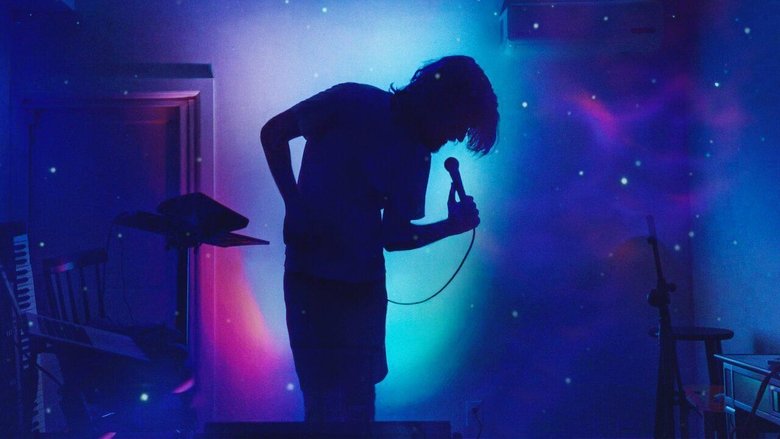
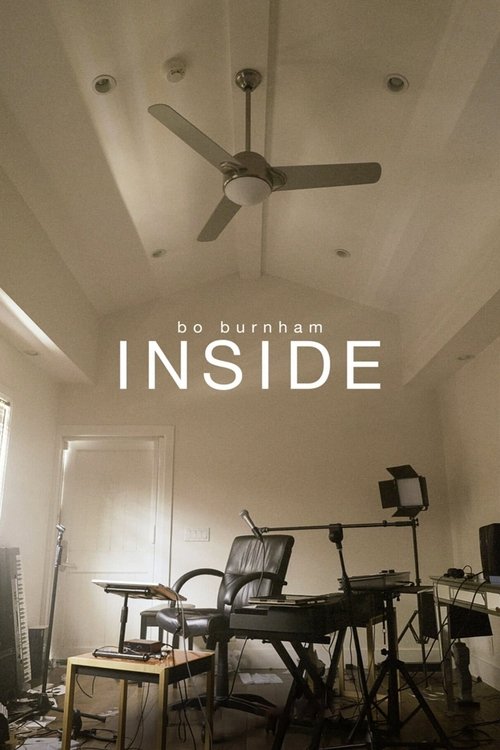
"Bo Burnham: Inside" is a musical comedy special created entirely by Bo Burnham in a single room of his home during the COVID-19 pandemic. Released in 2021, the film documents his creative process and deteriorating mental health over the course of a year. Through a series of vignettes, sketches, and innovative musical numbers, Burnham explores themes of isolation, the internet, social media's impact, performativity, and his own anxieties about his career and turning 30.
What begins as an attempt to create a comedy special without a crew or an audience gradually morphs into a deeply personal and raw examination of his own psyche. The film blurs the lines between performance and reality, comedy and drama, as Burnham confronts his past work, his relationship with his audience, and the absurdity of creating 'content' during a time of global crisis. The narrative is not linear but rather an emotional arc, tracking his growing beard and hair as visual markers of passing time and his shifting mental state.
Core Meaning
The core meaning of "Bo Burnham: Inside" is a multifaceted exploration of the fraught relationship between performance, mental health, and the internet in the modern age. The film questions the very nature of creating and consuming content in a hyper-online world, especially during a period of intense global isolation. Director Bo Burnham aims to deconstruct the performance of self that is constantly required, whether on a comedy stage or on social media, revealing the immense psychological toll it takes.
The film carries a powerful message about the loneliness and anxiety that pervade a generation raised online, where even cries for help can become part of the performance. By trapping himself physically "inside," Burnham forces a confrontation with what is happening inside his own mind, suggesting that the digital world we've built to connect us may actually be deepening our isolation and warping our sense of reality. Ultimately, it's a commentary on the struggle to find authenticity and meaning when every aspect of life feels like it's being staged for an unseen audience.
Thematic DNA
Mental Health and Isolation
This is the central theme, as the special documents Burnham's declining mental state during his self-imposed quarantine. Through songs and monologues, he candidly addresses depression, anxiety, panic attacks, and suicidal ideation. The single room setting becomes a metaphor for being trapped inside one's own head, with the creative process serving as both a coping mechanism and a source of immense pressure. The progression of his unkempt appearance over the year visually underscores this internal struggle.
The Internet and Digital Culture
Burnham relentlessly satirizes and critiques the internet's pervasive influence. Songs like "Welcome to the Internet" portray it as a chaotic, overwhelming, and addictive force. He parodies various online formats like reaction videos, Twitch streaming, and Instagram posts to comment on the performative nature of online life. The film explores how the internet commodifies every experience and emotion, blurring the line between authentic connection and manufactured content.
Performance and Performativity
A career-long theme for Burnham, this is explored with new depth in "Inside." He grapples with his ambivalent relationship with his audience and the pressure to perform, which previously caused him to suffer panic attacks on stage. The special is intensely meta-textual, constantly drawing attention to its own construction. Burnham questions whether it's possible to be authentic when a camera is always present, suggesting that life itself has become a performance for the "more real" digital world.
Social Commentary
Woven throughout the special are sharp critiques of contemporary societal issues. Burnham tackles topics like capitalism, corporate hypocrisy (in songs about Jeff Bezos), labor exploitation ("Unpaid Intern"), performative activism, and systemic inequality. Through songs like "How the World Works," featuring Socko the sock puppet, he delivers biting commentary on class struggle and power structures, using satire to highlight grim realities.
Character Analysis
Bo Burnham
Bo Burnham
Motivation
Initially, his motivation appears to be fulfilling his role as a comedian: to create content and entertain. However, this quickly evolves into a desperate need for a creative outlet to process his anxiety and the absurdity of the world. He is also motivated by a deep-seated, conflicting need for and fear of his audience's attention. Ultimately, his motivation becomes simply to finish the project he started, which has become both his reason for being and the source of his torment.
Character Arc
The character, a heightened version of Bo Burnham himself, begins with a familiar comedic persona, determined to create a special despite the circumstances. As the film progresses, this facade crumbles under the weight of isolation and creative pressure. His arc is one of mental and emotional deterioration, moving from witty social commentary to raw, desperate vulnerability. He becomes increasingly disheveled and emotionally volatile, culminating in a breakdown and a final, ambiguous acceptance of his performative existence. He doesn't overcome his struggles but instead incorporates them into the art, blurring the line between the artist and his creation until they are indistinguishable.
Symbols & Motifs
The Single Room
The room symbolizes multiple layers of confinement. It is the literal space of pandemic quarantine, but more profoundly, it represents Burnham's own mind, his creative isolation, and the claustrophobic nature of the internet, which offers a window to the world while simultaneously trapping you within its digital walls.
The entire special is filmed within this one room, which Burnham transforms into a versatile stage, studio, and prison. Its clutter and the visibility of production equipment constantly remind the viewer of the constructed nature of the performance, reinforcing the theme of being trapped within the creative process itself.
The Projector
The projector symbolizes introspection, self-scrutiny, and the inescapable nature of one's own performance. It represents the act of watching oneself, being both the creator and the audience, a central conflict in the film. It also acts as a tool to bring the outside world (or a simulation of it) into the confined space, highlighting the blurred lines between reality and digital artifice.
Burnham frequently uses the projector to display images on the wall, on himself, or as a primary light source. Crucially, in the final scene, he sits in the room watching projected footage of himself locked outside, smiling, signifying his acceptance or entrapment within his own artistic creation.
Mirrors and Reflections
Mirrors symbolize self-awareness, meta-commentary, and the fractured self. They force both Burnham and the viewer to confront the act of watching and being watched. The reflections often create layered images, representing the different personas Burnham embodies: the performer, the director, and the man underneath it all.
Throughout the special, Burnham frames shots using mirrors, talks to his reflection, or is surrounded by reflective surfaces. This technique constantly breaks the fourth wall, reminding the audience that they are watching a constructed piece of art about the construction of art.
The Camera
The camera is both a tool and a character in the film. It symbolizes the audience, the ever-present eye of the internet, and the medium through which Burnham must filter his reality. It is his only companion, a silent confessor, and the source of his performative pressure. His relationship with it—sometimes confrontational, sometimes intimate—mirrors his relationship with his career and his audience.
Burnham is frequently shown setting up, adjusting, and directly addressing the camera. In one scene, he dances intimately with it before dropping it, and in another, he zooms in on the camera's lens as if it's looking at itself, reinforcing the special's intense self-scrutiny.
Memorable Quotes
Can I interest you in everything, all of the time? A little bit of everything, all of the time. Apathy's a tragedy and boredom is a crime.
— Bo Burnham
Context:
Sung in the persona of a sinister, carnival-barker version of the internet itself, these lines are part of a manic, vaudevillian-style song that details the vast and often dark array of content available online. It's a dizzying introduction to the web's role as both a wonderland and a psychological trap.
Meaning:
This lyric from "Welcome to the Internet" perfectly encapsulates the song's theme: the internet's overwhelming, chaotic, and addictive nature. It highlights the constant stimulation and information overload that defines modern digital life, where the pressure to be engaged is relentless.
You say the whole world's ending. Honey, it already did. You're not gonna slow it, Heaven knows you tried. Got it? Good, now get inside.
— Bo Burnham
Context:
This is part of the special's climactic musical number. Burnham has just confessed his history of panic attacks on stage. The song has a hypnotic, cult-like feel, and these lyrics are delivered with a sense of grim finality, urging a turn away from futile struggle and toward inward focus.
Meaning:
This line, from the song "All Eyes On Me," reflects a sense of profound resignation and nihilism. It suggests that the major crises of the world (social, political, environmental) are past the point of no return. The instruction to "get inside" is both a literal reference to quarantine and a metaphorical retreat into oneself when the outside world becomes too much to bear.
If I'm self-aware about being a douchebag, it'll somehow make me less of a douchebag. But it doesn't.
— Bo Burnham
Context:
This line is spoken during a meta-commentary segment where Burnham creates a reaction video to his own music video ("Unpaid Intern"), which then loops into him reacting to his own reaction. It's a dizzying sequence that satirizes YouTube culture and his own tendency toward self-deprecation as a comedic tool.
Meaning:
This quote is a sharp critique of a specific type of performative self-awareness common in contemporary culture. Burnham points out that merely acknowledging one's flaws or privilege doesn't absolve them of responsibility or actually make them a better person, puncturing a common defense mechanism.
There's a feeling of dread, along with the dread. In a scary world, all anyone wants is to be sure of one thing: that everything's going to be okay. I'm not so sure. That funny feeling.
— Bo Burnham
Context:
Spoken as a preface to the acoustic song of the same name. The song itself is a list of disparate, unsettling cultural observations, from "female Colonel Sanders" to "a gift shop at the gun range," that collectively create a sense of profound unease and absurdity.
Meaning:
This introduces the concept of "That Funny Feeling," a term he uses to describe the specific 21st-century dread that comes from observing the absurd, tragic, and mundane juxtapositions of modern life. It's the cognitive dissonance of living in a deeply flawed world while being surrounded by distractions and trivialities.
Philosophical Questions
In an era of constant self-documentation, can an authentic self truly exist?
The film relentlessly explores this question by being a piece of art about its own creation. Burnham constantly shows the viewer the artifice—the lights, the cameras, the multiple takes. He questions whether his vulnerability is genuine or just another part of the act. This forces the audience to consider the nature of performativity in their own lives, especially on social media, where identities are curated and monetized. The special suggests that the line between living and performing has become irrevocably blurred.
Is it morally justifiable to create art, especially comedy, during times of immense social and political crisis?
This question is explicitly asked in the song "Comedy." Burnham sings, "Should I be joking at a time like this?" while simultaneously acknowledging his privilege as a white comedian. He grapples with the potential narcissism and futility of his work in the face of systemic oppression and global catastrophe. The special doesn't offer a clear answer but embodies the struggle itself, suggesting that art's role might be to honestly reflect the anxiety and moral confusion of the times, rather than offering solutions or escapism.
Has the internet fundamentally altered human consciousness and our perception of reality?
"Inside" portrays the internet as a separate reality that has superseded the physical world. Burnham states that the non-digital world is now just a "theatrical space in which one stages and records content for the much more real, much more vital digital space." Through songs like "Welcome to the Internet," he illustrates how constant exposure to "everything, all of the time" leads to desensitization, anxiety, and a fractured sense of self, posing the question of whether our minds are being permanently rewired.
Alternative Interpretations
The ending of "Inside" is particularly open to interpretation. In the final sequence, Burnham leaves the room only to find himself in a spotlight, laughed at by an unseen audience. He panics and tries to get back inside but is locked out. The final shot is of Burnham, back in the room, watching this footage on his projector and smiling faintly.
One interpretation is that this represents the artist's trap: the "inside" (the creative space, his own mind) is a prison, but the "outside" (the world of performance, audience expectation) is even more terrifying. His smile at the end could signify a grim acceptance of this paradox—he is trapped in the performance, even as an observer of his own suffering.
Another reading suggests a split between "Bo the performer" and "Robert the person." In this view, the character of "Bo" is the one locked outside, subjected to the audience's gaze, while the real person, Robert, watches from the safety of the room, having successfully created his art piece. The smile is one of artistic satisfaction and catharsis, having purged his anxieties into the performance.
A more cynical interpretation posits that the entire special, including the moments of apparent breakdown and vulnerability, is a meticulously crafted performance. The final smile is Burnham acknowledging the success of his artifice. He has masterfully manipulated the audience's perception of reality and performance, and the ending is his final meta-commentary on the impossibility of knowing what is real and what is staged in the content we consume.
Cultural Impact
"Bo Burnham: Inside" was released in May 2021, a time when the world was grappling with the long-term psychological effects of the COVID-19 pandemic. It captured the zeitgeist of quarantine with uncanny precision, articulating the shared experiences of isolation, digital dependency, and existential dread felt by millions. It resonated deeply, particularly with millennials and Gen Z, who saw their own struggles with mental health and online identity reflected in Burnham's work.
Critically, it was lauded as a groundbreaking work that blurred the lines between comedy special, musical, documentary, and performance art. Its influence was seen in its deconstruction of digital culture; it wasn't just *about* the internet, it was structured *like* the internet—a series of chaotic, tonally disparate, and deeply meta vignettes. The special's songs, particularly "Welcome to the Internet" and "All Eyes On Me," became viral sensations on platforms like TikTok, further embedding its commentary into the very culture it was critiquing.
The film prompted widespread discussions about the ethics of art creation, the vulnerability of the artist, and the societal pressure to be constantly creating "content." It was frequently analyzed through philosophical lenses, with commentators referencing figures like Michel Foucault to discuss themes of surveillance and self-regulation in the digital age. By being so intensely personal, "Inside" became universally relatable, a defining piece of pandemic-era art that captured a specific moment in history while exploring timeless questions about the human condition in a technological world.
Audience Reception
Audience reception for "Bo Burnham: Inside" was overwhelmingly positive, with many viewers hailing it as a masterpiece and a definitive cultural artifact of the pandemic era. Viewers praised its raw honesty, vulnerability, and the startling accuracy with which it captured the collective anxiety of quarantine. The blend of catchy, witty songs with moments of profound despair was frequently highlighted as a key strength. Many viewers found the special deeply cathartic, expressing that Burnham had given voice to feelings of isolation, depression, and internet-addled dread that they had been unable to articulate themselves.
The main points of praise focused on Burnham's multi-talented effort—writing, directing, filming, editing, and performing the entire special himself was seen as an incredible artistic achievement. The clever cinematography and innovative use of lighting within a single room also received significant acclaim.
Criticism was sparse but occasionally pointed to the special's intense self-absorption. Some viewers felt that it centered the experience of a privileged individual, even though Burnham himself repeatedly acknowledges and satirizes this fact within the special. However, for the vast majority of the audience, the verdict was clear: "Inside" was a powerful, relatable, and groundbreaking work of art that resonated deeply on both a personal and cultural level.
Interesting Facts
- The special was filmed entirely by Bo Burnham himself in the guest house of his Los Angeles home, which was also the house used for filming the original 'A Nightmare on Elm Street' (1984).
- Burnham wrote, directed, filmed, edited, and performed the entire special alone between March 2020 and May 2021.
- Before creating 'Inside', Burnham had taken a five-year hiatus from live performance after experiencing severe panic attacks on stage during his 'Make Happy' tour.
- The special won three Emmy Awards: Outstanding Directing for a Variety Special, Outstanding Music Direction, and Outstanding Writing for a Variety Special.
- The song "All Eyes On Me" won a Grammy Award for Best Song Written for Visual Media.
- An hour-long companion piece, 'The Inside Outtakes', featuring unused material from the filming of the special, was released for free on YouTube on the first anniversary of the original's release.
- The camera Burnham primarily used for the special was a Panasonic Lumix S1H, along with various creative lighting setups including GVM RGB LED panels and a projector.
Easter Eggs
The small room where Burnham films 'Inside' is the same room he exits at the very end of his previous special, 'Make Happy' (2016).
This creates a direct continuity between the two specials. The ending of 'Make Happy' saw him leave the performative space to find happiness with his partner. 'Inside' represents a forced return to that same space, reframing it from a place of artistic creation to one of confinement, suggesting his inability to escape the pressures of performance.
In the 'Unpaid Intern' segment, as Burnham layers reaction videos on top of each other, the original video continues to play in the background, making him react to his own future commentary.
This is a visual gag that represents an inescapable loop of self-criticism and meta-commentary. It satirizes the ouroboros-like nature of internet content while also symbolizing Burnham's own creative process, where he is constantly analyzing and critiquing his own work, trapped in a cycle of performative self-awareness.
⚠️ Spoiler Analysis
Click to reveal detailed analysis with spoilers
Frequently Asked Questions
Explore More About This Movie
Dive deeper into specific aspects of the movie with our detailed analysis pages
Comments (0)
No comments yet. Be the first to share your thoughts!