Gone with the Wind
"The greatest romance of all time!"
Overview
Set against the dramatic backdrop of the American Civil War and Reconstruction, "Gone with the Wind" tells the sprawling story of Scarlett O'Hara (Vivien Leigh), the willful and manipulative daughter of a Georgia plantation owner. The film opens on the eve of the war in 1861, with Scarlett infatuated with the gentlemanly Ashley Wilkes (Leslie Howard), who is engaged to his kind-hearted cousin, Melanie Hamilton (Olivia de Havilland). Scarlett's world of barbecues and suitors is shattered by the outbreak of war.
As the conflict devastates the South, Scarlett is forced to mature, fleeing a burning Atlanta and returning to her family's plantation, Tara, only to find it in ruins and her mother deceased. Driven by a vow to never be hungry again, she uses her cunning and determination to survive and save her home. Her path is repeatedly crossed by the cynical and charming blockade runner, Rhett Butler (Clark Gable), who sees through her facade and recognizes a kindred spirit. Their turbulent relationship, marked by passion, conflict, and tragedy, unfolds as Scarlett schemes her way through multiple marriages and business ventures in a desperate attempt to reclaim the wealth and status she lost.
The film chronicles Scarlett's relentless struggle for survival, her enduring obsession with the honorable Ashley, and her complex, fiery romance with Rhett, all while the Old South she knew vanishes forever. It is a story of love, loss, and the indomitable will of a woman who is both a product and a defiant survivor of her time.

Core Meaning
At its core, "Gone with the Wind" is a story about survival. The author of the novel, Margaret Mitchell, stated, "If Gone With the Wind has a theme it is that of survival. What makes some people come through catastrophes and others, apparently just as able, strong, and brave, go under?" The film explores this through its protagonist, Scarlett O'Hara, a pampered Southern belle who transforms into a hardened, resourceful survivor in the face of war, starvation, and societal collapse. The director portrays the immense destructive power of war, not through grand battle scenes, but by focusing on the personal toll it takes on individuals and their way of life. The film's central message is that resilience and an unbreakable will, even when coupled with selfishness and ruthlessness, are the keys to overcoming adversity. Scarlett's journey suggests that in times of extreme upheaval, one must adapt and look forward, as clinging to a romanticized past—a "Lost Cause"—leads to stagnation and ruin, a fate embodied by the character of Ashley Wilkes.
Thematic DNA
Survival and Resilience
The primary theme is the sheer will to survive against overwhelming odds. Scarlett O'Hara embodies this, transforming from a spoiled aristocrat into a ruthless pragmatist. After finding her home, Tara, ravaged by the war, she makes a powerful vow, "As God is my witness, I'll never be hungry again." This declaration becomes her guiding principle. Her journey shows that survival often requires shedding old societal expectations and adopting a hardened, self-reliant mindset to navigate the harsh realities of a new world.
The End of an Era and Social Transformation
The film chronicles the destruction of the antebellum South's aristocratic society. The title itself signifies that a way of life has vanished forever. The narrative contrasts the Old South, represented by the honorable but ineffectual Ashley Wilkes, with the New South, symbolized by the pragmatic and opportunistic Rhett Butler. Scarlett straddles these two worlds, clinging to the memory of the past (Ashley) while using the cutthroat tactics of the new era to succeed. The story is a meditation on the painful, sweeping changes brought by war and Reconstruction.
Love, Obsession, and Self-Deception
A central driving force of the plot is Scarlett's romantic life, particularly her long-standing obsession with Ashley Wilkes, which blinds her to her true compatibility with Rhett Butler. She mistakes her desire for the unobtainable Ashley as love, failing to see that he represents a past she can't reclaim. Her relationship with Rhett is a tumultuous battle of wills between two similar, strong personalities. The tragedy of the film lies in Scarlett's final realization that she has loved Rhett all along, but only after her selfishness and self-deception have driven him away.
Land and Legacy
The land, specifically the O'Hara plantation Tara, is a powerful symbol of heritage and endurance. Early in the film, Scarlett's father tells her that land is "the only thing in the world worth workin' for, worth fightin' for, worth dyin' for, because it's the only thing that lasts." Initially, Scarlett dismisses this, but after losing everything, Tara becomes her anchor and the source of her strength. It represents a connection to her past and the foundation upon which she vows to rebuild her future, serving as her ultimate refuge when all else is lost.
Character Analysis
Scarlett O'Hara
Vivien Leigh
Motivation
Her primary motivation is survival, encapsulated in her vow to "never be hungry again." This evolves into a relentless ambition to acquire wealth and security to protect herself and her home, Tara. Underlying this is a deep-seated, obsessive desire to win the love of Ashley Wilkes, which she mistakenly believes is the key to her happiness.
Character Arc
Scarlett begins as a spoiled, vain, and self-centered Southern belle concerned only with social standing and winning the affection of Ashley Wilkes. The Civil War shatters her world, forcing her to evolve. After her mother's death and her father's mental collapse, she becomes the pragmatic and determined head of her family, vowing to do whatever it takes to survive. She becomes a ruthless businesswoman, sacrificing her reputation and manipulating others, including marrying her sister's fiancé for his money. Her arc is one of hardening resilience, but also of profound emotional immaturity. She spends the entire film chasing an illusion (Ashley) and fails to recognize her true love (Rhett) until it's too late. In the end, though she has achieved material survival, she is emotionally desolate, having lost the one man who truly understood her.
Rhett Butler
Clark Gable
Motivation
Rhett is motivated by a desire for wealth and pleasure, and a cynical disdain for the hypocrisy of the Old South. However, his deepest motivation is his profound and enduring love for Scarlett. He constantly challenges her and tries to make her see the world realistically, hoping she will eventually mature and choose him freely. His actions are often driven by a desire to both protect and possess her.
Character Arc
Rhett is introduced as a cynical, scandalous, and pragmatic outsider who sees the Old South's impending doom with clear eyes. A war profiteer and blockade runner, he represents the opportunistic New South. He is immediately drawn to Scarlett, recognizing her as a kindred spirit who rejects societal norms. Throughout the film, his cynical exterior is pierced by moments of vulnerability, genuine love for Scarlett, and unexpected patriotism when he joins the Confederate army at the last minute. His arc is tragic; he patiently waits for Scarlett to return his love, but her obsession with Ashley erodes his affection. The death of their daughter, Bonnie, is the final blow. By the end, his love for Scarlett is exhausted, and he walks away, a man defeated by the very passion he once pursued.
Ashley Wilkes
Leslie Howard
Motivation
Ashley is motivated by a deep-seated sense of honor and duty to his family, his wife Melanie, and the traditions of the Old South. He is haunted by the past and wants to preserve the "calm dignity" of the world he once knew. This loyalty and nostalgia prevent him from fully embracing the future or returning Scarlett's passionate feelings, trapping him in a state of perpetual melancholy.
Character Arc
Ashley represents the honor, chivalry, and romanticism of the Old South that is destined to perish. He is a contemplative, gentle man who is ill-equipped for the harsh realities of the post-war world. He admits his love for Scarlett but marries Melanie because they share the same values. Throughout the war and Reconstruction, he remains trapped by his code of honor and his nostalgia for a lost world. He is unable to adapt and relies on others, primarily Scarlett and Melanie, for survival. His arc is one of decline; he is a living ghost, a relic of a bygone era who cannot find his place in the new order and ultimately acknowledges his own weakness and failure.
Melanie Hamilton Wilkes
Olivia de Havilland
Motivation
Melanie is motivated by an unwavering love for her family and an unshakable belief in the goodness of others. Her primary drive is to support her husband, Ashley, and to maintain a sense of grace, community, and compassion amidst the chaos of war and its aftermath. She lives by a code of kindness and forgiveness, often at her own expense.
Character Arc
Melanie is the embodiment of the grace, compassion, and inner strength of the ideal Southern lady. She is selfless, kind, and sees the good in everyone, especially Scarlett, whom she loves as a sister despite Scarlett's barely concealed contempt. Her arc is not one of transformation but of steadfastness. She remains the moral center of the story, a source of unwavering love and support for those around her. Her physical frailty belies an incredible emotional and spiritual strength that sustains Ashley and even Scarlett. Her death near the end of the film is a major catalyst, forcing Scarlett to finally confront her own feelings and realize the value of Melanie's friendship and Rhett's love.
Symbols & Motifs
Tara
Tara symbolizes home, heritage, and the enduring connection to the land. For Scarlett, it represents her roots and the source of her strength. It is the one constant in her life, a legacy to be fought for and preserved when the rest of her world has been destroyed. It is the physical manifestation of her vow to survive.
Tara is Scarlett's family plantation. After she returns from the ashes of Atlanta to find Tara plundered but still standing, she clings to it. Her desperate efforts to pay the exorbitant taxes and save it from carpetbaggers drive much of the plot. At the end of the film, after Rhett leaves her, her final thought is of returning to Tara to find a way to start again.
The Red Earth of Tara
The red soil of Tara symbolizes Scarlett's intrinsic connection to her home and her Irish heritage. It represents a strength and resilience that is primal and unbreakable. When she clutches the red earth in a moment of despair, it's a symbolic act of drawing strength directly from her roots and the land itself.
In a pivotal scene after her return to a ruined Tara, a starving and desperate Scarlett digs up a radish from the neglected garden. After vomiting, she falls to the ground and, in a moment of clarity and defiance, clutches a handful of the red earth, making her vow to never be hungry again. This act solidifies the land as the source of her indomitable will.
Atlanta
Atlanta represents the New South: opportunistic, resilient, and unconcerned with the traditions of the past. It is a place of raw, crude energy where Scarlett's shrewd business sense can thrive, in contrast to the genteel, agrarian society of Tara and Twelve Oaks. It symbolizes the future, built on commerce and pragmatism rather than aristocracy.
Scarlett moves to Atlanta after the war and builds her successful lumber business there, scandalizing polite society with her aggressive and unfeminine business practices. The city is first seen burning to the ground, and its rise from the ashes parallels Scarlett's own reconstruction of her life and fortune.
Memorable Quotes
Frankly, my dear, I don't give a damn.
— Rhett Butler
Context:
At the very end of the film, after Melanie's death, Scarlett has a moment of revelation and realizes she loves Rhett. She begs him not to leave her, asking, "Where shall I go? What shall I do?" He delivers this line with cold finality before walking out into the mist, leaving her alone.
Meaning:
This is Rhett's final, iconic rejection of Scarlett. It signifies the complete death of his love for her, worn away by years of her selfishness and obsession with Ashley. It represents the ultimate consequence of Scarlett's actions and the moment she realizes she has lost everything that truly matters. The line was shocking for its time and required special approval from censors.
After all, tomorrow is another day.
— Scarlett O'Hara
Context:
After Rhett leaves her, a devastated Scarlett collapses on the stairs. As she weeps, she remembers the voices of her father and Ashley speaking of Tara. Her despair turns to resolve, and she stands up, delivering this line with renewed determination as she decides to return to Tara to think of a way to win Rhett back.
Meaning:
This is Scarlett's personal mantra and the film's final line. It encapsulates her defining characteristic: her relentless optimism and her ability to survive by postponing difficult emotions. It represents the indomitable human spirit and the hope for a fresh start, no matter how dire the present circumstances. It is her coping mechanism and the source of her resilience.
As God is my witness, I'll never be hungry again!
— Scarlett O'Hara
Context:
At the end of the film's first half, Scarlett has returned to a ruined Tara. Starving, she pulls a radish from the desolate garden and eats it, only to vomit. In a moment of absolute desperation and defiance, she raises a fist to the sky and makes this oath against the backdrop of a dramatic sunset.
Meaning:
This powerful vow marks the turning point in Scarlett's character. It is the moment the pampered belle dies and the hardened survivor is born. It becomes her life's driving motivation, justifying her subsequent ruthless and pragmatic actions as she claws her way back from poverty. It is the thematic centerpiece of her entire arc.
Land is the only thing in the world worth workin' for, worth fightin' for, worth dyin' for, because it's the only thing that lasts.
— Gerald O'Hara
Context:
In the opening scenes of the film, Scarlett is heartbroken over Ashley's engagement to Melanie. Her father, Gerald, tries to comfort her by instilling in her the importance of their land, Tara, which he believes is a legacy more valuable and lasting than any romantic pursuit.
Meaning:
This line establishes the foundational theme of the permanence and importance of the land, specifically Tara. It foreshadows the central role Tara will play in Scarlett's survival and identity. While Scarlett initially doesn't understand its meaning, this philosophy ultimately becomes her final source of hope and strength.
Philosophical Questions
What is the true cost of survival?
The film explores whether one can maintain their humanity while doing whatever it takes to survive. Scarlett sacrifices love, friendship, honor, and kindness to save her home and ensure she is never poor again. She succeeds materially but ends up emotionally bankrupt and alone. The film forces the audience to question at what point the price of survival becomes too high. Does enduring hardship inevitably require a hardening of the soul, and is a life achieved through ruthlessness ultimately a hollow victory?
Is it more important to honor the past or adapt to the future?
This question is central to the conflict between the characters of Ashley Wilkes and Rhett Butler. Ashley is honorable but is paralyzed by his nostalgia for the lost world of the Old South. He cannot adapt and becomes a tragic figure. Rhett, a pragmatist, understands the world has changed and thrives by adapting to it. Scarlett is torn between these two poles. The film suggests that while the past shapes identity (as Tara shapes Scarlett's), an inability to let go of an idealized version of it is a path to obsolescence and despair.
Can love endure selfishness?
The central romance between Rhett and Scarlett is a long-term examination of this question. Rhett's love for Scarlett is deep and patient, but it is constantly tested by her self-absorption, emotional blindness, and her unending obsession with another man. The film ultimately answers in the negative. After years of emotional neglect and the final tragedy of their daughter's death, Rhett's love is extinguished. The story serves as a tragedy about the corrosive effect of selfishness on even the most profound love, suggesting that love requires reciprocity and self-awareness to survive.
Alternative Interpretations
One significant alternative interpretation views Scarlett O'Hara not just as a survivor, but as an early feminist icon. In a rigidly patriarchal society, she defies gender roles by taking charge of her family, running a business, and prioritizing her own financial independence over social propriety. From this perspective, her ruthlessness is not just selfishness, but a necessary tactic for a woman to gain power and agency in a world designed to suppress her.
Another interpretation posits that the film can be read as a critique of nostalgia. Ashley Wilkes, who embodies the romanticized Old South, is portrayed as weak, ineffectual, and unable to cope with reality. His story serves as a cautionary tale about the dangers of clinging to an idealized past. In contrast, Rhett and Scarlett, the ultimate pragmatists, are the ones who thrive in the new, harsh world. In this reading, the film's message is that looking forward, however painful, is essential for survival, while looking backward leads to ruin.
Finally, some critics view the film's ending not as a promise of hope but as the ultimate tragedy of self-delusion. Scarlett's final line, "Tomorrow is another day," is seen not as a sign of strength, but as her perpetual refusal to face consequences and learn from her mistakes. She believes she can win Rhett back, but the audience knows his love is gone. Therefore, the ending suggests she is doomed to repeat her patterns of self-absorption, forever chasing something she has already irrevocably lost, making her material survival a hollow victory.
Cultural Impact
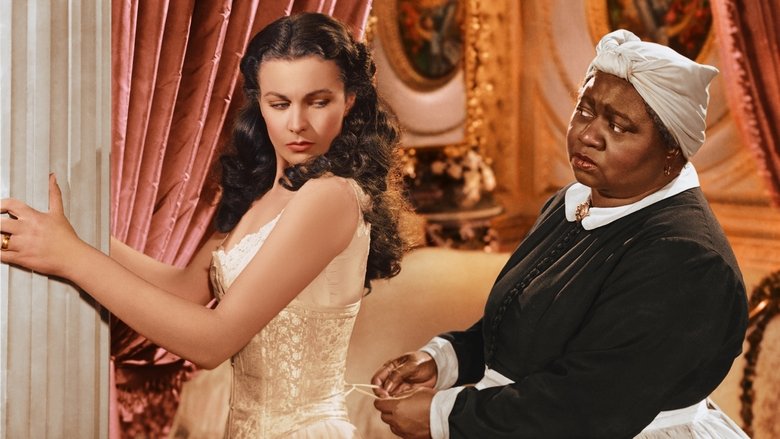
"Gone with the Wind" is regarded as one of the greatest films ever made, but its legacy is complex and controversial. Upon its release in 1939, it was a monumental cultural event and a massive commercial success, becoming ingrained in popular culture. Hattie McDaniel's Oscar win was a historic milestone for African Americans in Hollywood, breaking a significant barrier, though it occurred within a deeply segregated industry that limited her to stereotypical roles.
However, the film has faced significant criticism for its historical negationism, particularly its romanticized and benign portrayal of slavery and the antebellum South. It promotes the "Lost Cause" ideology, a revisionist myth that frames the Confederacy's cause as heroic and just, rather than centered on the preservation of slavery. The depiction of enslaved characters as loyal, simple-minded, and content with their situation (the "happy slave" archetype) is a harmful stereotype that whitewashes the brutality of the institution. These portrayals were controversial even at the time of the film's release among Black audiences. In recent years, this has led to renewed debate, with platforms like HBO Max temporarily removing the film to add historical context explaining its problematic depictions.
Despite this, the film's influence on cinema is undeniable. Its epic scale, use of Technicolor, and iconic performances set a new standard for Hollywood filmmaking. The character of Scarlett O'Hara, a fiercely independent and morally complex antiheroine, was groundbreaking for its time and remains a landmark female role. The film continues to be a subject of cultural and academic debate, serving as a powerful example of how popular art can both reflect and perpetuate societal myths and prejudices.
Audience Reception
Upon its 1939 release, "Gone with the Wind" was met with widespread critical acclaim and overwhelming audience enthusiasm, becoming a cultural phenomenon and the highest-grossing film of its time. Audiences were captivated by its epic scope, the dramatic romance, the lavish Technicolor cinematography, and the powerful performances, especially Vivien Leigh's Scarlett O'Hara.
However, its reception has become more complicated over the decades. The primary point of criticism, both historically and today, is its romanticized depiction of the Confederacy and slavery. Many viewers and critics condemn the film for promoting the "Lost Cause" myth and presenting enslaved people through racist stereotypes, such as the loyal, content servant. This has led to the film being labeled controversial and problematic, particularly in modern times amid heightened awareness of racial injustice.
Despite the controversy, many audience members continue to praise the film for its compelling story of survival, its complex antiheroine, and its grand cinematic artistry. The central love story remains iconic. The overall verdict is polarized: it is simultaneously celebrated as a landmark achievement of Hollywood's Golden Age and condemned for its harmful and historically inaccurate portrayal of a painful chapter in American history.
Interesting Facts
- Hattie McDaniel, who played Mammy, became the first African American to be nominated for and win an Academy Award. However, due to segregation laws at the time, she was seated at a separate table at the back of the awards ceremony venue and was barred from attending the film's premiere in Atlanta.
- The search for an actress to play Scarlett O'Hara was a massive two-year publicity campaign, with 1,400 women interviewed for the part. Vivien Leigh, a relatively unknown British actress at the time, was cast after filming had already begun.
- The famous "burning of Atlanta" scene was one of the first things filmed. To create the massive fire, producer David O. Selznick burned old sets on the studio backlot, including the great wall from "King Kong" (1933).
- The film had three different directors: George Cukor was fired after three weeks (reportedly due to conflicts with Clark Gable), Victor Fleming took over (but left briefly due to exhaustion), and Sam Wood stepped in to direct for two weeks.
- Clark Gable was extremely reluctant to play Rhett Butler and had to be secured by producer David O. Selznick from MGM studios.
- Leslie Howard, who played Ashley Wilkes, reportedly despised the role and felt he was too old for the part.
- Producer David O. Selznick had to fight the censors of the Hays Code to keep Rhett Butler's iconic final line, "Frankly, my dear, I don't give a damn," in the film, arguing that changing it would be a mockery.
- At almost four hours long, it is the longest film to ever win the Best Picture Oscar.
- When adjusted for inflation, "Gone with the Wind" remains the highest-grossing film of all time.
⚠️ Spoiler Analysis
Click to reveal detailed analysis with spoilers
Frequently Asked Questions
Explore More About This Movie
Dive deeper into specific aspects of the movie with our detailed analysis pages
Comments (0)
No comments yet. Be the first to share your thoughts!