GoodFellas
A frenetic, intoxicating plunge into the seductive glamour and brutal reality of the mob, experienced through the wide eyes of a man who always wanted to be a gangster.
GoodFellas

GoodFellas

"Three decades of life in the mafia."

12 September 1990 United States of America 145 min ⭐ 8.5 (13,669)
Director: Martin Scorsese
Cast: Robert De Niro, Ray Liotta, Joe Pesci, Lorraine Bracco, Paul Sorvino
Drama Crime
The Seduction and Corruption of Power Loyalty and Betrayal The Illusion of the American Dream Violence as a Way of Life
Budget: $25,000,000
Box Office: $47,072,327

Overview

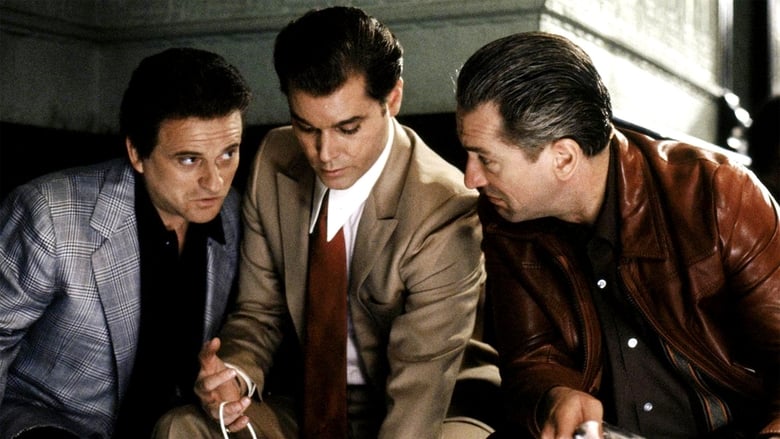
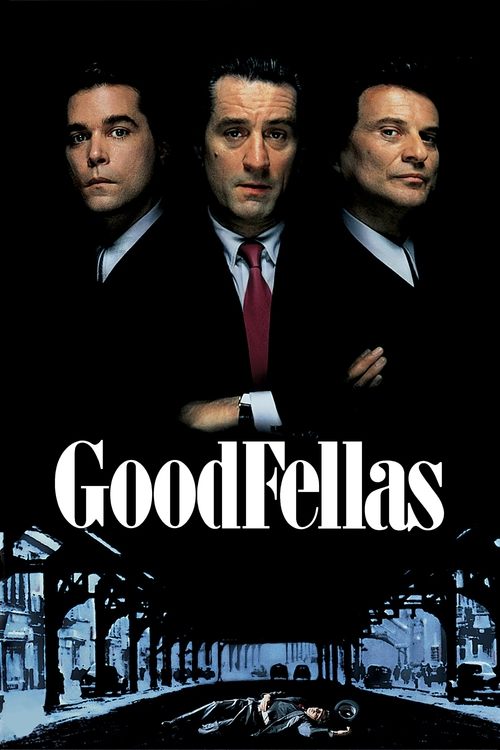
Based on the true story of Henry Hill, GoodFellas chronicles his rise and fall in the New York City mob. As a young boy in a working-class Brooklyn neighborhood, Henry (Ray Liotta) is captivated by the power and respect commanded by local mobsters. He begins working for the Lucchese crime family under the mentorship of the charismatic and dangerous Jimmy Conway (Robert De Niro) and the volatile Tommy DeVito (Joe Pesci).

The film charts their audacious criminal activities over several decades, from hijacking trucks to the infamous Lufthansa heist. Henry's life becomes a whirlwind of fast money, lavish spending, and brutal violence. He marries Karen (Lorraine Bracco), who is initially an outsider but is soon seduced by the intoxicating and perilous lifestyle. The narrative, driven by Henry's voiceover, provides an insider's perspective on the mob's complex codes of honor, loyalty, and ruthless justice.

As the years pass, the camaraderie begins to fray under the weight of paranoia, greed, and addiction. Henry's involvement in the drug trade against the orders of his boss, Paulie Cicero (Paul Sorvino), leads to his downfall, forcing him to make a choice that violates the mob's most sacred rule: never rat on your friends.
Core Meaning

GoodFellas serves as a powerful deconstruction of the gangster myth, stripping away the romanticism to expose the corrupt and destructive reality of mob life. Director Martin Scorsese's primary message is that the allure of this lifestyle—the power, wealth, and freedom from convention—is an illusion that inevitably leads to betrayal and ruin. The film explores a twisted version of the American Dream, where upward mobility is achieved through violence and intimidation rather than hard work.

At its core, the film is a cautionary tale about the loss of identity and morality. It examines how the desire for belonging can lead an individual down a path of self-destruction. Henry Hill's journey is not one of a tragic hero, but of a man who chooses a morally bankrupt life and, in the end, has no profound epiphany or remorse; he only laments the loss of his power and status. Scorsese intended to deglamorize the gangster, showing that beneath the flashy suits and charismatic smiles are deeply flawed and dangerous individuals.

Thematic DNA

The Seduction and Corruption of Power 30%
Loyalty and Betrayal 30%
The Illusion of the American Dream 25%
Violence as a Way of Life 15%

The Seduction and Corruption of Power

The film masterfully depicts the intoxicating allure of the gangster lifestyle. From a young age, Henry is drawn to the power and respect the mobsters command, seeing it as an escape from his mundane, working-class existence. This power allows the characters to live outside the bounds of conventional society, taking what they want and operating with impunity. However, this absolute power corrupts absolutely. It breeds arrogance, paranoia, and a desensitization to violence, ultimately leading to their downfall.

Loyalty and Betrayal

The mob operates on a strict, albeit hypocritical, code of loyalty. The cardinal rules are "never rat on your friends, and always keep your mouth shut." This loyalty is presented as the foundation of their brotherhood, a bond stronger than family. Yet, the film systematically dismantles this notion, revealing that loyalty is fragile and easily discarded in the face of self-preservation or greed. Jimmy Conway, who preaches the importance of loyalty, ultimately decides to eliminate his associates to avoid loose ends, and Henry saves himself by betraying everyone he once called a friend.

The Illusion of the American Dream

GoodFellas presents a perverted version of the American Dream. The characters achieve immense wealth and status, the cornerstones of this dream, but through illegal and violent means. They see the conventional path of hard work and lawful living as a life for "schnooks." Their dream is one of instant gratification and excess. The film argues that this shortcut to success is unsustainable and built on a foundation of moral decay, ultimately leading not to fulfillment but to a hollow existence, as exemplified by Henry's final lament for his lost gangster life.

Violence as a Way of Life

Violence in GoodFellas is not just a tool for business; it is an integral part of the characters' identities and daily existence. It is sudden, brutal, and often senseless. Tommy DeVito, in particular, embodies this casual brutality, killing for the slightest perceived insult. The film presents this violence in a raw and unsentimental way, forcing the audience to confront the grim reality of this world. It underscores how these men become desensitized to horrific acts, viewing murder as a simple solution to problems.

Character Analysis

Henry Hill

Ray Liotta

Archetype: Antihero / Protagonist-Narrator
Key Trait: Ambitious and Self-Preserving

Motivation

Henry's primary motivation is the desire to be a "somebody" in a world of "nobodies." He craves the respect, power, and glamorous lifestyle that he associates with being a gangster. Abused by his father, he seeks a new, more powerful and accepting family in the mob. Ultimately, his motivation shifts to pure survival as his world collapses around him.

Character Arc

Henry begins as a wide-eyed kid enamored with the gangster lifestyle, viewing it as superior to the mundane life of ordinary people. He climbs the ranks, embracing the wealth and excitement, but remains an outsider as he can never be a "made man" due to his Irish heritage. Initially, he is less violent than his peers, but becomes increasingly desensitized. His descent is accelerated by his addiction to cocaine and paranoia, which leads to his arrest. His arc is ultimately one of disillusionment and self-preservation; he betrays his friends to save himself, but his final monologue reveals he has no moral epiphany, only regret for losing his privileged, criminal life.

Jimmy Conway

Robert De Niro

Archetype: The Mentor / The Pragmatic Criminal
Key Trait: Calculating and Paranoid

Motivation

Jimmy is motivated by greed and a love for the thrill of stealing. He enjoys the process and the profits of crime. His core motivation, however, is self-preservation and maintaining control. He is highly cautious and preaches about not drawing attention, which ultimately drives him to extreme violence when he feels his security is threatened.

Character Arc

Jimmy is introduced as a charming, generous, and highly effective criminal who acts as a mentor to Henry. He is calculating and professional in his criminal endeavors, particularly hijacking. Like Henry, he is Irish-American and thus can never be a made man, which fuels his ambition. His arc darkens significantly after the Lufthansa heist. Consumed by paranoia that his associates' lavish spending will attract police attention, his pragmatism turns into ruthless brutality as he systematically has them all murdered to cover his tracks. He goes from a trusted father figure to a man who would kill his closest friends to protect himself.

Tommy DeVito

Joe Pesci

Archetype: The Loose Cannon / Psychopath
Key Trait: Volatile and Impulsive

Motivation

Tommy is driven by a desperate need for respect and a fragile ego. Having come from humble beginnings as a shoeshine boy, he reacts with extreme violence to any perceived slight or insult. His primary motivation seems to be asserting his dominance and proving his toughness at all times. He craves the status of being a "made man," which he believes will finally give him the ultimate respect he feels he deserves.

Character Arc

Tommy's character does not have a traditional arc of development; he is a volatile and explosive force of nature from beginning to end. He is terrifyingly unpredictable, capable of switching from jovial humor to murderous rage in an instant. His impulsive violence, such as the murders of Billy Batts (a made man) and the young bartender Spider, escalates throughout the film. His recklessness, which makes him a feared figure, is also his undoing. His arc abruptly ends when he is killed by the mob in retribution for murdering Batts, a violation of their code that could not be ignored.

Karen Hill

Lorraine Bracco

Archetype: The Outsider / The Complicit Partner
Key Trait: Seduceable and Resilient

Motivation

Initially motivated by a desire for a conventional life, Karen is quickly seduced by the power and excitement that Henry offers. She is motivated by a desire to maintain the luxurious lifestyle she has become accustomed to and to protect her family. Her complicity stems from both her love for Henry and her own attraction to the power and status that come with being part of the mob world.

Character Arc

Karen starts as an innocent outsider, a Jewish girl who is initially wary of Henry and his world. She is drawn into the lifestyle by the glamour, power, and Henry's charismatic display of control. A pivotal moment in her arc is when Henry gives her a gun to hide after brutally assaulting a man who harassed her; she admits that the act "turned her on." She transforms from an observer to an active and complicit participant, helping Henry with his drug business and embracing the perks of being a mob wife. Her arc follows a similar trajectory to Henry's, ending in disillusionment and fear as she is forced into the Witness Protection Program with him.

Symbols & Motifs

Food

Meaning:

Food symbolizes family, camaraderie, and the richness of the mob lifestyle. The act of preparing and sharing meals is central to the characters' social bonds and traditions. In prison, their elaborate meals signify their ability to live above the rules even when incarcerated. The decline in the quality of food at the end, from fine Italian cuisine to "egg noodles and ketchup," symbolizes Henry's fall from grace and his new, mundane existence as a "schnook."

Context:

Throughout the film, lavish meals are shown at gatherings, in prison, and at Tommy's mother's house. The final scene features Henry complaining about the poor quality of food in witness protection, directly contrasting it with his former life.

Guns

Meaning:

Guns represent power, authority, and dominance within the film's world. Possessing a gun grants a character control over others and situations. For Karen, being given Henry's bloody gun is a turning point that, instead of scaring her away, excites and draws her deeper into the lifestyle, symbolizing her seduction by the power it represents. The final shot of Tommy firing at the camera signifies the ever-present threat of violence that defined their lives.

Context:

Guns are used frequently for acts of violence, such as Tommy's impulsive murders. A significant scene involves Henry giving a blood-stained gun to Karen to hide after he pistol-whips her neighbor. The film's closing shot is an homage to The Great Train Robbery, with Tommy shooting directly at the audience.

Flashy Attire and Cars

Meaning:

Conspicuous consumption, exemplified by expensive suits, jewelry, and flashy cars like the pink Cadillac, symbolizes the excess and vanity of the gangster lifestyle. This ostentatious display of wealth is a way for the characters to assert their status and success. However, it also represents their recklessness and becomes a liability, as it draws unwanted attention from law enforcement and breeds paranoia within the group, as seen with Jimmy's reaction to the Lufthansa heist crew's spending.

Context:

After the Lufthansa heist, Jimmy grows furious and paranoid when he sees his crew members flaunting their new wealth, such as Johnny Roastbeef's wife and her pink Cadillac, leading him to have them all killed.

Memorable Quotes

As far back as I can remember, I always wanted to be a gangster.

— Henry Hill

Context:

This is the first line of the film, delivered by Henry in a voiceover as he looks back on his life, establishing his worldview and the foundation for all the events that follow.

Meaning:

This opening line perfectly encapsulates Henry's lifelong ambition and sets the entire narrative in motion. It establishes the film's central theme: the seductive allure of the criminal underworld from the perspective of someone who sees it not as evil, but as the ultimate aspiration.

Funny how? I mean, funny like I'm a clown, I amuse you?

— Tommy DeVito

Context:

During a gathering at the Bamboo Lounge, Henry tells Tommy he's a funny guy. Tommy takes mock offense, aggressively questioning Henry and making everyone at the table intensely uncomfortable before revealing he was just kidding. The scene was based on a real-life experience of actor Joe Pesci.

Meaning:

This quote is the centerpiece of one of the film's most iconic and tense scenes. It perfectly demonstrates Tommy's terrifying volatility and his ability to turn a casual compliment into a life-or-death confrontation. The scene masterfully builds suspense and reveals the constant danger of being around someone so unpredictable, where a single wrong word can lead to violence.

Never rat on your friends, and always keep your mouth shut.

— Jimmy Conway

Context:

Jimmy says this to a young Henry after Henry is arrested for the first time and refuses to talk to the police. It's a moment of mentorship that instills the core values of the mob in Henry from a young age.

Meaning:

This line, spoken by Jimmy to a young Henry, establishes the two most important rules of the mob's code of conduct. It represents the supposed bedrock of their world: absolute loyalty. The quote becomes deeply ironic by the end of the film, as Henry breaks this sacred rule to save himself from Jimmy, who in turn was planning to kill him, showing the ultimate hypocrisy of their code.

I got to admit the truth. It turned me on.

— Karen Hill

Context:

Karen delivers this line in a voiceover, reflecting on her feelings after Henry violently assaulted a man who had been harassing her. It's the moment she becomes fully immersed and complicit in his lifestyle.

Meaning:

This quote marks Karen's transformation from an outsider to an accomplice. After Henry brutally beats her neighbor and gives her the gun to hide, her fear is replaced by excitement. It's a crucial moment that illustrates the seductive nature of power and violence in the film, showing how even a seemingly ordinary person can be drawn into this dark world.

Now go home and get your fuckin' shinebox.

— Billy Batts

Context:

Made man Billy Batts says this to Tommy at a bar, teasing him about his humble beginnings. The insult infuriates Tommy, who, along with Jimmy, later brutally beats and kills Batts.

Meaning:

This seemingly innocuous insult is the catalyst for extreme violence and a major turning point in the plot. Batts' condescending remark about Tommy's past as a shoeshine boy deeply wounds Tommy's fragile ego, triggering a rage that leads to Batts' murder. This single line sets in motion the events that will ultimately lead to Tommy's own death, demonstrating how in their world, matters of pride and respect are deadly serious.

Philosophical Questions

What is the nature of loyalty and is it possible in a world built on self-interest?

The film constantly tests the concept of loyalty. The mob's code demands absolute loyalty, but their actions reveal that this loyalty is conditional and secondary to self-preservation and greed. Jimmy Conway preaches loyalty but murders his associates to protect himself. Henry, the recipient of this lesson, ultimately betrays everyone. The film seems to ask whether true loyalty can exist in a subculture where personal gain is the ultimate goal, suggesting that in such an environment, betrayal is not an anomaly but an inevitability.

Does power inherently corrupt, or does it merely reveal one's true character?

GoodFellas explores how the acquisition of power affects its characters. As they gain more influence and impunity, they become more violent, paranoid, and detached from conventional morality. Tommy's behavior becomes increasingly erratic as he feels more untouchable, and Jimmy's paranoia escalates after he orchestrates a massive heist. The film suggests that the freedom from consequences that power provides allows the characters' worst impulses to flourish, raising the question of whether the power created these monsters or simply gave them the opportunity to be who they always were.

Can one find true freedom by living outside the law?

Henry and his friends believe they are the truly free ones, unbound by the mundane rules that govern the lives of "schnooks." They enjoy a life of excess and instant gratification. However, the film meticulously shows the prison they build for themselves. They are trapped by their own code, constantly looking over their shoulders, and living in fear of betrayal from their closest friends or a violent death. Henry's eventual entry into the Witness Protection Program, the ultimate loss of identity, serves as the final, ironic answer: their version of freedom is an illusion that leads to a far more profound form of imprisonment.

Alternative Interpretations

While the dominant interpretation of GoodFellas is as a cautionary tale and a deconstruction of the gangster myth, some alternative readings exist. One perspective is to view the film through the lens of an unreliable narrator. Since the entire story is told from Henry's point of view, it's possible that he presents himself in a more favorable light than reality. He rarely participates in the most brutal acts of violence and often positions himself as a reluctant observer or the voice of reason. This interpretation suggests that Henry might be minimizing his own culpability and ruthlessness to gain the audience's sympathy, making his character even more complex and morally ambiguous.

Another interpretation focuses on the film as a critique of capitalist ambition and the American Dream. The mobsters can be seen as extreme capitalists who operate outside the law, using violence and exploitation as their business model. Their rise and fall mirror the boom-and-bust cycles of legitimate businesses, and their relentless pursuit of wealth at any human cost reflects the darkest aspects of the capitalist ethos. Henry's final lament is not for his lost morality, but for his exclusion from the game of acquisition, making him a tragic figure of a purely materialistic society.

Cultural Impact

GoodFellas was released in 1990 to critical acclaim and has since been regarded as one of the greatest films ever made, and a landmark in the gangster genre. It redefined the genre by shifting focus from the powerful, almost mythic bosses seen in films like The Godfather to the everyday, working-class lives of the mob's foot soldiers. Its documentary-like style, use of voiceover narration, freeze-frames, and frenetic editing created a visceral and immersive experience that has been widely influential.

The film's influence is vast, particularly on television. David Chase, the creator of The Sopranos, has cited GoodFellas as his "Koran," profoundly influencing the show's tone, its blend of brutal violence with dark humor, and its exploration of the mundane aspects of mob life. Many actors from GoodFellas, including Lorraine Bracco and Michael Imperioli, went on to have starring roles in The Sopranos. The film's stylistic innovations, such as its long, intricate Steadicam shots (like the iconic Copacabana sequence), have been emulated by countless directors, including Quentin Tarantino and Paul Thomas Anderson.

Upon its release, the film was praised by critics for its energy and performances but was also controversial for its violence and perceived glamorization of crime. Over time, however, it has been recognized as a sharp critique of the very lifestyle it depicts. In 2000, GoodFellas was selected for preservation in the United States National Film Registry by the Library of Congress for being "culturally, historically, or aesthetically significant." It remains a cultural touchstone, with its dialogue and scenes deeply embedded in popular culture.

Audience Reception

Upon its release, GoodFellas received widespread critical acclaim, with many hailing it as a masterpiece and one of Martin Scorsese's best films. Critics praised its energetic direction, innovative cinematography, fast-paced editing, and powerful performances, particularly Joe Pesci's Oscar-winning role as Tommy DeVito. However, audience reception was initially more divided. Test screenings were notoriously poor, with a significant number of viewers walking out due to the graphic violence and profanity. Some audiences found the characters reprehensible and the film's non-judgmental, documentary-style approach to be a form of glamorization of a violent lifestyle. Despite this, the film was a commercial success and has grown immensely in stature over the years, now being almost universally regarded by audiences as a classic and a favorite within the genre.

Interesting Facts

  • The famous "Funny how?" scene was largely improvised by Joe Pesci, based on a real-life encounter he had with a mobster when he was a young waiter.
  • Martin Scorsese's mother, Catherine Scorsese, played Tommy's mother. The dinner scene at her house was almost entirely improvised.
  • The real Henry Hill was paid nearly $500,000 for the rights to his story. He was kicked out of the Witness Protection Program after the film's release due to continued criminal activity.
  • Al Pacino was offered the role of Jimmy Conway but turned it down to avoid being typecast, a decision he later regretted.
  • The film uses the f-word 300 times, with almost half of the usages coming from Joe Pesci's character, many of which were ad-libbed.
  • During a test screening, many audience members walked out due to the film's violence, particularly the scene where Billy Batts is stabbed. Scorsese had to reduce the number of on-screen stabs from seven to four.
  • Many of the extras in the film were reportedly actual mobsters.
  • The iconic Steadicam shot through the Copacabana kitchen wasn't originally planned. It was devised because the production couldn't get permission to enter through the front of the building.
  • Robert De Niro was extremely meticulous in his preparation, frequently calling the real Henry Hill to ask about details as specific as how Jimmy Conway held his cigarette.

Easter Eggs

The U.S. Attorney who prosecutes Henry Hill at the end of the film is played by Edward McDonald.

This is not an actor, but the actual U.S. Attorney who prosecuted the real Henry Hill and put him into the Witness Protection Program. He is essentially reenacting scenes from his own life.

The final shot of Tommy firing his gun directly into the camera.

This is a direct homage to the final shot of the seminal 1903 silent film The Great Train Robbery, which had a similar startling effect on audiences of its time. Scorsese used it to signify the violent and unpredictable nature of the gangster world breaking the fourth wall.

Martin Scorsese's father, Charles Scorsese, has a brief cameo.

He appears as the prisoner who puts too many onions in the tomato sauce. Scorsese frequently cast his parents in small roles in his films.

⚠️ Spoiler Analysis

Click to reveal detailed analysis with spoilers

Frequently Asked Questions

Explore More About This Movie

Dive deeper into specific aspects of the movie with our detailed analysis pages

Comments (0)

Leave a comment

No comments yet. Be the first to share your thoughts!