The Theory of Everything
A poignant biographical drama that feels like a bittersweet dance with time, capturing the luminous glow of love against the encroaching shadow of mortality.
The Theory of Everything

The Theory of Everything

"His mind changed our world. Her love changed his."

07 November 2014 United Kingdom 123 min ⭐ 7.8 (10,874)
Director: James Marsh
Cast: Eddie Redmayne, Felicity Jones, Charlie Cox, Emily Watson, Simon McBurney
Drama Romance
Love and Sacrifice Intellect vs. Physicality Time Faith vs. Science
Budget: $15,000,000
Box Office: $123,726,688

Overview

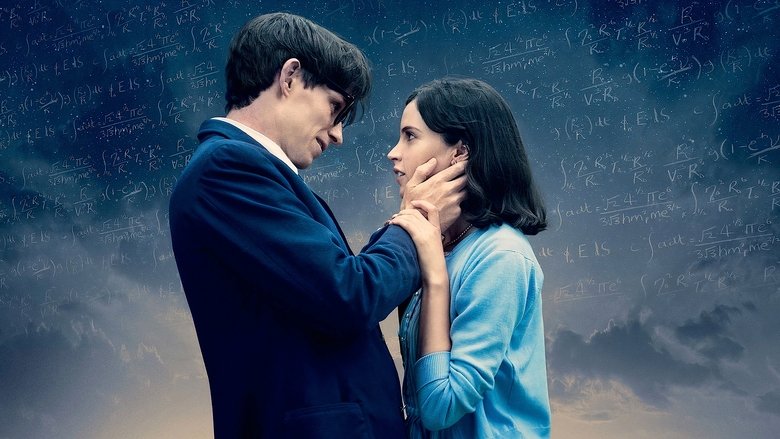
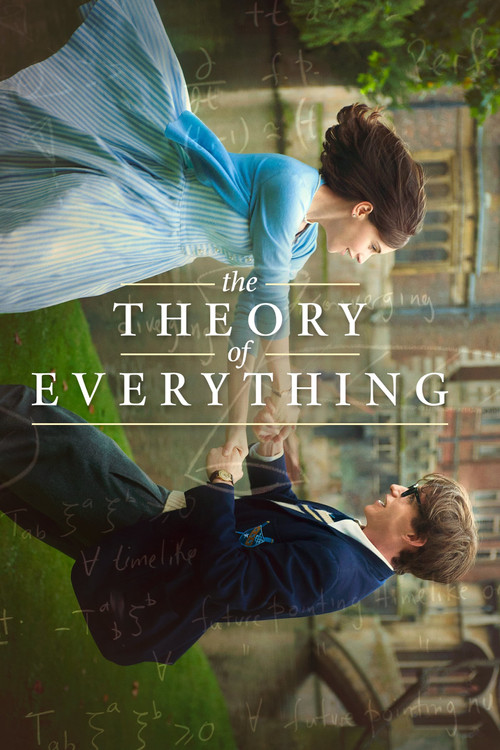
"The Theory of Everything" chronicles the remarkable life of the world-renowned astrophysicist Stephen Hawking, through the lens of his relationship with his first wife, Jane Wilde. The film begins at Cambridge University in the 1960s, where Stephen is a brilliant but aimless cosmology student. He meets and falls in love with Jane, an arts student. Their budding romance is tragically interrupted when, at the age of 21, Stephen is diagnosed with motor neuron disease and given only two years to live.

Despite the devastating prognosis, Jane's unwavering love and determination give Stephen a renewed purpose. They marry and start a family, all while Stephen, confined to a wheelchair and his physical abilities deteriorating, embarks on his most ambitious and groundbreaking scientific work, studying the very thing he has been told he has so little of: time. The film explores their shared journey over three decades, navigating the complexities of his illness, his burgeoning fame, and the immense strain it places on their relationship, ultimately telling a story of love, perseverance, and the indomitable human spirit.


Core Meaning

The core meaning of "The Theory of Everything" transcends a simple biographical account of Stephen Hawking's life. At its heart, the film is an exploration of the enduring and transformative power of love in the face of immense adversity. Director James Marsh intended to tell an unusual love story set against a challenging backdrop, focusing on how two people transcend the immense complications life throws at them. It posits that human connection and emotional resilience are as profound and essential as the grandest scientific theories. The film suggests that while the universe may be governed by complex equations, the human heart operates on a different, equally powerful plane. It's a testament to the idea that while a brilliant mind can change our understanding of the world, love can fundamentally change and shape a life. The narrative ultimately champions hope and the limitless potential of human endeavor, regardless of physical limitations, encapsulated in Hawking's own words: "While there's life, there is hope."

Thematic DNA

Love and Sacrifice 35%
Intellect vs. Physicality 30%
Time 20%
Faith vs. Science 15%

Love and Sacrifice

This is the central theme of the film, which is fundamentally a love story. Jane's decision to marry Stephen, knowing his prognosis, is an act of profound love and commitment. The film details the immense sacrifices she makes, putting her own academic ambitions on hold to care for Stephen and their children. Her love is portrayed as the galvanizing force that pulls Stephen from his initial depression and enables his groundbreaking work. However, the film also explores the strain this sacrifice places on her and their marriage, leading to a complex and nuanced depiction of love that is both enduring and fraught with human limitations.

Intellect vs. Physicality

The film presents a stark and moving contrast between Stephen's brilliant, expanding mind and his deteriorating physical body. Director James Marsh masterfully juxtaposes the soaring nature of his intellect with the progressive confinement of his body. As Stephen loses control over his muscles, his mind continues to unravel the secrets of the universe. This theme is visually represented by showing his physical struggles alongside scenes of him lecturing or contemplating complex theories. The narrative highlights the triumph of the human mind and spirit over severe physical limitations, demonstrating that one's identity and contribution to the world are not solely defined by their physical form.

Time

Time is a multifaceted theme, woven throughout the narrative both scientifically and personally. For Stephen, time is the central object of his academic study—he seeks to find a single equation to explain its beginning and end. Personally, time is his greatest adversary, as his diagnosis gives him a starkly limited amount of it. The film visually plays with the concept of time, using home movie montages to show its passage and a poignant reverse-chronology sequence at the end to reflect on the beginnings of Stephen and Jane's relationship, mirroring Stephen's scientific method of rewinding the universe to understand its origins.

Faith vs. Science

The ideological and personal differences between Jane's devout Christian faith and Stephen's staunch atheism form a consistent sub-theme. Jane, a student of arts and language, and Stephen, a man of science and numbers, represent two different ways of understanding the world. Their differing beliefs are a source of gentle conflict and debate throughout their relationship. Jane finds hope in God, while Stephen seeks answers in a single, elegant equation. The film doesn't declare a victor in this debate but rather explores the dynamic between these two worldviews, suggesting that both love and reason are essential components of the human experience.

Character Analysis

Stephen Hawking

Eddie Redmayne

Archetype: The Resilient Genius
Key Trait: Indomitable Intellect

Motivation

Initially driven by intellectual curiosity, his motivation becomes a race against time after his diagnosis. He is desperate to unlock the secrets of the universe and formulate a single equation to explain everything before his body fails him completely. His love for Jane and his children also provides a powerful emotional anchor and a reason to keep fighting.

Character Arc

Stephen begins as a brilliant but somewhat directionless Cambridge student. His devastating ALS diagnosis forces him to confront his mortality. Initially falling into depression, he is pulled out by Jane's love and finds a new, urgent purpose in his work. His arc is a powerful journey of adaptation, where he transcends his physical decay to become one of the most celebrated minds in history. Despite losing his ability to move and speak, his wit, humor, and intellectual curiosity remain, and he learns to find hope and purpose in his constrained existence.

Jane Wilde Hawking

Felicity Jones

Archetype: The Steadfast Caregiver
Key Trait: Resilience

Motivation

Her primary motivation is her deep and abiding love for Stephen. She is determined to fight the illness with him and provide him with a full life, a family, and the support he needs to continue his work. As the years pass, she is also motivated by the need to maintain her own identity and find personal happiness beyond her role as a caregiver.

Character Arc

Jane starts as a bright, determined arts student who falls in love with Stephen. Her arc is one of selfless love and immense sacrifice. She transforms from a young romantic partner into a devoted wife, mother, and primary caregiver, putting her own academic career on hold. Over the years, the immense strain of her responsibilities leads to exhaustion and a crisis of identity, forcing her to seek personal fulfillment while still loving Stephen. Her journey is about finding the limits of her own strength and redefining her life and happiness amidst extraordinary circumstances.

Jonathan Hellyer Jones

Charlie Cox

Archetype: The Kind Helper
Key Trait: Compassion

Motivation

Initially motivated by Christian charity and a desire to help a family in need, his motivations evolve as he develops a deep affection and love for Jane. He is driven by a desire to ease her burdens and provide the emotional support that Stephen's condition makes it difficult for him to offer.

Character Arc

Jonathan enters the Hawkings' lives as a kind widower and church choirmaster who offers Jane friendship and support. He becomes an integral part of the family, helping with Stephen's care and the children. His arc involves navigating his growing romantic feelings for Jane while respecting her marriage and Stephen. Ultimately, after Stephen and Jane's marriage ends, he and Jane are able to unite, representing a new, quieter form of happiness for her.

Symbols & Motifs

Stairs

Meaning:

Stairs symbolize the immense and increasing physical challenges Stephen faces. They represent the everyday obstacles that his disease turns into insurmountable hurdles, highlighting his loss of mobility and independence.

Context:

Early in the film, Stephen navigates stairs with ease. After his diagnosis, a scene where he struggles to climb a staircase to see his first child is particularly poignant. Later, his inability to climb them at all signifies the progression of his illness and the family's need to adapt their lives around his physical limitations.

Chalkboard Equations

Meaning:

The complex equations Stephen writes on chalkboards symbolize the boundless world of his intellect, a space where he is free from physical constraints. They are a visual representation of his genius and his ongoing quest to understand the universe.

Context:

Throughout the first half of the film, Stephen is frequently shown working on complex mathematical proofs on chalkboards. As his physical condition worsens and he can no longer write, the chalkboards disappear, replaced by his computerized voice, marking a significant transition in his life and work.

The Universe and Stars

Meaning:

Visual references to stars, galaxies, and the cosmos represent Stephen's intellectual passion and the grand questions of existence he seeks to answer. They also serve as a visual metaphor for the wonder and beauty he and Jane find in their life together, despite the hardships.

Context:

The film uses imagery of the cosmos during key moments of scientific breakthrough and personal reflection. The swirling of cream in a coffee cup dissolving into a galaxy is a prime example. The recurring motif visually connects the mundane with the cosmic, mirroring Stephen's theoretical work.

Memorable Quotes

There should be no boundaries to human endeavor. We are all different. However bad life may seem, there is always something you can do, and succeed at. While there's life, there is hope.

— Stephen Hawking

Context:

Stephen delivers this line via his computerized voice during a lecture to a large audience near the end of the film. He has just imagined being able to stand up and return a dropped pen to a student, a moment of poignant reflection on his lost mobility. The speech that follows is his inspirational philosophy on life.

Meaning:

This quote encapsulates the film's central message about perseverance, hope, and the limitless potential of the human spirit. It's a powerful statement on overcoming adversity and finding a purpose regardless of one's circumstances.

I have loved you. I did my best.

— Jane Hawking

Context:

Jane says this to Stephen after he tells her he is taking his nurse, Elaine, with him to America. It is the moment they both tacitly acknowledge their marriage has run its course and agree to divorce.

Meaning:

This heartbreaking line signifies the end of their marriage. It's a simple, yet profound, summation of Jane's decades of love, sacrifice, and exhaustion. It acknowledges that love alone was not enough to sustain their marriage under such extraordinary pressure, and that its end is not a failure but a painful necessity.

Look what we made.

— Stephen Hawking

Context:

Near the end of the film, Stephen invites Jane to meet the Queen with him and their children. As they watch their children play in the garden at Buckingham Palace, Stephen says this to Jane, and they share a warm, knowing smile. It shows their lasting bond as friends and parents.

Meaning:

This is a quote of profound tenderness and reflection, shifting the focus from cosmic theories to their shared human creation: their family. It signifies that despite their divorce and all the hardships, the enduring legacy of their time together is their children and the love that created them.

Cosmologist. It's a kind of religion for intelligent atheists.

— Stephen Hawking

Context:

This is part of the playful banter between Stephen and Jane when they first meet at a party at Cambridge. It establishes their intellectual dynamic and the friendly opposition between his scientific worldview and her religious faith.

Meaning:

This witty line, delivered early in the film, perfectly captures Stephen's character: brilliant, charming, and firmly rooted in scientific atheism. It cleverly frames his life's work as a quest for ultimate answers, akin to a religious pursuit, but one based on evidence and reason rather than faith.

Philosophical Questions

What is the relationship between faith and reason?

The film explores this question through the central relationship between Jane, a devout Christian, and Stephen, a committed atheist. Their love story becomes a microcosm of the larger dialogue between religion and science. Jane's faith provides her with the strength and hope to face their immense challenges, while Stephen's reason drives him to find a complete, rational explanation for the universe. The film does not seek to resolve this conflict but rather presents them as two complementary, though often competing, forces in the human experience, suggesting that a full life may require elements of both.

Can the human spirit triumph over physical limitations?

This is a central question the film addresses directly. Stephen Hawking's life is presented as the ultimate testament to the power of the mind and will over the frailties of the body. The narrative constantly juxtaposes his physical deterioration with his intellectual achievements. His story, as depicted in the film, serves as an inspirational exploration of human potential, arguing that our contributions, our identities, and our ability to live a meaningful life are not ultimately defined by our physical capabilities but by our intellect, our will to persevere, and our capacity for hope.

Does a finite life diminish or enhance its meaning?

Given a two-year prognosis at the age of 21, the concept of limited time becomes the driving force of Stephen's life and work. The film explores whether this death sentence drains his life of meaning or imbues it with a powerful, urgent purpose. His frantic need to complete his work suggests that the awareness of his finitude is precisely what galvanizes him. The film posits that confronting mortality can be a catalyst for extraordinary achievement and a deeper appreciation for the time one has, turning a tragedy into a source of profound meaning.

Alternative Interpretations

One significant alternative interpretation revolves around the film's portrayal of Jane Hawking and their marriage. While the film presents Jane as a deeply loving and supportive figure, it is based on her second, more conciliatory memoir, "Travelling to Infinity." Her first memoir, "Music to Move the Stars," painted a much harsher and more negative picture of their life together. Therefore, some critics and viewers argue that the film is a romanticized, sanitized version of their relationship, glossing over the more severe conflicts, Stephen's reported stubbornness, and the true extent of Jane's suffering and resentment. From this perspective, the film is less a factual account and more of a loving, but biased, memory piece that prioritizes an inspirational narrative over a more complex and potentially unflattering truth.

Another interpretation focuses on the film as a critique of the biopic genre itself. Some critics noted that for a film about one of history's most innovative thinkers, the narrative structure is remarkably conventional and safe. This reading suggests that the film's adherence to a traditional romantic drama framework, while emotionally effective, ironically fails to capture the revolutionary spirit of its subject. It chooses to explore Hawking's life through the most accessible lens—a love story—rather than attempting to grapple with his complex scientific ideas or the more challenging aspects of his personality. This interpretation sees the film not just as a story about Stephen Hawking, but as a reflection on how society prefers to consume the stories of its great minds: simplified, humanized, and centered on relatable emotions rather than challenging intellect.

Cultural Impact

"The Theory of Everything" was met with widespread critical acclaim upon its release, largely for the powerful and transformative performances of Eddie Redmayne and Felicity Jones. Redmayne's portrayal earned him the Academy Award, Golden Globe, BAFTA, and SAG Award for Best Actor. The film was a significant player in the 2014-2015 awards season, bringing renewed mainstream attention to Stephen Hawking's life story, not just as a scientist but as a man who lived a complex emotional life.

The movie had a considerable impact on the public's perception of ALS, raising awareness of the devastating nature of the disease through its raw and realistic depiction of Stephen's physical decline. It presented a deeply human story behind the iconic, wheelchair-bound figure, moving beyond the stereotype of the disembodied genius. By adapting Jane Hawking's memoir, the film also gave a powerful voice to the often-overlooked perspective of caregivers, highlighting their sacrifices, struggles, and resilience. While some critics argued the film prioritized the romance over Hawking's scientific contributions, its focus on the human drama made the story accessible and emotionally resonant for a global audience, solidifying Hawking's place not just as a scientific icon but as a symbol of human perseverance.

Audience Reception

Audience reception for "The Theory of Everything" was overwhelmingly positive. Viewers widely praised the tour-de-force performances by Eddie Redmayne and Felicity Jones, with many finding Redmayne's physical transformation into Stephen Hawking to be astonishing and deeply moving. The film's emotional weight and inspirational story resonated strongly, and it was frequently described as a beautiful, heartfelt, and powerful love story. Audiences appreciated the focus on the human relationship, which made the complex figure of Stephen Hawking accessible and relatable. The primary points of criticism from some viewers mirrored those of the critics: that the film felt like a conventional, sometimes overly sentimental, biopic. Some also expressed a desire for a deeper exploration of Hawking's scientific theories. However, the general consensus among the audience was that the film was a poignant and beautifully acted tribute to love and human resilience.

Interesting Facts

  • Stephen Hawking lent his own copyrighted synthesized voice to the film's final scenes. Initially, the filmmakers had tried to recreate it, but Hawking was so moved by the film that he granted them permission to use the real thing.
  • Eddie Redmayne met Stephen Hawking only once, five days before filming began. He found the three-hour meeting so nerve-wracking that he ended up just telling Hawking facts about Hawking himself.
  • To prepare for the role, Redmayne spent four months training with a dancer to learn how to control his body's muscles individually and charted the progression of Hawking's illness to ensure accuracy, as the film was not shot chronologically.
  • Stephen Hawking also lent the production his Companion of Honour medal and a signed copy of his thesis to be used as authentic props in the film.
  • Felicity Jones, concerned about portraying a real person, met with Jane Hawking. Jones wanted to avoid portraying Jane as a 'saint' and capture her nuanced strength and her struggles with her own identity and desires.
  • The film takes some liberties with the timeline. For instance, in reality, Jane learned of Stephen's diagnosis before they began dating, whereas the film depicts the diagnosis happening after their romance has started.
  • The character of Brian, Stephen's roommate, is not a real person but a composite of several of his real-life friends.

Easter Eggs

While the film doesn't feature traditional 'easter eggs,' it does include a subtle nod to Stephen Hawking's real-life pop culture status.

The film subtly references Hawking's real-life appearances in popular media, including his famous cameos on shows like "The Simpsons" and "Star Trek". While not a direct visual cue, this acknowledgment in the narrative of his celebrity status outside of academia is a nod to the audience's wider perception of Hawking.

⚠️ Spoiler Analysis

Click to reveal detailed analysis with spoilers

Frequently Asked Questions

Explore More About This Movie

Dive deeper into specific aspects of the movie with our detailed analysis pages

Comments (0)

Leave a comment

No comments yet. Be the first to share your thoughts!