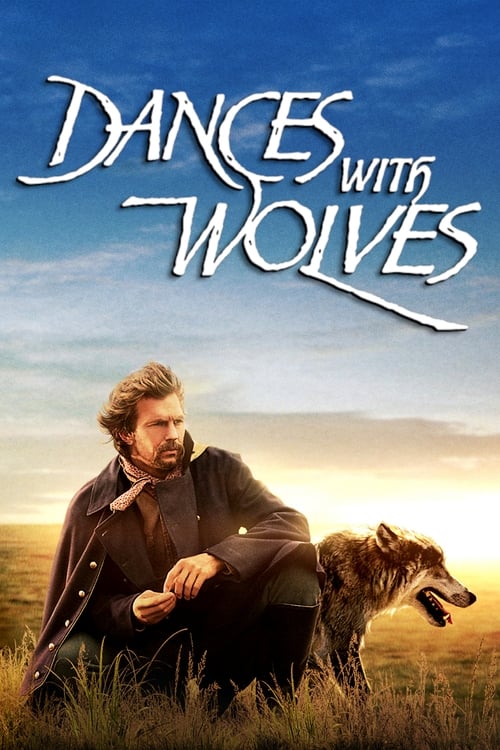
Dances with Wolves
An elegiac Western, this film paints a soulful portrait of a man shedding his identity amidst the sprawling, untamed frontier, finding humanity where he least expected it.
Dances with Wolves

Dances with Wolves

"Inside everyone is a frontier waiting to be discovered."

30 March 1990 United Kingdom 181 min ⭐ 7.8 (4,502)
Director: Kevin Costner
Cast: Kevin Costner, Mary McDonnell, Graham Greene, Rodney A. Grant, Floyd "Red Crow" Westerman
Drama Adventure Western
Cultural Exchange and Transformation The Disappearing Frontier Identity and Belonging Critique of Imperialism (White Savior Narrative Debate)
Budget: $22,000,000
Box Office: $424,208,848

Overview

Dances with Wolves tells the story of Lieutenant John J. Dunbar, a Union Army officer in 1863 who, after a near-suicidal act of bravery, is hailed as a hero and granted his request to be posted to the remote American frontier. He wishes to see the West "before it's gone." Arriving at the desolate Fort Sedgwick, he finds it abandoned. Through a series of misadventures, the army loses all record of his post, leaving him utterly alone.

His solitude is broken by encounters with his neighbors, a band of Lakota Sioux. Initially met with suspicion and hostility, Dunbar begins a slow, cautious process of communication. He gradually forms a bond with the tribe's holy man, Kicking Bird, and the fierce warrior, Wind In His Hair. His connection deepens through his interactions with Stands With A Fist, a white woman who was adopted by the tribe as a child and serves as his interpreter. As Dunbar learns their language and customs, participating in a buffalo hunt and helping defend the village, his allegiance shifts, and he is given the name Dances With Wolves. He finds himself torn between the world he left behind and the people who have accepted him as their own.

Core Meaning

The core meaning of Dances with Wolves revolves around the themes of cultural exchange, the search for identity, and a critique of manifest destiny. The film posits that true understanding and humanity can transcend cultural barriers when individuals are open to communication and mutual respect. Director Kevin Costner presents a revisionist take on the Western genre, moving away from the stereotypical portrayal of Native Americans as savages and instead depicting a rich, nuanced society with deep family bonds and a harmonious relationship with nature. The film serves as a poignant commentary on the tragic and inevitable clash between Native American cultures and the relentless westward expansion of the United States, ultimately lamenting the loss of a way of life and the disappearance of the American frontier.

Thematic DNA

Cultural Exchange and Transformation 35%
The Disappearing Frontier 30%
Identity and Belonging 20%
Critique of Imperialism (White Savior Narrative Debate) 15%

Cultural Exchange and Transformation

The central theme is John Dunbar's profound transformation as he immerses himself in Lakota culture. Initially an outsider, he sheds his former identity as a U.S. soldier to embrace the Sioux way of life. This is depicted through his learning of the Lakota language, his participation in their customs and hunts, and his eventual marriage to Stands With A Fist. The film champions the idea that understanding and empathy can bridge the divide between seemingly disparate cultures.

The Disappearing Frontier

Dunbar's initial motivation is to see the frontier "before it's gone." This sense of an impending ending permeates the film. The vast, unspoiled landscapes, while beautiful, are constantly under the shadow of encroaching "civilization." The senseless slaughter of the buffalo by white hunters for their hides is a powerful symbol of this destructive expansion. The film's epilogue, which notes the eventual surrender of the last free Sioux, confirms this tragic theme of loss.

Identity and Belonging

John Dunbar begins the film as a man alienated from his own world, to the point of attempting suicide. In his isolation at Fort Sedgwick and subsequent life with the Lakota, he finds a new sense of purpose and identity. He discovers who he truly is not as John Dunbar, but as Dances With Wolves. By the end, when captured by U.S. soldiers, he identifies himself in Lakota, signifying his complete shift in allegiance and sense of self. The film explores the idea that identity is not fixed but can be redefined through experience and human connection.

Critique of Imperialism (White Savior Narrative Debate)

The film critiques the destructive nature of American expansionism by portraying the U.S. Army as largely ignorant and brutal. However, it has also faced criticism for employing a "white savior" narrative, where Dunbar, a white man, becomes the primary protector of the Sioux, teaching them to use firearms effectively against their enemies. This perspective suggests that the film, while sympathetic, still centers the white protagonist's experience and agency over that of the Native characters.

Character Analysis

Lieutenant John J. Dunbar / Dances With Wolves

Kevin Costner

Archetype: The Seeker / The Convert
Key Trait: Inquisitive and Open-Minded

Motivation

His initial motivation is to see the American frontier before it disappears. This evolves into a desire for connection and understanding after encountering the Lakota. Ultimately, his motivation becomes the protection of his new family and their way of life from the very world he once represented.

Character Arc

Dunbar begins as a disillusioned Civil War hero, weary of the "white" world and suicidal. Seeking the frontier as an escape, his journey is one of profound internal discovery. Initially isolated and lonely, his curiosity and inherent decency lead him to bridge the cultural gap with the Lakota. He transforms from a soldier of the U.S. Army into a dedicated member of the Sioux tribe, finding love, family, and a true sense of self. His arc is a complete rejection of his former life in favor of a more harmonious existence.

Kicking Bird

Graham Greene

Archetype: The Mentor / The Diplomat
Key Trait: Wise and Deliberate

Motivation

Kicking Bird is motivated by a desire to understand the future and protect his people. He believes that learning about Dunbar—and by extension, the coming wave of white settlers—is crucial for the tribe's survival. He is also driven by a deep sense of compassion and wisdom.

Character Arc

Kicking Bird is the tribe's wise and gentle holy man who advocates for communication with Dunbar. He acts as Dunbar's primary guide into the Lakota world. His arc involves moving from cautious curiosity to deep, fatherly affection for Dunbar. He sees the value in understanding the white man but is also keenly aware of the threat they pose. He represents the wisdom and foresight of his people, ultimately bestowing upon Dunbar his blessing and acceptance.

Stands With A Fist

Mary McDonnell

Archetype: The Bridge / The Healer
Key Trait: Resilient and Loyal

Motivation

Her primary motivation is her loyalty to her adoptive family, the Sioux. She is driven by a duty to help her people communicate with Dunbar. As her relationship with him develops, her motivation shifts to building a new life and family with him, while still honoring her Lakota identity.

Character Arc

A white woman adopted by Kicking Bird after her family was killed by the Pawnee, Stands With A Fist lives between two worlds. Initially, she is in mourning for her Sioux husband and hesitant to reconnect with her white past. Her arc is one of healing and reawakening. By serving as the translator between Dunbar and the Sioux, she rediscovers her English language and falls in love with Dunbar, bridging the two cultures within herself and forging a new future.

Wind In His Hair

Rodney A. Grant

Archetype: The Skeptic / The Loyal Warrior
Key Trait: Fiercely Loyal

Motivation

His motivation is the protection and honor of his tribe. He is fiercely protective and distrustful of outsiders, seeing them as a potential threat. His actions are always guided by what he believes is best for the safety and strength of his people.

Character Arc

Wind In His Hair is a fiery and proud warrior who is initially the most hostile and suspicious of Dunbar. His character arc is a powerful representation of earned respect. Through Dunbar's actions—informing them of the buffalo and fighting alongside them against the Pawnee—Wind In His Hair's skepticism transforms into a fierce and unwavering friendship. His final, booming declaration of friendship from the cliff top is one of the film's most emotional moments.

Symbols & Motifs

The Wolf (Two Socks)

Meaning:

Two Socks symbolizes the wild, untamed spirit of the frontier that Dunbar comes to embrace. The wolf's cautious but eventual friendship with Dunbar mirrors the relationship Dunbar develops with the Lakota people. The tragic, senseless killing of Two Socks by U.S. soldiers represents the brutal destruction of the natural world and the Lakota way of life by the encroaching white civilization.

Context:

Dunbar first encounters the wolf during his solitary time at Fort Sedgwick. Their playful interactions lead to the Lakota giving him the name "Dances With Wolves." The wolf follows Dunbar's convoy when he is arrested, and the soldiers shoot it with contemptuous ease, highlighting their disconnect from nature.

Dunbar's Journal

Meaning:

The journal represents Dunbar's connection to his old world and the objective, observational stance he initially takes. As he becomes more integrated with the Sioux, the journal becomes a dangerous liability—a map that could lead the army directly to his new family. His decision to retrieve it, which leads to his capture, symbolizes his attempt to sever his past and protect the future of the Lakota.

Context:

Dunbar regularly records his thoughts and observations about the prairie and the Lakota people. Near the end of the film, realizing the U.S. Army will eventually find the fort, he risks his life to go back and retrieve the journal to prevent it from falling into the wrong hands.

The American Flag (Stars and Stripes)

Meaning:

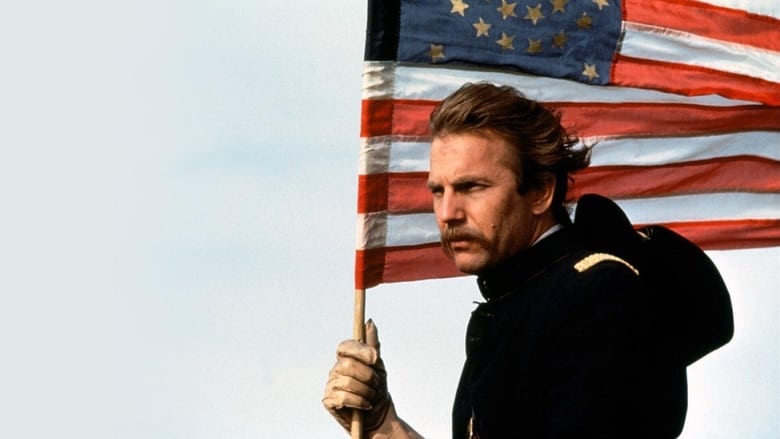
Initially a symbol of Dunbar's identity and mission, the flag's meaning shifts throughout the film. He raises it over the desolate Fort Sedgwick, a lonely assertion of U.S. authority in the vast wilderness. As his allegiance changes, the flag comes to represent the encroaching force that threatens his new life and the Lakota people. Its eventual tattering and replacement by the life of the Sioux camp signifies Dunbar's personal transformation.

Context:

Dunbar finds the flag and raises it upon his arrival at the abandoned Fort Sedgwick. It is a recurring visual during his solitary stay. When U.S. troops finally return, they reoccupy the fort under this same banner, but by then, Dunbar's loyalty lies elsewhere, and the flag now represents an enemy force.

Memorable Quotes

My name is Dances with Wolves. I have nothing to say to you. You are not worth talking to.

— John Dunbar

Context:

After being captured at the reoccupied Fort Sedgwick, Dunbar is interrogated and beaten. When demanded to act as a translator, he defiantly responds in the language of his chosen people, completely rejecting his former life and affirming his new identity.

Meaning:

This line, spoken in Lakota to his U.S. Army captors, marks the final and complete transformation of his identity. He no longer sees himself as John Dunbar and refuses to acknowledge the authority or legitimacy of the men who now hold him prisoner, defining them as his enemies.

Dances With Wolves! I am Wind In His Hair. Do you see that I am your friend? Can you see that you will always be my friend?

— Wind In His Hair

Context:

As Dunbar and Stands With A Fist depart from the Sioux winter camp to protect the tribe, Wind In His Hair rides to a high ridge and shouts this farewell across the valley, ensuring his friend knows their bond is unbreakable despite the separation.

Meaning:

This quote is a powerful declaration of unwavering loyalty and brotherhood that transcends cultural boundaries. It encapsulates the deep bond formed between the two men and serves as the emotional climax of their relationship, from suspicion to profound friendship.

I was just thinking that of all the trails in this life, there are some that matter most. It is the trail of a true human being. I think you are on this trail, and it is good to see.

— Kicking Bird

Context:

Spoken to Dunbar as they share a quiet moment before Dunbar departs from the tribe at the end of the film. It is a moment of fatherly approval and mutual respect between the two men.

Meaning:

This is Kicking Bird's highest praise and final blessing for Dunbar. He is not just accepting Dunbar as a member of the tribe, but acknowledging his fundamental decency and honor as a person. It speaks to the film's core theme that character and humanity are universal virtues.

They were a people so eager to laugh, so devoted to family, so dedicated to each other. The only word that comes to mind is harmony.

— John Dunbar (voiceover)

Context:

This is part of Dunbar's journal entry narration, reflecting on his time living with the Lakota people. It shows how his firsthand experience has completely overturned the ignorant stereotypes he was taught.

Meaning:

This narration summarizes Dunbar's ultimate understanding of the Sioux society. It directly counters the prejudiced view of Native Americans as savage, instead portraying them as a community built on positive human values, living in balance with each other and their environment.

Philosophical Questions

Can an individual truly shed their cultural identity and adopt a new one?

The film explores this question through John Dunbar's complete transformation. It poses that identity is not necessarily determined by birth but by experience, values, and community. Dunbar's journey suggests that when one's original culture is perceived as corrupt or soulless, it is possible to find a more authentic self within another. His adoption of the name "Dances With Wolves" and his final declaration in the Lakota language signify a complete rebirth, raising questions about the nature of self and belonging.

What is the true meaning of 'civilization'?

Dances with Wolves directly challenges the 19th-century American definition of civilization. The so-called "civilized" white characters are often depicted as wasteful (slaughtering buffalo for their hides), destructive, and cruel. In contrast, the "savage" Lakota society is shown to be harmonious, deeply familial, and spiritually connected to the natural world. The film asks the audience to reconsider which society is truly more civilized, suggesting that technological advancement does not equate to moral or social superiority.

To what extent can one person's actions influence the course of history?

Dunbar's story is one of significant personal impact. He forms a bridge between two cultures and saves his friends' lives on multiple occasions. However, the film's melancholy ending and epilogue underscore the tragic reality that his individual efforts are ultimately powerless against the overwhelming tide of westward expansion and government policy. The film suggests that while individual acts of understanding and bravery are noble and meaningful, they are often insufficient to alter the course of larger, destructive historical forces.

Alternative Interpretations

While widely seen as a sympathetic portrayal of Native American culture, Dances with Wolves is often interpreted through a more critical lens, particularly concerning the "white savior" trope. From this perspective, the story is less about the Lakota and more about a white man's journey of self-discovery, using a native culture as an exotic backdrop. Critics of this view point out that Dunbar doesn't single-handedly save the Sioux; in fact, they rescue him multiple times, and he ultimately leaves to prevent them from being targeted by the army. His contribution of rifles helps in one battle, but it doesn't alter their ultimate historical fate.

Another interpretation views the film as a form of romanticized nostalgia or fantasy—a portrayal of 'how we wish the West had been' rather than a historically rigorous account. It presents an idealized version of contact, where a single good-hearted man can bridge the gap between two cultures. This reading suggests the film is more of a fable about tolerance and understanding than a historical document. The simplified portrayal of the Pawnee as unambiguously villainous, in contrast to the noble Sioux, is often cited as evidence of this more simplistic, fable-like structure rather than a nuanced historical depiction.

Cultural Impact

Dances with Wolves had a profound cultural impact upon its release in 1990. It is credited with reviving the Western genre, which had been considered commercially dead for over a decade. The film's epic scope, stunning cinematography, and emotional storytelling captivated audiences worldwide, leading to a massive box office success and critical acclaim, including seven Academy Awards.

Most significantly, the film dramatically shifted the popular cinematic portrayal of Native Americans. Departing from decades of stereotypical depictions of "savages," it presented the Lakota Sioux as a complex, honorable, and humane society. Its use of the Lakota language with subtitles was groundbreaking for a mainstream Hollywood film and was praised for its attempt at authenticity. Many in the Native American community lauded the film for its respectful and sympathetic portrayal, with some Sioux leaders making Kevin Costner an honorary member of their nation.

However, the film has also faced criticism over the years, particularly regarding its "white savior" narrative, in which a white protagonist becomes the central hero in a story about a minority culture. Some critics and scholars argue that despite its good intentions, the film still perpetuates the trope of the "noble savage" and centers the white experience. Nevertheless, Dances with Wolves remains a landmark film that opened a wider conversation about the representation of Native Americans in media and challenged the foundational myths of the American West. In 2007, it was selected for preservation in the United States National Film Registry by the Library of Congress for being "culturally, historically, or aesthetically significant."

Audience Reception

Audiences overwhelmingly embraced Dances with Wolves upon its release, making it a global box office phenomenon. Viewers were captivated by its epic scale, the breathtaking cinematography of the American plains, John Barry's sweeping musical score, and the emotional, character-driven story. Many praised the film for its heartfelt and respectful portrayal of Native American culture, which was a significant departure from typical Hollywood Westerns. The love story between Dunbar and Stands With A Fist was also a celebrated element. The main points of criticism, which grew more prominent in the years following its release, centered on its long runtime and the argument that it promoted a "white savior" narrative. Some found the portrayal of the Pawnee tribe as one-dimensionally villainous to be problematic. Despite these criticisms, the overall verdict from audiences was that it was a powerful, moving, and important film that successfully revitalized a genre and offered a more humane perspective on a crucial period of American history.

Interesting Facts

  • The film is an adaptation of the 1988 novel of the same name by Michael Blake. Blake wrote the novel at Kevin Costner's suggestion after his initial screenplay idea failed to attract interest.
  • Kevin Costner, in his feature directorial debut, invested $3 million of his own money to complete the film when it went over budget.
  • Much of the dialogue is spoken in the Lakota language with English subtitles. Doris Leader Charge, a Lakota language instructor, translated the script and coached the actors.
  • The iconic buffalo hunt scene took three weeks to film and involved 3,500 bison, many from a private ranch.
  • The role of the wolf, Two Socks, was played by two different wolves named Buck and Teddy.
  • The film was a massive critical and commercial success, winning seven Academy Awards, including Best Picture and Best Director for Costner.
  • Due to the film's positive and respectful portrayal, Kevin Costner was made an honorary member of the Lakota Sioux Nation.
  • The character of Stands With a Fist was inspired by the real-life story of Cynthia Ann Parker, a white woman who was captured by Comanches as a child and lived with them for 24 years.

⚠️ Spoiler Analysis

Click to reveal detailed analysis with spoilers

Frequently Asked Questions

Explore More About This Movie

Dive deeper into specific aspects of the movie with our detailed analysis pages

Comments (0)

Leave a comment

No comments yet. Be the first to share your thoughts!