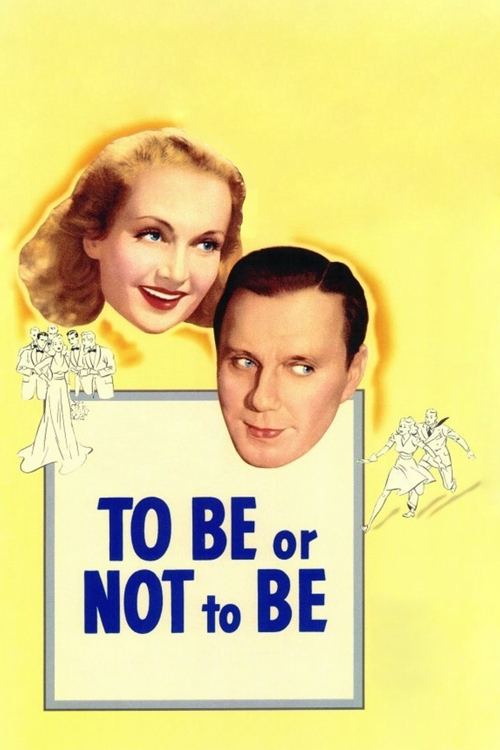
To Be or Not to Be
"The Picture Everyone Wants to See"
Overview
Set in 1939 Warsaw on the eve of the Nazi invasion, To Be or Not to Be follows a troupe of world-class, though profoundly egotistical, actors led by the formidable husband-and-wife duo Joseph and Maria Tura. Their theatrical routine is shattered when the German blitzkrieg begins, transforming their stage into a battlefield of a different sort. The plot ignites when a young Polish pilot, Stanislav Sobinski, unwittingly entrusts a double agent, Professor Siletsky, with a list of Polish resistance members.
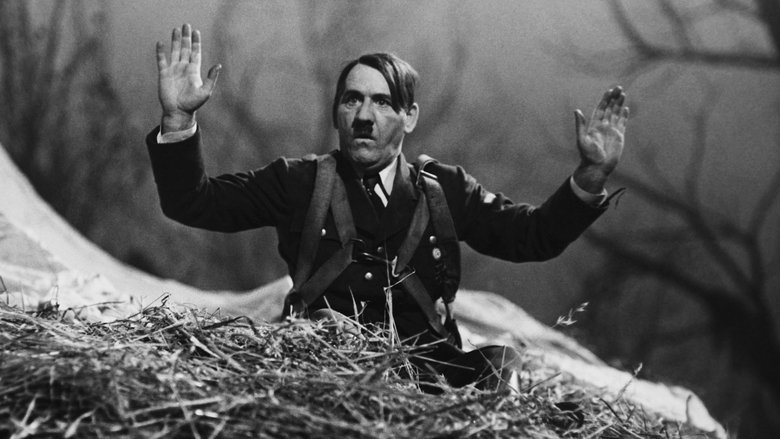
To prevent a massacre, the actors must utilize their greatest talents: costumes, makeup, and unwavering bravado. They orchestrate a series of high-stakes improvisations, with Joseph Tura taking on the roles of Nazi officials and even Hitler himself. The film expertly balances the tension of a spy thriller with the rapid-fire wit of a screwball comedy, as the troupe attempts to outmaneuver the bumbling but dangerous Colonel Ehrhardt and his Gestapo officers.
As the line between performance and reality blurs, the actors find that their vanity, once a mere character flaw, becomes their most effective weapon against a regime that demands total conformity. The film explores the resilience of the human spirit in the face of oppression, all while maintaining the sophisticated, light-handed direction for which Ernst Lubitsch was celebrated.
Core Meaning
The core of the film is a daring assertion that satire and ridicule are the ultimate weapons against fascism. Lubitsch suggests that the Nazi regime is fundamentally a theatrical performance—one built on costumes, rehearsed gestures, and a fragile ego—and that the only way to defeat it is to perform better than they do. By portraying the Gestapo as buffoons who are easily fooled by ham actors, the film strips the oppressors of their power and aura of invincibility.
Furthermore, it celebrates the triumph of art over brute force. The actors, who are initially presented as superficial and self-absorbed, discover a higher purpose in their craft. Their willingness to risk their lives for Poland through the medium of theater elevates their "insignificant" profession into a noble act of resistance, suggesting that culture and humor are essential for survival in dark times.
Thematic DNA
The Performativity of Power
The film highlights how the Nazi regime relies on external signs of authority—uniforms, salutes, and repetitive slogans like "Heil Hitler." By showing that a troupe of actors can successfully mimic these signs to bypass security, Lubitsch reveals that totalitarian power is often a hollow performance that can be unmasked by those who understand the art of the stage.
Art as Resistance
The theater troupe moves from performing Shakespeare for entertainment to performing for survival. Their "Gestapo" play, which was censored to avoid offending Germany, eventually becomes the script for their actual infiltration. This theme emphasizes that creative expression is a form of defiance that can undermine even the most rigid political structures.
Vanity vs. Valor
Joseph Tura's obsession with his reviews and Maria's desire for admiration provide the comedic engine, but these traits also drive their bravery. Their actors' egos prevent them from being intimidated by the Nazis; they are more worried about a missed cue or a bad beard than they are about the Gestapo, making their vanity a peculiar source of courage.
Deception and Identity
The film is built on layers of identity: an actor playing a spy, who is then played by another actor. This constant shifting of masks raises questions about the stability of the self and the ease with which one can inhabit a role, whether it be a hero, a villain, or a lover.
Character Analysis
Joseph Tura
Jack Benny
Motivation
Driven by a mixture of patriotic duty and the desperate need to prove he is a "great, great actor" to his wife and the Nazis.
Character Arc
Tura begins as a "ham" actor obsessed with his reputation. Through the war, he transitions from seeking applause on stage to seeking survival through performance, eventually proving that his acting skills can save lives.
Maria Tura
Carole Lombard
Motivation
Motivated by a desire for excitement, a love for her husband, and a fierce loyalty to her country.
Character Arc
A glamorous star who uses her charm to navigate danger. She manages a delicate balancing act between her husband's ego and the romantic advances of Sobinski, eventually becoming a key operative for the resistance.
Lieutenant Stanislav Sobinski
Robert Stack
Motivation
To protect Maria and fulfill his duty as a Polish airman in the RAF.
Character Arc
Initially a lovesick pilot who treats the war like a romantic adventure, he is the bridge between the resistance and the theater troupe, forcing the actors into the real world.
Colonel Ehrhardt
Sig Ruman
Motivation
Maintaining his status and surviving the internal politics of the Nazi party.
Character Arc
The stereotypical "Concentration Camp" Ehrhardt remains static as a bumbling bureaucrat whose primary fear is disappointing Hitler, serving as the perfect foil for the actors' schemes.
Greenberg
Felix Bressart
Motivation
To finally play a "great part" that speaks the truth about his humanity.
Character Arc
A bit player who dreams of playing Shylock. He provides the film's moral weight, delivering the famous "Hath not a Jew eyes?" speech in a real-life confrontation with the Nazis.
Symbols & Motifs
The "To Be or Not to Be" Soliloquy
In the film, the famous line serves as the secret signal for Sobinski to visit Maria's dressing room. Beyond the joke of Joseph being interrupted, it symbolizes the choice between existing as a submissive subject or acting as a free individual, reflecting the play's original themes of life and death.
The Fake Beard
Joseph Tura must constantly adjust his disguise to match Professor Siletsky. The literal pulling of the beard by Colonel Ehrhardt serves as a visual metaphor for the constant threat of having one's true self "unmasked" by the enemy.
Maria's White Silk Gown
Maria insists on wearing a glamorous gown for a scene set in a concentration camp, arguing it provides "contrast." This symbolizes the film's own aesthetic: using the beauty and light of comedy to highlight the darkness of the surrounding conflict.
The "Heil Hitler" Salute
Lubitsch turns the salute into a comedic refrain, most notably with the line "Heil myself." It reduces the terrifying symbol of the Third Reich to a meaningless, repetitive reflex that can be mocked and co-opted.
Memorable Quotes
So they call me Concentration Camp Ehrhardt?
— Colonel Ehrhardt
Context:
Ehrhardt is speaking to Joseph Tura (disguised as Siletsky) and chuckles at his own terrifying reputation.
Meaning:
A dark, satirical jab at the regime's self-awareness (or lack thereof). It highlights how the Nazis were perceived by the outside world vs. their own internal logic.
What he did to Shakespeare we are doing now to Poland.
— Colonel Ehrhardt
Context:
Ehrhardt comments on Joseph Tura's "hammy" acting in Hamlet, unaware he is talking to the actor himself.
Meaning:
One of the most biting lines in cinema history, equating cultural vandalism with military destruction.
Heil myself.
— Bronski (disguised as Hitler)
Context:
During a rehearsal, an actor dressed as Hitler walks in and salutes himself to prove his costume's effectiveness.
Meaning:
Reduces the cult of personality surrounding Hitler to a punchline, emphasizing the narcissism of the dictator.
I prefer a slow encirclement.
— Maria Tura
Context:
Maria is flirting with Professor Siletsky to distract him and gain information.
Meaning:
A masterful use of the "Lubitsch Touch," using military terminology as a sexual double entendre.
Philosophical Questions
Is everything a performance?
The film suggests that social and political roles—whether soldier, spy, or dictator—are performances maintained through costume and script, questioning if there is a 'true' self beneath the role.
Can humor be a moral act?
By laughing at evil, the film asks if we are trivializing it or reclaiming our power over it. Lubitsch argues that humor preserves humanity when logic and peace have failed.
Alternative Interpretations
Some critics view the film as a meta-commentary on Hollywood itself, where the "actors" are a stand-in for the film industry attempting to contribute to the war effort through artifice. Another perspective focuses on Maria's agency: is she actually having an affair with Sobinski, or is she simply "acting" the role of the unfaithful wife to maintain her husband's jealousy and competitive spirit? The film leaves her true feelings ambiguous, suggesting that for a great actress, life is just another stage.
Cultural Impact
To Be or Not to Be is considered a landmark in political satire. Released during the height of WWII, it broke the unspoken rule that certain tragedies were too immense for comedy. Its influence can be seen in later works like The Producers, Hogan's Heroes, and Inglourious Basterds, which also utilize humor to deconstruct fascist aesthetics. Over the decades, it has transitioned from a controversial failure to a widely recognized masterpiece, frequently cited as the pinnacle of the 'Lubitsch Touch'—a style defined by elegance, brevity, and sophisticated wit.
Audience Reception
Contemporary 1942 audiences were polarized; many found the jokes about concentration camps and the bombing of Warsaw jarringly insensitive. However, modern audiences and critics (holding a 98% on Rotten Tomatoes) celebrate it for its bravery and structural perfection. It is now lauded as one of the funniest films ever made, with Jack Benny's performance often cited as his career best.
Interesting Facts
- Carole Lombard tragically died in a plane crash during a war bond tour two months before the film's release.
- The film was initially panned by critics who felt it was in 'bad taste' to make a comedy about the Nazi occupation while it was still happening.
- Jack Benny's father was so offended seeing his son in a Nazi uniform that he walked out of the theater; Benny later convinced him to watch it, and he reportedly saw it 46 times.
- Director Ernst Lubitsch, a Jewish refugee from Germany, felt a personal mission to use humor as a weapon against the Nazis.
- The role of Maria was originally offered to Miriam Hopkins, but she left the production after clashes with Jack Benny.
- Mel Brooks produced and starred in a famous remake of the film in 1983.
Easter Eggs
The Merchant of Venice Reference
The character Greenberg's dream of playing Shylock allows Lubitsch to insert a powerful plea for Jewish humanity ("Hath not a Jew eyes?") into a comedy, a direct challenge to the Holocaust occurring in Europe.
Hitler's Entrance
The opening shot of Hitler in Warsaw is a classic 'fake-out' that mirrors the beginning of many documentaries, only to be revealed as a theatrical rehearsal.
⚠️ Spoiler Analysis
Click to reveal detailed analysis with spoilers
Frequently Asked Questions
Explore More About This Movie
Dive deeper into specific aspects of the movie with our detailed analysis pages
Comments (0)
No comments yet. Be the first to share your thoughts!