Skip to content
Tunnel
A suffocating claustrophobic thriller wrapped in biting black comedy, Tunnel balances mortal dread with quiet human warmth, framing an ordinary man buried beneath concrete rubble as a fractured mirror to a nation’s crumbling institutional conscience.
Tunnel
Tunnel

터널

"When all collapsed, only hope remained."

10 August 2016 South Korea 126 min 7.3 (664)

Director: Kim Seong-hun

Cast: Ha Jung-woo, Bae Doona, Oh Dal-su, Shin Jung-keun, Nam Ji-hyun

Drama Thriller Incompetence of Institutions and Bureaucratic Neglect The Value of Human Life vs. Economic Utility Media Sensationalism and Ethical Corrosion Human Resilience, Empathy, and Solidarity Public Apathy and Collective Fatigue
Budget: $1,000,000
Box Office: $52,444,295

Tunnel — Ending Explained

⚠️ Spoiler Analysis

The narrative progresses through an escalating sequence of institutional blunders, personal loss, and administrative abandonment:

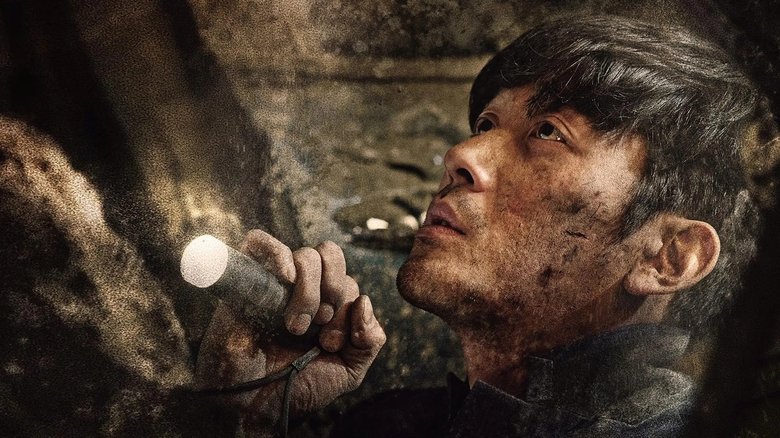
After being crushed in the Hado Tunnel, Jung-soo establishes contact with rescue chief Kim Dae-kyung, who teaches him to ration his cake and two bottles of water. While exploring the surrounding rubble, Jung-soo discovers another survivor, Lee Mi-na, who is pinned in her car alongside her pet pug, Ttaeng-yi. Jung-soo shares his water and lets her use his cell phone to speak with her mother, but Mi-na dies from severe internal injuries shortly after, leaving him alone with her dog.

On Day 17, rescue drills finally breach the bedrock, but rescuers discover they have drilled into an empty ventilation shaft. The construction firm used outdated blueprints, deviating from official plans to cut costs. The operation is forced to restart from scratch. Soon after, an accidental detonation kills a rescue technician, causing public sentiment to turn viciously against Jung-soo and his wife, framing the trapped man as an expensive liability holding back the adjacent Second Tunnel project.

Pressured by government authorities, Se-hyun signs a consent form to resume construction blasting. She broadcasts an agonizing final farewell over the radio, believing her husband is gone. Jung-soo hears the transmission on his car radio, realizing the world has abandoned him. Despite orders to stop, Dae-kyung descends into the secondary drill shaft and hears Jung-soo tapping the car horn, which Jung-soo rewired using his car battery. Extracted alive on Day 35, Jung-soo whispers a defiant message that Dae-kyung relays via megaphone to the gathering politicians and cameras: 'Back off, you sons of bitches!' The film concludes months later with Jung-soo and Se-hyun driving toward another highway tunnel; the navigation system chimes, 'Tunnel ahead. Please drive safely,' leaving the couple exchanging an anxious, traumatized look.

Alternative Interpretations

The film can be examined through several critical lenses:

  • Direct Political Allegory for the Sewol Ferry Sinking: Domestically, the film is widely read as a reflection of the 2014 ferry disaster, matching the failure of official manuals, early misreported survivor numbers, predatory press behavior, government image obsession, and society's eventual willingness to move on.
  • Kafkaesque Parable of Middle-Class Disposable Labor: From a socioeconomic perspective, Jung-soo is an average worker trapped inside the very consumer commodity he sells (an automobile) and buried under infrastructure built for capital. The state and corporate apparatus eagerly seek to declare him dead once halting construction on an adjacent commercial tunnel incurs major daily financial losses.
  • Existential Allegory on Modern Alienation: The narrative illustrates the emotional and physical isolation of the modern individual. Separated by rock and reliant on failing battery-powered gadgets, Jung-soo's condition suggests that modern technological connectivity is fragile, exposing deep personal alienation that can only be mitigated through raw human empathy.

Explore More About This Movie

Dive deeper into specific aspects of the movie with our detailed analysis pages

Similar Movies